Willis Otieno slams Sakaja over poor drainage in Nairobi CBD after heavy downpour
By Ascah Mwango, October 4, 2025Lawyer and politician Willis Otieno has lashed out at Nairobi County Governor Johnson Sakaja over the poor drainage system in the Central Business District after heavy rains pounded the city on Friday, October 3, 2025.
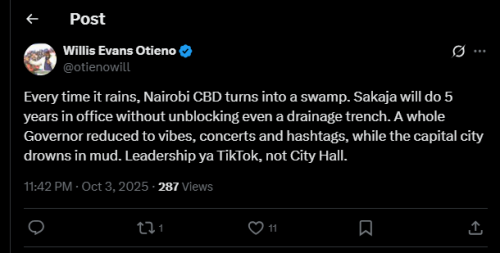
In a statement on his X account, Otieno said that every time it rains, the capital city turns into a swamp because the county government has failed to unblock drainage trenches.
He argued that Sakaja has focused more on entertainment events and online trends instead of addressing critical infrastructure challenges like drainage, leaving Nairobi residents to struggle with flooding and muddy streets.
“Every time it rains, Nairobi CBD turns into a swamp. Sakaja will do 5 years in office without unblocking even a drainage trench. A whole Governor reduced to vibes, concerts and hashtags, while the capital city drowns in mud. Leadership ya TikTok, not City Hall,” Otieno stated.
Heavy rains
Otinoe’s sentiments come after heavy rains hit Nairobi and other parts of the country, as the Kenya Meteorological Department had warned earlier in the day.
The department announced that the ongoing rains across several regions would intensify in both amount and spread between Friday and Sunday.
The prediction made on October 1, 2025, highlighted that the Central Highlands, including Nairobi, the Lake Victoria Basin, the Rift Valley, Western and North-western regions would receive increased rainfall.
According to the Met Department, some areas were expected to record isolated heavy showers ranging between 20 millimetres and 50 millimetres in 24 hours, with a few regions likely to receive more than 50 millimetres.
The agency warned that these intense rains could lead to localised flooding, slippery roads and disruptions to normal activities.
The weather authority urged residents, especially those in flood-prone and low-lying areas, to remain vigilant.
It cautioned that heavy rains could affect transportation due to slippery roads and reduced visibility, and that urban centres with poor drainage systems were likely to face temporary flooding.