Willis Otieno accuses govt of double-financing Affordable Housing programme
By Mustafa Juma, May 10, 2026Lawyer Willis Otieno has raised fresh questions over the government’s Affordable Housing Programme.
Taking to his official X account on Sunday, May 10, 2026, the Safina deputy party leader accused the state of “double-financing” the initiative through both mandatory salary deductions and external borrowing arrangements.
Otieno argued that the structure of the programme suggests a complex financial model where workers are taxed through the Housing Levy while the government still seeks additional funding from external lenders and private financial structures.
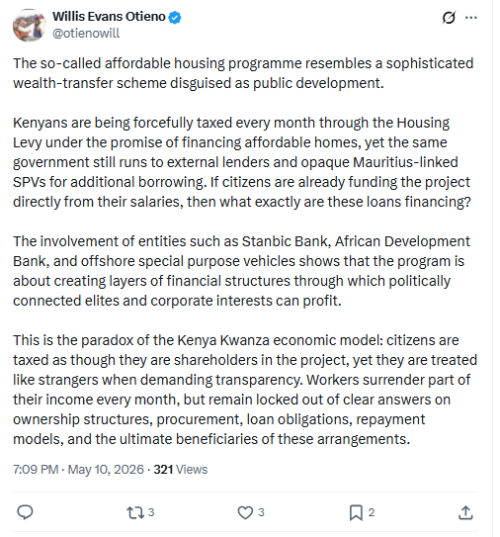
“The so-called affordable housing programme resembles a sophisticated wealth-transfer scheme disguised as public development,” Otieno stated.
“Kenyans are being forcefully taxed every month through the Housing Levy under the promise of financing affordable homes, yet the same government still runs to external lenders and opaque Mauritius-linked SPVs for additional borrowing.”
He further questioned why the government continues to pursue loans if citizens are already directly funding the housing programme through monthly deductions from their salaries.
He argued that this raises fundamental concerns about transparency and accountability in the management of public funds.
“If citizens are already funding the project directly from their salaries, then what exactly are these loans financing?” he posed.
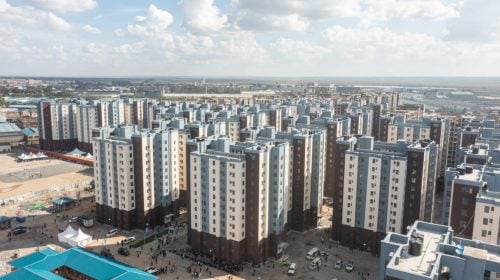
Concerns over financial structures
The lawyer also pointed to the involvement of major financial institutions and investment structures, including banks and offshore special purpose vehicles, arguing that the programme may be layered with complex arrangements that are not fully transparent to the public.
According to Otieno, these structures risk creating a system where politically connected actors and corporate interests benefit disproportionately from a programme meant to deliver affordable housing.
Otieno described the Affordable Housing Programme as resembling a “sophisticated wealth-transfer scheme disguised as public development”, arguing that citizens are contributing financially without clear visibility of ownership structures, procurement processes, or repayment obligations.
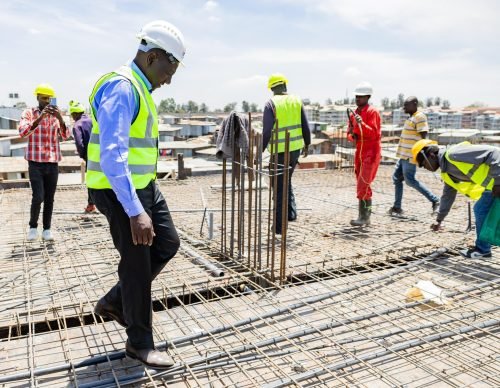
He further claimed that workers are being treated as forced contributors rather than stakeholders with access to transparent information on how their contributions are being utilised.
The lawyer also criticised the broader economic approach under the current administration, saying it places a disproportionate burden on workers while limiting their access to information on state-led development projects.
He said the situation reflects a contradiction where citizens are taxed as contributors but excluded from decision-making and accountability structures.
“This is the paradox of the Kenya Kwanza economic model: citizens are taxed as though they are shareholders in the project, yet they are treated like strangers when demanding transparency. Workers surrender part of their income every month, but remain locked out of clear answers on ownership structures, procurement, loan obligations, repayment models, and the ultimate beneficiaries of these arrangements,” he stated.
Affordable housing programme
The Affordable Housing Programme remains one of the flagship initiatives under the Kenya Kwanza administration, aimed at addressing urban housing shortages and improving access to decent housing for low- and middle-income earners.
However, it has continued to attract scrutiny from legal experts, economists, and political commentators who have raised concerns about financing, affordability, and implementation frameworks.
Government officials have, in previous statements, defended the programme, insisting it is structured to ensure long-term sustainability and broad-based economic participation.