Why Kenyans in Europe may face faster deportation under new EU rules
By Aloys Michael, June 18, 2026The European Union (EU) has adopted sweeping changes to its migration return framework, a move that could significantly affect thousands of non-EU nationals, including Kenyans living irregularly across member states.
On Wednesday, June 17, 2026, Members of the European Parliament (MEPs) approved reforms designed to simplify and speed up procedures for returning third-country nationals who no longer have the right to stay in the EU.
The legislation passed with 418 votes in favour, 218 against, and 30 abstentions, following an informal agreement reached with the Council on June 1, 2026.
“The reform strengthens return procedures while insisting they remain aligned with fundamental rights and international law, including the principle of non-refoulement and the prohibition of collective expulsions,” the legislation reads in part.
For Kenyans in Europe, especially those without valid residence permits or whose asylum claims have been rejected, the changes mean quicker administrative decisions and stricter enforcement timelines.
Under the new rules, a return decision issued by a member state will require a non-EU national to leave immediately or within a given time, as authorities will also have expanded powers to enforce compliance.
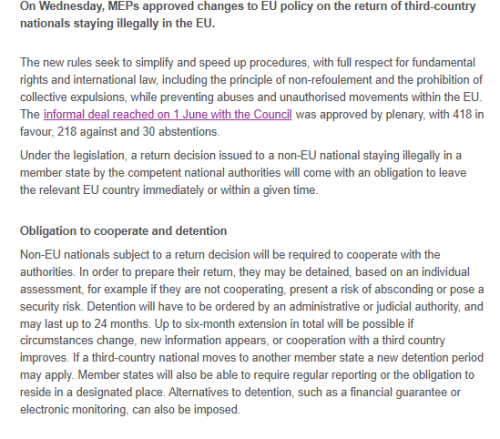
Individuals subject to return orders will be required to cooperate with authorities. If they fail to do so, or if they present a risk of absconding or security concerns, they may be detained following an individual assessment. Detention can last up to 24 months, with possible extensions in specific circumstances.
Authorities may also impose alternatives such as electronic monitoring, regular reporting, or designated residence requirements.
For Kenyans in transit or working informally in Europe, these measures signal a more rigid enforcement environment, particularly for those moving between member states after receiving return orders.
Return hubs and external cooperation
The EU framework also opens the door to sending migrants with return orders, excluding unaccompanied minors, to so-called return hubs in third countries that agree to host them under formal arrangements. These agreements must comply with international law and human rights standards.
This external dimension could indirectly affect African countries like Kenya in future migration negotiations, especially as Europe seeks partner states willing to cooperate on returns and reintegration frameworks.

“Today Europe delivered. People rightly expect that those with no right to stay return to their countries of origin. That’s why I have one clear priority: effective, realistic return measures. And after almost 20 years of standstill, Europe finally has them. Return is the final piece in Europe’s migration system, and I’m hugely proud it’s now in place,” rapporteur Malik Azmani said after the vote.
Kenya–EU migration dynamics
Kenya has long been part of broader migration flows toward Europe, including labour migration, education pathways, and asylum-seeking routes.
While most Kenyan migrants in the EU are documented, irregular overstays remain a concern for immigration authorities.
The new EU policy is expected to increase the speed of deportation procedures for Kenyans found without legal status, reduce delays caused by administrative appeals, and expand cooperation pressure on third countries for readmission agreements.
As the legislation moves to final adoption by the Council and publication in the Official Journal, Kenyan migrants, diaspora groups, and policymakers will be watching closely.
The changes could reshape how migration enforcement is handled across Europe and how quickly affected individuals are returned home.