Advertisement
Why informal settlements are at the heart of Uhuru’s health care improvement plan
Thursday 17th June, 2021 12:16 AM|
By Selina Chiteri
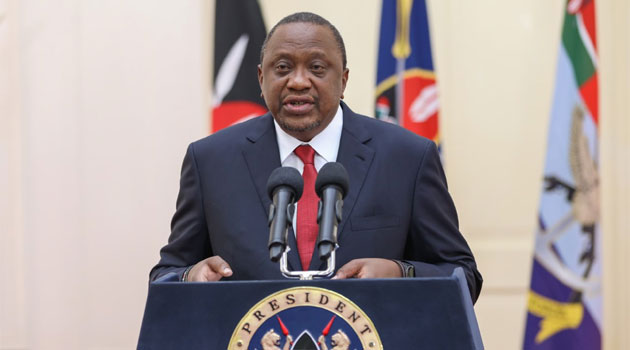
Kenya’s health sector has faced a tumultuous journey with a myriad of challenges, some touching on health facilities, personnel and infrastructure. This has seen the sector bedeviled with the harsh realities of dwindling services and facilities over the years. However, President Uhuru Kenyatta recently embarked on a progressive restructuring programme to make amends in the highly sensitive sector, a move that is seeing cartels being edged out and key infrastructural initiatives being taken to bring health centres closer to informal settlements.
In an apparent effort to make it a reality, a Sh121 billion budgetary allocation has been done. Out of the Sh121.1 billion, 42.2 per cent (Sh56 billion) has been allocated to development expenditure while Sh65 billion is reserved for recurrent expenditure.
With a key focus on infrastructure, already several projects have been completed and others currently underway targeting the informal settlements.
Touching on the twenty-four hospitals project, a project being undertaken in Nairobi’s informal settlements, 19 of the facilities are being built at a cost of Sh70 million each. The remaining five were to undergo rehabilitation at a cost of Sh300 million. In the well thought out government initiative in collaboration with the Nairobi Metropolitan Services the project caters for development of hospitals in the informal settlements. The areas targeted are Viwandani, Majengo, Mathare, Kayole, Soweto, Korogocho, Kawangware, Gitare Marigu, Mukuru Kwa Njenga, Mukuru kwa Reuben, Kibera and Githurai 44. Of the 19 under construction, nine have been set for Level Three hospitals and ten Level Two hospitals.
Back in August 2020, President Uhuru Kenyatta commissioned the construction of three hospitals in the informal settlements of Uthiru, Kibera and Mukuru Kwa Reuben, a move that set the momentum for the project. In part of a grand plan towards transformation of informal settlements, the Level Three hospitals were allocated Sh210 million. This amount would constitute a 16-bed capacity hospital at Muthua in Uthiru and Kianda with a bigger 24-bed capacity health facility at Maendeleo Village in Mukuru kwa Reuben.
These are areas where there has been limited access to health with many forced to incur an added cost of transportation to access key hospitals and others forced to grapple with costly private clinics that were at times not licensed to operate.
Key to note is that for every hospital facility there will be a subsequent absorption of healthcare workers, catering staff and other casual workers to fully operationalize the facility. Moreover, larger hospitals the Kenyatta National Hospital, Pumwani hospital, Mama Lucy Hospital and Mbagathi Hospital are likely to be relieved of the pressure currently experienced with the end result being the efficient and affordable provision of health care services and facilities to Kenyans.
The next hospital facility that is set to open is the in Mathare-Korogocho facility that will see an absorption of over 300 workers and includes facilities such as a dialysis centre, patient admissions ward, an Intensive Care Unit (ICU), pharmacy, theatres and a morgue. The facility will cater for the residents of Korogocho and Mathare.
The developments are likely to reinforce the implementation of the Universal Health Coverage with Sh47.7 billion allocated to fund its programmes.
To better align with development projects in the health sector more money has been pumped into vaccination, sanitation and treatment. The government has also set aside Sh14.3 billion for the purchase of Covid -19 vaccines.
This approach by the government is keenly focusing on ensuring healthcare services are efficient, accessible and affordable to Kenyans. Additionally, 47.7 billion has also been allocated to deal with the cancer burden by further bringing services closer to the people with the Kenyatta University Teaching and Referral and Research Hospital receiving Sh450 million for a Cyber Knife Radiotherapy equipment. Two cancer centres will also be established in Kakamega and Meru at a cost of Sh350 million. Other hospitals allocated funds to facilitate treatment of cancer patients are the Kenyatta National Hospital and the Moi Teaching and Referral Hospital which have been allocated Sh15.2 billion and Sh11.5 billion respectively. This focus ultimately addresses the pressing concern of health facilities and services that will undoubtedly have far-reaching positive effects on Kenyans.
Author
People Daily
View all posts by People DailyLatest News



Advertisement
More on News