Advertisement
Why I advocate for dyslexia awareness – a condition that affects learning
Monday 03rd January, 2022 12:00 AM|
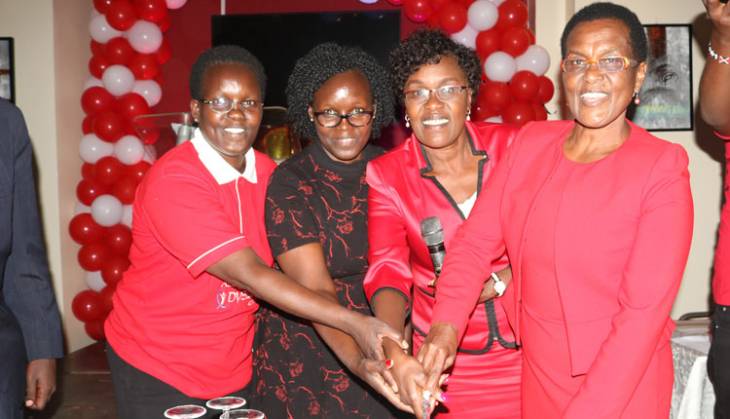
Briefly tell us about Dyslexia Organisation Kenya (DOK).
It is a non-governmental organisation started in 2011. It is the pioneer organisation in Africa to champion for the rights of children with dyslexia.
Our vision is to create a society where learners with dyslexia and other specific learning difficulties are accorded necessary support to ensure they unleash their full potential.
What is dyslexia and what is the status in the country?
This is a general term for disorders that involve difficulty in learning to read or interpret words, letters, and other symbols, but that does not affect general intelligence.
Globally, one in every five students has dyslexia. That means in our country, out of the 3.5 million students in secondary schools and about 10 million students in primary school today 750,000 and about two million respectively have dyslexia.
Students with this condition continue to suffer in school, why?
Because many teachers and parents do not know about the existence of dyslexia.
Then parents think the teacher is not doing his/her work hard enough. On the other hand, teachers think the student is lazy.
This is why we strive to raise awareness for every educator and parent in our country and in Africa.
You founded the organisation with your sister. What motivated the two of you?
In 2006, when my son was in pre-school, I realised he had difficulties with reading and spelling.
He could not master the alphabet and was lagging behind his peers in class. He showed no physical signs that could explain his difficulties in reading.
As I was struggling to solve my son’s reading puzzle, my twin sister, Nancy, was also going through the same with her son.
Her case was more frustrating as she was her own son’s teacher. She could not understand how other children younger than him could master reading without much difficulties while hers couldn’t
Just when the frustration was getting at its peak, I came across the word ‘dyslexia’ in a magazine, and the characteristics therein fitted my son and nephew.
The struggle to solve the puzzles with our children made us read and research widely.
I immersed myself in the internet and shared whatever materials I found with Nancy, who would use them in her class.
We also practiced solutions found on the internet and as time went by our sons reading and self-esteem improved.
This motivated us to share with other parents, teachers, and entire community. That is how the organisation was borne.
Our focus is on the needs of pupils and individuals with specific learning difficulties in Kenya and Africa.
We achieve our goals by raising awareness about many students who struggle with specific learning difficulties, training teachers, and supporting parents of children struggling with dyslexia.
How many people have benefited from your programme and how have you made a difference?
Since we started, over 200 teachers have been trained on early identification and intervention of dyslexia, over 2,000 children have been assessed at our Kitengela centre and referred to schools they can get proper support, and we have organised over 300 awareness seminars and workshops for parents.
This has eased headaches to parents who didn’t know what to do with their children who are dyslexic.
You have also started a school tell us about it?
The school is known as Rare Gem Talent School and is located in Kitengela. It was founded in 2012 with the objective of finding a place where learners with specific learning difficulties such as dyslexia would be accommodated.
The school is registered as a special school. It admits students who have specific learning difficulties which include autism, dyslexia, bipolar syndrome, auditory processing disorders, and communication disorders as well as regular students who do not have learning difficulties.
It doesn’t limit itself to academics, but widens its platform to accommodate the many talents and gifts that students with dyslexia have.
The school blends academics with practical skills students can use in real life to generate income.
These lessons are taught by professionals in dressmaking, drawing, painting, singing, beading, and tapestry. The students produce bangles, mats, and other different forms of art.
The school also seeks apprenticeships for students in dressmaking and hairdressing to furnish them with practical experiences in these areas. We have more than 200 students and more than 25 teachers.
What are some of the challenges you have been facing along the way?
Our main challenge is that dyslexia is still not understood and, therefore, not given the attention it deserves by the Ministry of Education.
Limited funding is also another challenge. Our target is to have at least three teachers in every school able to identify and support children with dyslexia, but this has not been possible because of limited funds.
Your parting Shot
If at least three teachers in every school are able to identify dyslexia and support the children, it would reduce the number of children who drop out of school, the number of children in crime, mental health in children, and ultimately eliminate children who commit suicide. Dyslexia is the common cause of academic failure.
Author
Milliam.Murigi
View all posts by Milliam.MurigiLatest News





Advertisement
More on News