US report exposes surge of fake medicines and electronics in Kenyan market
By Aloys Michael, May 7, 2026A new report by the Office of the United States Trade Representative (USTR) has flagged Kenya as a major transit and destination market for counterfeit goods, raising fresh concerns over the growing circulation of fake medicines, electronics and consumer products in the country.
The 2026 Special 301 Report says counterfeit products originating largely from China and other Asian markets are increasingly finding their way into African economies through weak enforcement systems and porous trade networks, with Kenya singled out among countries struggling to curb the illegal trade.
According to the report, Kenya has emerged as one of the third-country markets where counterfeit products are distributed after passing through international transit hubs such as Singapore, Türkiye, Hong Kong and the United Arab Emirates.
“The counterfeits are shipped either directly to purchasers or indirectly through transit hubs to third-country markets such as Brazil, Kenya, Mexico, Nigeria, Paraguay, and Russia, that are reported to have ineffective or inadequate IP enforcement systems,” the report states.
The findings come at a time when Kenyan authorities are grappling with rising cases of fake pharmaceuticals, substandard electronics and counterfeit household goods flooding local markets, threatening public health and undermining legitimate businesses.

The USTR report warns that counterfeit medicines pose one of the gravest risks to consumers globally, noting that the illicit pharmaceutical trade has been accelerated by online platforms and weak regulatory oversight in developing economies.
“The manufacturing and distribution of pharmaceutical products and active pharmaceutical ingredients bearing counterfeit trademarks is a growing problem that has important consequences for consumer health and safety,” the report says.
“Counterfeit medicines contribute to the spread of substandard, unsafe medicines that do not conform to established quality standards.”
The report further states that counterfeit electronics, semiconductors and automobile parts are increasingly circulating in global markets, exposing consumers to safety hazards while hurting legitimate manufacturers and governments through lost tax revenues.
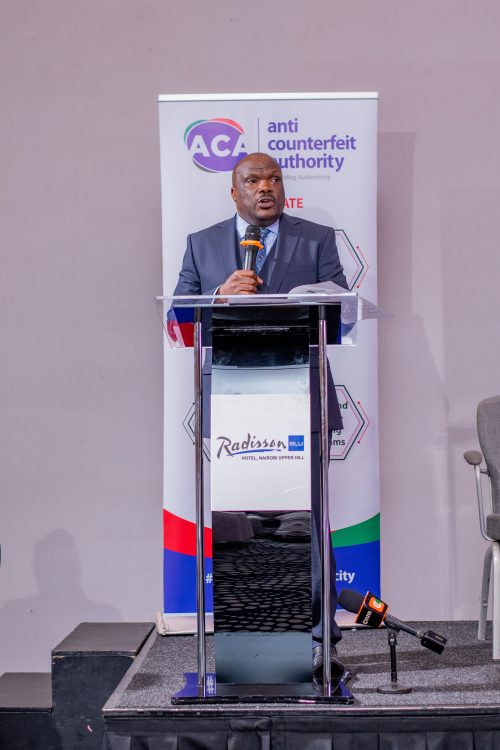
Kenya has, in recent years, intensified crackdowns on counterfeit trade through the Anti-Counterfeit Authority (ACA), the Kenya Bureau of Standards (KEBS) and the Pharmacy and Poisons Board.
However, traders and manufacturers continue to raise concerns over the scale of illicit imports entering the country through border points and online marketplaces.
Industry players say fake mobile phones, electrical cables, chargers, pharmaceuticals and beauty products have become increasingly common in Kenya’s informal retail sector, often sold at significantly lower prices than genuine products.
The USTR report notes that counterfeiters are increasingly exploiting express mail services, courier companies and postal networks to ship fake products in small consignments, making detection more difficult for customs agencies.
“Counterfeiters increasingly use legitimate express mail, international courier, and postal services to ship counterfeit goods in small consignments rather than ocean-going cargo to evade the efforts of enforcement officials,” the report states.

Online business syndicates
The report also points to the rapid growth of online commerce as a major driver of counterfeit trade worldwide. E-commerce platforms and social media marketplaces have become key channels for the sale of fake products, including medicines and electronics.
“Counterfeiters also increasingly sell counterfeit goods on online marketplaces, particularly through platforms that permit consumer-to-consumer sales,” the report reads.
For Kenya, the findings could renew pressure on regulators to tighten intellectual property enforcement and improve border surveillance as the country positions itself as a regional trade and logistics hub.
The USTR warns that weak anti-counterfeit enforcement not only harms consumers but also discourages foreign investment and innovation.
“Legitimate producers face diminished revenue and investment incentives while governments lose tax income due to the expansion of illicit trade,” it warns.
Globally, the Organisation for Economic Co-operation and Development (OECD) and the European Union Intellectual Property Office (EUIPO) estimate that trade in counterfeit and pirated goods reached Ksh70.1 trillion in 2021, representing 2.3 per cent of total global imports.
The USTR report urges countries to strengthen criminal and border enforcement mechanisms, empower customs officials to seize counterfeit goods and improve cooperation between governments, law enforcement agencies and online platforms to curb the growing threat of fake products.