Advertisement
Tracing premier Abe legacy in Japan’s politics, economy
Monday 31st August, 2020 12:00 AM|
Tokyo, Sunday
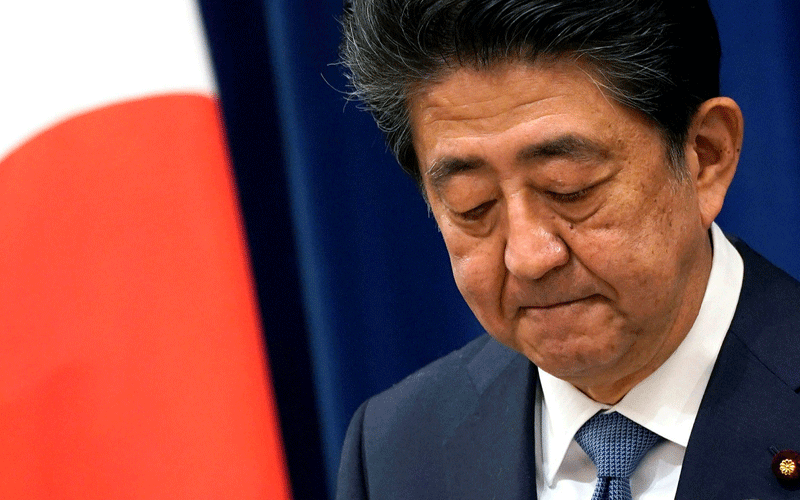
Shinzo Abe, Japan’s longest-serving prime minister, announced on Friday that he would resign, ending a term in office in which he pursued — with mixed results — a conservative agenda of restoring the country’s economy, military and national pride.
Abe, 65, the grandson of a prime minister, was initially elected to Parliament in 1993 after the death of his father, a former foreign minister.
He first served as prime minister beginning in 2006, but stepped down after a scandal-plagued year in office.
He became the country’s leader again in 2012, promising to fix its beleaguered economy and achieve his nationalist dream of amending Japan’s pacifist Constitution to allow for a full-fledged military.
After he had served nearly eight years in office, he said it was ailing health — a relapse of a bowel disease that had contributed to his previous exit in 2007 — that led him to resign.
The once-popular leader, however, had recently seen a decline in his standing with the Japanese people, and he was criticized for his handling of the country’s coronavirus epidemic and his support for an arrested member of his party.
Foreign Policy
Abe rose to national prominence in the early 2000s when he accompanied the then PM, Junichiro Koizumi, on a trip to Pyongyang to negotiate the release of Japanese citizens kidnapped by North Korea.
Championing the cause of those abducted citizens remained a preoccupation for the rest of his tenure, and contributed to his hawkish views on the isolated Communist country.
While in office, he encouraged a discussion about whether Japan should acquire the ability to strike missile launch sites in enemy territory if an attack appeared imminent, a debate tied to the rising nuclear threat from the North.
His grandfather Nobusuke Kishi was accused of — but never tried for — war crimes, and the legacy of Japan’s actions in World War II haunted the country well into Abe’s term.
Though he sought to improve ties with China and South Korea, where bitter wartime memories run deep, Abe riled both neighbours in 2013 by visiting Yasukuni Shrine in Tokyo, seen by Beijing and Seoul as a symbol of Japan’s past militarism.
He never again visited the shrine, but relations with South Korea over how, and for how long, Japan must atone for its wartime atrocities reached a level of intensity unseen in decades.
After years of a chilly relationship with China, however, Abe tried to usher in a new era, making the first visit to Beijing by a Japanese prime minister in seven years when he met with Xi Jinping, China’s leader, in 2018.
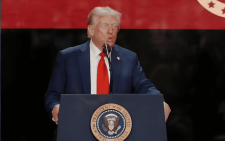
Abe was one of the few world leaders to maintain a consistently close relationship with President Donald Trump, regularly chatting on the phone and playing golf. – AFP
Author
People Daily
View all posts by People DailyLatest News
Advertisement
More on News