Advertisement
Tough journey awaits Ruto after swearing-in fete
Monday 12th September, 2022 01:00 AM|
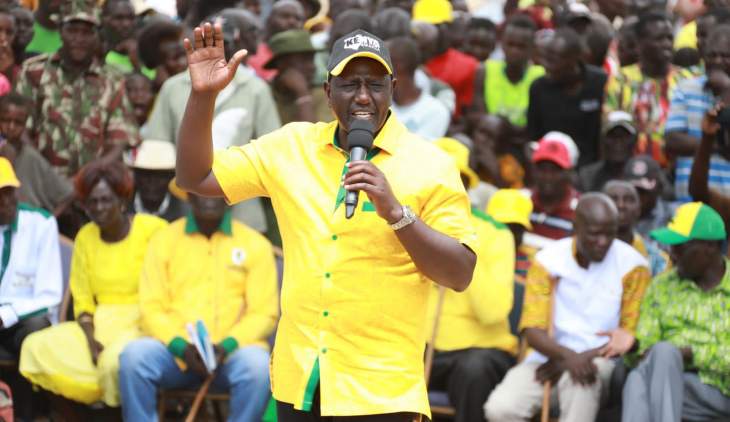
With 24 hours to go before President-Elect William Ruto is sworn into office, his in-tray is full already with a raft of expectations from the public and a myriad problems that he must address.
Even as he and his supporters throng the Kasarani Sports Complex to receive the instruments of power from outgoing President Uhuru Kenyatta, Ruto will be worried about anxious supporters who expect him to walk the talk and deliver on the many promises he made during the campaigns.
His inauguration is complicated by the fact that fuel prices will be reviewed within 24 hours after he assumes office. If the outgoing government did not provide for the fuel subsidy to be extended, it will mean that fuel prices will jump within one day of the transfer of power, which will have a ripple effect on inflation.
The Energy and Petroleum Regulatory Authority (EPRA) has been reviewing fuel prices based on a subsidy programme, and many will be waiting to see how the new administration will address the issue.
The government has been utilising the Petroleum Development Levy (PDL) to cushion consumers from the otherwise high prices.
Pending bills
The increased landing cost of petrol, coupled with a depreciating dollar are some of the factors that have contributed to the increased cost. However, the elephant in the room will be the oil marketers who claim they have not been paid billions of shillings in pending bills.
Kenyans could cough in excess of Sh200 per litre of fuel from Wednesday if the fuel subsidy is not extended even as oil majors get jittery due to pending bills.
In his manifesto and charters with various interest groups, Ruto promised to among other things, lower the cost of living and appoint women to half of the 22 Cabinet slots. This was in addition to giving greater autonomy to public institutions and setting up a kitty to fund businesses owned by the youth, women and people with disabilities.
Making his victory speech last week, Ruto announced that his first Executive Order will be to direct the reduction of the price of maize flour and fertiliser. Yesterday, he indicated that he had met Agriculture Ministry officials to explore the options available to the incoming administration.
During the campaign period, the government worked with millers to bring down the cost of maize flour to Sh100 for a two-kilogramme packet through a subsidy programme. Since the election, however, the cost has gone back to between Sh230 and Sh250 per packet.
During his campaigns, Ruto also promised to lower fertiliser prices from Sh6,000 to Sh2,500. Farmers will be watching to see if that promise will be fulfilled.
“There must be access to fertilisers that a farmer can afford,” Ruto told a campaign rally in Kitale, considered Kenya’s breadbasket. “Now I want to announce that fertiliser prices will decrease from Sh6,000 to the Sh2,500 we used to know, starting this year.”
Third Schedule
That now gives him about 100 days to fulfill his pledge.
His supporters will also be waiting for him to release the Sh50 billion fund to support micro and small businesses.
“The programme will loan you with a low interest of five per cent a year. We will make the rates low to reach every small business owner, be it mama mboga or boda boda,” Ruto said.
Now, he has to ensure the rubber meets the road after he assumes office.
The President-elect will assume office by taking and subscribing the oath of affirmation of allegiance, and the oath or affirmation for the execution of the functions of the office as prescribed in the Third Schedule.
However, he will hardly have time for a political honeymoon because he must face the reality of the challenges before him, including ensuring that the government raises sufficient revenue to meet its recurrent obligations and give a pay rise to some cadres of the civil service, particularly the police, who were promised enhanced pay.
The oath of office will be administered by the Chief Registrar of the Judiciary, Anne Amadi, and witnessed by Chief Justice Martha Koome.
Ruto will be taking over power at a time when unemployment is high in part due to the slowdown caused by the Covid-19 pandemic, which hurt the economy for the last two years, leading to job losses.
During his campaigns, he promised to establish a Hustlers Fund to help the unemployed to open businesses. The fund is to be established in the first 100 days after he assumes office, meaning that targeted beneficiaries can expect to start borrowing by December.
Ruto’s “bottom-up” economic transformation model will be put to test as those who voted for him hoping to reap from the idea will be expecting results in the short term, meaning that he has to hit the ground running from the first day.
Tax policy
For his economic transformation and development programmes to succeed, Ruto will have to put tough measures in tax collection, including expanding the tax bracket.
Last week, the National Treasury kick-started a process that seeks to change revenue collection strategies. According to a circular released by Treasury, the proposed measures will seek to raise the ratio of revenue collection to Gross Domestic Product (GDP) from the current 16.6 to 25 per cent by 2030 and improve compliance to 90 per cent from the current 70 per cent.
The domestic revenue mobilisation will also be achieved by aligning Kenya’s tax policy objectives, including improving the ease of doing business, reviewing trade policies and enhancing collaboration between the Government ministries, departments and agencies (MDAs), county governments, private sector, civil society and the public.
This even as the President-elect says he has already spoken with senior directors of the Kenya Revenue Authority (KRA) to ensure tax collection is optimised.
Ruto said the taxman will adopt more effective tax collection mechanisms to ensure that no tax “goes uncollected”.
While addressing a congregation at a church in Meru yesterday, Ruto said he would lead from the front in paying taxes and warned that no one will be exempted.
“KRA has assured me that all Kenyans who should be paying taxes won’t avoid or evade the duty. The agency will be used constitutionally, and not for witch-hunt,” Ruto said.
The other issue that Kenyans will be watching is the proposed changes to Competency Based Curriculum (CBC), which is still in its infancy with the first set of candidates expected to sit their national exams in November.
Although he welcomed the shift from the 8-4-4 education system to the CBC system, Ruto has indicated that it will need review to accommodate concerns from parents, teachers and other stakeholders in the education sector.
“As Kenya Kwanza, we support the progression from what we had as knowledge and exam-based education to the new format of knowledge, skills and competence as well as value-based education,” said Ruto.
Author
Anthony.Mwangi
View all posts by Anthony.MwangiLatest News




Advertisement
More on News