Advertisement
State built Sh68M war museum boosts tourism
Friday 03rd March, 2023 07:40 AM|
Local historians term it as a grave historical anomaly. For almost a century, many documented reports and official battle accounts of the First and Second World War have placed Germans and Britons at the heart of the war. This trend is seen even when the battle was fought in foreign lands including African soil.
As a result, many critical facts over the battle have become fuzzy, obscured and distorted. This distortion includes erasing key actors from the war books, suppressing their contributions and elevating the valour and exploits of western soldiers. The Africans are given a marginal mention and their roles, whenever they accidentally appear, are relegated to the backburner. Their devotion and sacrifice in the war is accorded cursory attention and is made to appear like an inconsequential footnote in the history of this great programme.
Whether by default or by design, this erasure of history has been a source of great consternation to local battlefield researchers who often accuse western historians of bias and engaging in revisionists’ tendencies.
“The Africans were central to the war yet they have never been fully appreciated for the critical role they played. They were the hands and boots that brought victory,” says Willy Mwadilo, a World War One historian and a battlefield tourism expert.
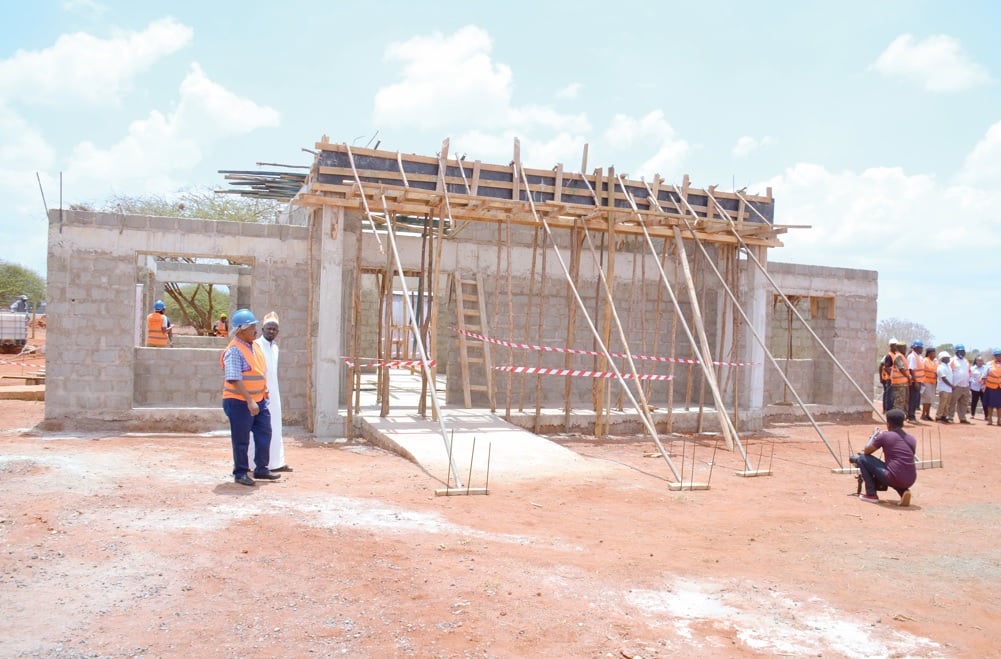
However, the government through the National Museums of Kenya (NMK) is set to rectify this historical injustice and accord Africans their rightful recognition in the history of the war. The construction of the Sh68 million state-of-the-art World War One Interpretive Centre at Maktau area in Taita-Taveta County is being regarded as the first deliberate step towards formal recognition and honouring thousands of Africans who participated in the war.
Dubbed as WW1 Interpretive Centre, the facility will be a memorial for thousands of Africans who lost their lives and be home to priceless war artefacts recovered from battlefields scattered across the county. The Maktaua centre will also serve as the main repository of WW1 accounts in Kenya and a key platform for amplifying the roles Africans played in the battle.
The NMK acting Director General Stanvas Ongalo states the WW1 centre will be pivotal in entrenching the Africans’ involvement in war narratives in addition to documenting other unknown contributions to the history of world wars.“The wars were historical events with global significance but Africans’ roles have not been as prominent as other actors. This centre will be a commemorative facility where tourists will visit to get the true picture of Africans’ involvement in battle,” he said.
The centre, which is funded by the Tourism Fund Kenya, has a modern exhibition room, a gallery and other administrative offices.
It’s location at the remote wind-swept, sun-scorched village of Maktau tucked at the edge of Tsavo West National Park is not by chance. Though dusty, dry and prone to frequent human-wildlife conflict, Maktau village might appear no different from many other rural settlements scattered across the country.
However, this village holds a special place, not just for WW1 but also in the aviation history of Kenya. Maktau is the official site where the first locally assembled plane took off from during the war.
Century later
“The first plane took off from an airstrip in the village. The plane was shipped in parts and assembled here before taking off to help Britons in the battle,” explains Mwadilo.
In Kenya, the bulk of the war during the East African WW1 Campaign took place in Taita-Taveta County. A century later, the county landscape has battle scars and is replete with dozens of historical sites with relevance to the war.
At Voi, the Commonwealth War Cemetery with remains of British soldiers is the most prominent reminder of the war. Supplies and porters would arrive at the Voi Railway station and sorted Kariokor grounds. The porters then embarked on the back-breaking trek through impenetrable hostile bushes teeming with wild animals to deliver supplies to British soldiers fighting at Salaita Hill in Taveta.
Indian cemetery
Mwatate is home to the Indian Cemetery where the Baluchi, Indian soldiers, are buried. Other sites include Mwashoti Fort where British soldiers had an observatory point. The fort also acted as a temporary shelter for soldiers before. The Mile 27 Bridge, a critical asset, became a key target for the German demolition team bent on disrupting the supplies.
In Taveta, Salaita Hill became the heart of the battle. Hundreds died trying to control this strategic hill. The Sniper Baobab Tree is also a historical site where a German female sniper took out dozens of British soldiers.
Martha Ndau, a Maktau resident, says the Interpretive Centre will open up the area and provide them with an alternative source of income. She adds they intend to open shops selling beads, traditional baskets and refreshments to tourists.
“We are farmers but lack of rains and destruction of crops by elephants has made farming impossible. We are hoping this centre will give us a new beginning,” she said.
Author
Latest News





Advertisement
More on News