Advertisement
Single pay point directive hurts State agencies
Tuesday 22nd August, 2023 06:20 AM|
Several government agencies are threatened with near-paralysis in their operations as the effects of the centralised revenue payment system begin to bite.
This is even as questions emerge over the legality of the new system that was announced by President William Ruto on June 30, with lawyers accusing the President of attempting to subvert the independence of parastatals.
With the new system having taken off on August 9, state agencies that were spending revenue collected through Appropriation-in-Aid (AIA) to fund their various activities have found the going tough as all the monies collected are remitted to a central account, leaving them starved.
Though the President had promised that government agencies would receive back the AIA from the Consolidated Fund at the Central Bank of Kenya within 48 hours of collection, this has not happened because of red tape.
In civil service lingua, AIA is the day-to-day revenue received by government departments and retained to meet daily operations expenditure, instead of being paid into the Consolidated Fund.
For example, a hospital that has been depending on fees paid by patients for registration, consultation, X-rays, laboratory tests and other services for their day-to-day operations has been left frustrated as all the money is directly remitted to the Consolidated Fund.
Therefore, several government agencies that have been relying on the AIA to fund their daily operations as they wait for the major part of their budget funding from the Fund have had to scale down some of their operations.
Those hit hard include agencies that charge fees for service delivery such as public hospitals, the National Police Service, Immigration, the Media Council of Kenya, the National Hospital Insurance Fund (NHIF), the National Transport and Safety Authority (NTSA), Kenya Pipeline Company, Communications Authority of Kenya, Airports Authority, Kenya Forest Service and National Social Security Fund (NSSF), among others. Only Kenya Ports Authority (KPA) has been exempted from using the centralised system and has maintained its own collection system.
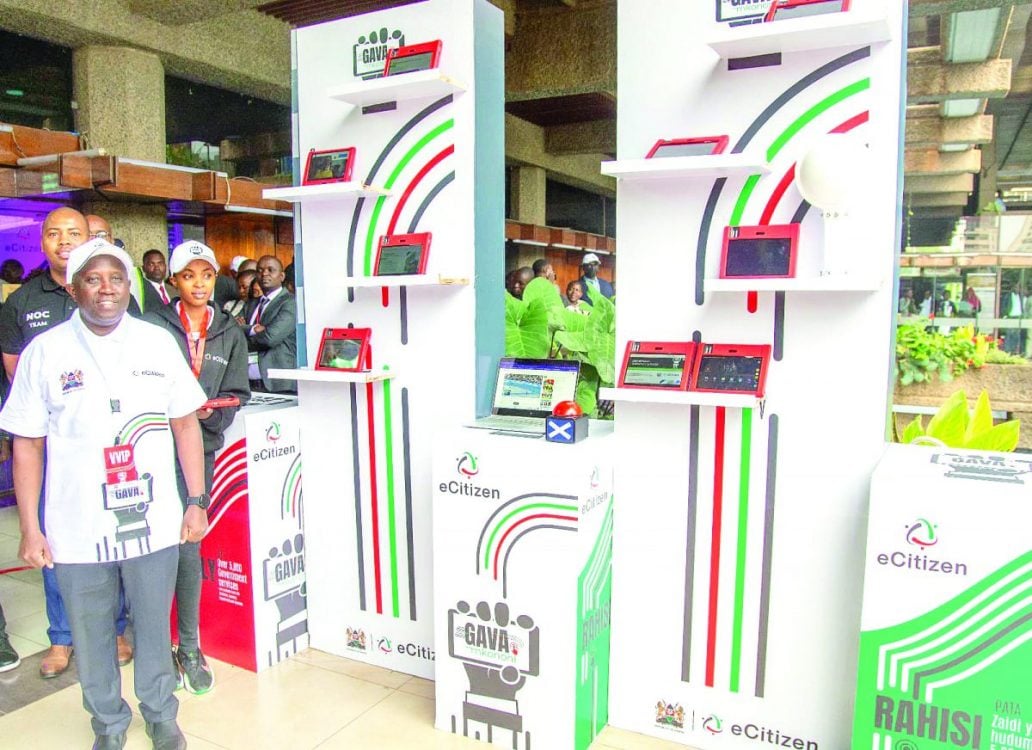
One of the parastatals, Kenya Wildlife Service (KWS) yesterday sent out an alert urging Kenyans visiting its parks to make payments through e-Citizen.
“KWS wishes to inform our esteemed customers and the public that they can now pay for services on the eCitizen platform. This follows the directive that all government services be boarded on the eCitizen platform to ensure efficient service delivery and transparency,” a statement from KWS’ corporate communications read.
No framework
Though proponents of the government digital payments unit argue that it is meant to increase revenue collection, minimize the cost of collection and enhance service delivery, heads of departments and CEOs claim the new system has bogged down service delivery as they have been unable to access the money remitted to the Consolidated Fund.
Officers who spoke to People Daily on condition of anonymity said the government has not formulated a framework on how the proposed single digital payment platform would be managed.
They also argue that it would be quite tedious or near impossible for the government to account for the revenue raised by different state bodies since the pay bill is single.
Sources said that National Treasury Principal Secretary Dr Chris Kiptoo yesterday convened a crisis meeting with departmental heads at the Treasury to deliberate on the matter that is now threatening the operations of government services.
President Ruto’s June 30 directive meant that at least 1,448 PayBill numbers that had been in use for the collection of payments for government services were to be shut down to pave the way for a centralised payment system. As such, all Ministries, Departments and Agencies were ordered to use only one PayBill number, 222222, to collect revenue paid for government services. More intriguing is the revelation that for every transaction made by any Kenyan, the Kenya Revenue Authority (KRA) deducts Sh50, out of which Sh30 goes directly to the company managing the pay bill, leading to the question of how that firm was prequalified.
The president made the move because the government could not account for some of the PayBill numbers used by various government agencies hence the move to shut them down. Speaking at the Kenyatta International Conference Centre (KICC) when he unveiled the State’s new digital services, President Ruto noted that Kenyans will only use the PayBill number, 222222, to pay for government services.
“All government money will be paid through 222222 directly to the Treasury and then the Treasury will make sure that the whole eco-system works. If there is money going to a particular ministry, the Treasury will ensure that the cash goes to the respective ministry and agencies,” said Ruto at the time.
Discontinued
And in a follow-up statement issued on August 8, 2023, Immigration and Citizen Services Principal Secretary Prof Julius Bitok directed all government departments that were yet to comply with the directive to do so immediately.
“Following the directive, 1,448 Paybills have been discontinued so far. Government Ministries, Departments and Agencies (MDAs) that are yet to comply with the directive are urged to do so without further delay,” said Prof. Bitok.
While issuing the directive, President Ruto said the government has gone digital and all agencies should comply.
The President had explained that it was for the purpose of efficiency to use one playbill so that no data is lost or grey areas. He had indicated that once payments are made through the channel, the Treasury will then remit the cash to respective ministries.
But since its operationalisation, other than impacting negatively on the delivery of services and leaving more confusion within the government agencies, questions are emerging over the independence of agencies such as NHIF and NSSF and the legality of the directive.
Law Society of Kenya (LSK) President Eric Theuri says the directive is not only illegal but also poses a security risk to government accounts.
“The whole process is highly irregular as it is aimed at usurping the mandate of some parastatals like NHIF and NSSF which are run and operated by respective boards. Since the Acts of Parliament that created them allow them to collect such monies, they must be left to do so independently for purposes of accountability,” Theuri told the People Daily.
Theuri warned that keeping all the revenue collected in one centralised account poses a major security risk in the event the system is compromised like hacking.
Institutions such as Kenyatta National Hospital, NHIF and NSSF, among others, are now finding it rough operating under the new system that was meant to seal loopholes through which some unscrupulous individuals pilfered public funds, but has ended up denying them the very money they are supposed to use.
Author
Print Reporter
View all posts by Print ReporterLatest News




Advertisement
More on News