Senate Health Committee flags congestion and staffing gaps in Rift Valley counties
By Faith Lagat, April 18, 2026The Senate Committee on Health has raised concerns over overcrowding, staffing shortages, and operational inefficiencies in public health facilities following an oversight tour across Nakuru, Baringo, Elgeyo-Marakwet, and Nandi counties.
The committee, chaired by Uasin Gishu Senator Jackson Mandago, visited several facilities including Nakuru Level 5 Hospital, Baringo County Referral Hospital, Meteitei Sub-County Level 4 Hospital, and Maraba Township Health Centre.
The delegation also included Kisii Senator Richard Onyonka, Baringo Senator Vincent Chemitei, and Nandi Senator Samson Cherargei.
During the visits, senators observed congestion in wards, long patient queues, and limited capacity to handle patient numbers. At Nakuru Level 5 Hospital, it was reported that two doctors were attending to approximately 1,000 patients daily, highlighting pressure on available medical personnel.
“The Committee noted severe hospital congestion due to staff shortages and called for urgent recruitment and improved equipment,” read the Senate X post dated 17 April 2026.
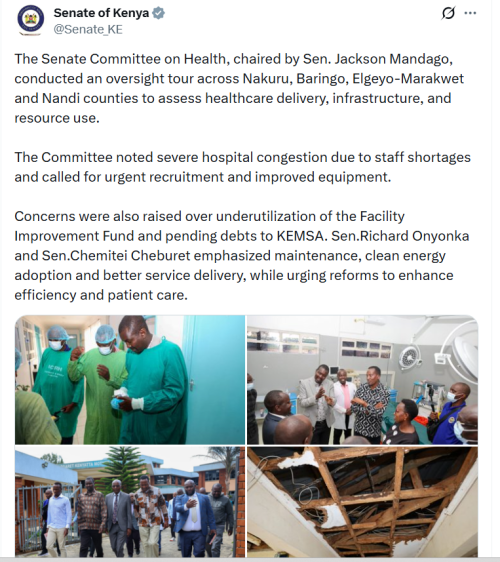
Healthcare system challenges
The committee identified staffing shortages as a key challenge affecting service delivery across the counties. Similar concerns had previously been raised during an oversight visit to Bungoma and Kakamega counties in November 2025, where understaffing was also highlighted as a barrier to effective healthcare provision.
Additional issues noted included shortages of essential medicines and non-pharmaceutical supplies, sanitation gaps, and infrastructure maintenance challenges. The committee also observed gaps in child immunisation programmes and inconsistent service delivery across facilities.
Senator Samson Cherargei noted instances where some counties carried out temporary improvements ahead of inspections, while Senator Richard Onyonka and Senator Vincent Chemitei pointed to the need for consistent facility maintenance and improved operational efficiency.
Funding, supply chain and energy concerns
The committee raised concerns over the underutilisation of the Facility Improvement Fund and outstanding debts owed to the Kenya Medical Supplies Authority (KEMSA), which have affected the supply of essential medicines to hospitals.
Senators also recommended the adoption of clean energy solutions such as solar power to reduce operational costs in health facilities. Discussions during the tour emphasised the need for reforms in procurement, supply chain management, and resource allocation to improve efficiency in service delivery.
The committee indicated that findings from the Rift Valley tour will be compiled into a report for tabling in the Senate. The report is expected to outline recommendations including recruitment of additional health workers, upgrading of medical equipment, digitisation of health records, and strengthened financing mechanisms for county health systems.