Salasya calls for scrap of housing levy, tax relief on building materials
By Kenneth Mwenda, May 17, 2026Mumias East MP Peter Salasya has renewed debate on Kenya’s Affordable Housing programme, calling for the scrapping of the Housing Levy and a shift in tax policy on key construction materials.
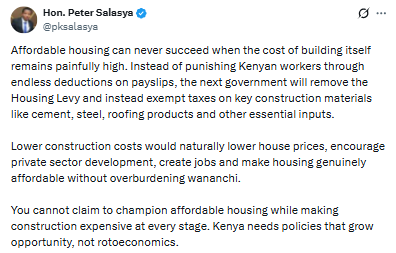
In a post on his X account on Sunday, May 17, 2026, Salasya argued that the current system makes housing expensive from the start, even before projects begin.
“Affordable housing can never succeed when the cost of building itself remains painfully high,” he wrote.
He said the government should stop what he termed as “endless deductions on payslips” and instead remove the Housing Levy altogether. He also proposed tax exemptions on cement, steel, roofing materials and other inputs used in construction.
According to him, lowering the cost of materials would have a direct impact on house prices and increase private sector involvement in housing development.
“Lower construction costs would naturally lower house prices, encourage private sector development, create jobs and make housing genuinely affordable without overburdening wananchi,” Salasya said.
He added that policy should focus on easing production costs rather than relying heavily on worker deductions to fund housing projects.
“You cannot claim to champion affordable housing while making construction expensive at every stage,” he added.
Ruto defends the housing levy policy
Salasya’s remarks come at a time when the Affordable Housing programme remains a major national policy under President William Ruto’s administration. The government has defended the Housing Levy, arguing that it has helped fund ongoing housing projects and create jobs.
President Ruto has previously said the programme supports hundreds of thousands of workers in construction and related sectors. Speaking during the Second Africa Urban Forum at KICC in April 2026, he dismissed critics of the levy.
“That is such pedestrian talk. How can you not see 640,000 people working?” Ruto said, warning that scrapping the levy would stall projects and hurt livelihoods.
The programme has also faced court challenges and political opposition, with critics questioning its structure and affordability. However, the government insists it remains key to solving Kenya’s housing shortage and unemployment.
At the same time, the Ministry of Housing has moved to clarify how funds are managed. Housing Principal Secretary Charles Hinga recently said the government is working on a system that would allow contributors who opt out of the programme to withdraw their voluntary savings.
“What you are saving towards house ownership is your money,” Hinga said, noting that the government is developing a platform with a telecommunications company to support withdrawals.
While the Housing Levy remains non-refundable, voluntary savings under the scheme can be accessed by contributors who choose to exit.