Ruto’s govt faces fresh US trade test as Kenya’s AGOA duty-free status comes under review
By Aloys Michael, July 3, 2026The government of President William Ruto is facing a fresh test of its trade and governance credentials after the United States formally launched its annual review of African countries eligible for duty-free access to the world’s largest consumer market under the African Growth and Opportunity Act (AGOA).
The Office of the United States Trade Representative (USTR) has initiated the 26th annual review of Sub-Saharan African countries’ eligibility for AGOA benefits for the 2027 calendar year, inviting written submissions from governments, businesses, labour groups and civil society before holding a public hearing later this month. The review will determine whether Kenya and other beneficiary countries continue to qualify for preferential access to the US market should Congress reauthorise the programme beyond its current expiry date of December 31, 2026.
For Kenya, one of Africa’s leading AGOA exporters, the review carries significant economic and diplomatic weight as exporters seek certainty over continued access to the American market while the Ruto administration works to deepen trade and investment ties with Washington.
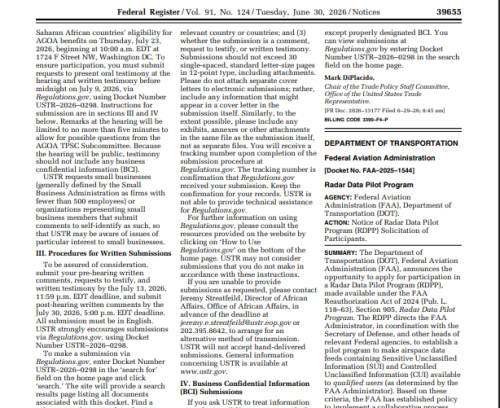
In announcing the review, the USTR said it is requesting written comments and will convene a public hearing on July 23 to receive testimony on whether beneficiary countries continue meeting AGOA’s statutory requirements. Written comments and requests to testify must be submitted by July 13, while post-hearing submissions will close on July 30, 2026.
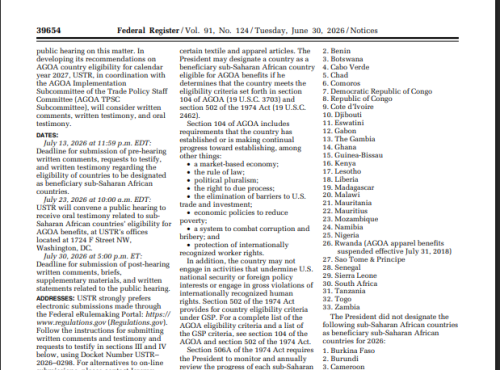
Although Kenya remains among the 33 Sub-Saharan African countries currently designated as AGOA beneficiaries, the Federal Register notice makes clear that continued eligibility is far from automatic.
“The President may designate a country as a beneficiary if he determines that the country meets the eligibility criteria. Participating countries must demonstrate they have established or are making continual progress toward key governance and economic reforms,” the notice reads.
Those benchmarks extend well beyond trade. According to the official notice, countries seeking to retain AGOA benefits must continue demonstrating progress toward establishing a market-based economy, the rule of law, political pluralism, the right to due process, and a system to combat corruption and bribery.
They are also expected to eliminate barriers to US trade and investment, implement policies that reduce poverty and protect internationally recognised worker rights.
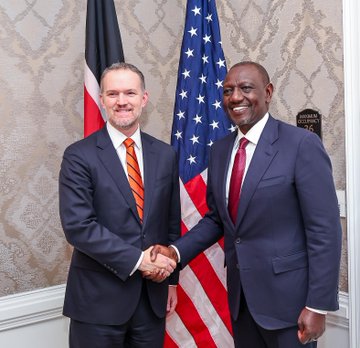
met with United States Trade Representative Ambassador Jamieson Greer for the AGOA extension deal on Friday, December 5, 2025. PHOTO/@MusaliaMudavadi/X
“Beneficiary countries may not engage in activities that undermine U.S. national security or foreign policy interests or engage in gross violations of internationally recognised human rights,” the review states.
The language places renewed attention on governance, transparency and human rights at a time when these issues have increasingly shaped Washington’s trade relationships with African partners.
The USTR also underscores the consequences of failing the annual assessment.
“If the President determines that a beneficiary sub-Saharan African country is not meeting the eligibility requirements, the President must terminate the designation,” the notice says.
“Alternatively, the President may withdraw, suspend, or limit the application of duty-free treatment with respect to specific articles if doing so would better promote compliance with AGOA’s requirements.”
AGOA’s balancing test
The latest review comes as AGOA itself approaches a critical crossroads. The programme, first enacted in 2000 to expand trade and investment between the United States and eligible African countries, is currently scheduled to expire at the end of 2026 unless renewed by Congress. The USTR notes that the current review is intended to determine eligibility if reauthorised for the 2027 calendar year.
Kenya’s inclusion among the current beneficiaries offers reassurance to exporters for now, but the review process means Nairobi’s performance on governance and economic reforms will again be scrutinised alongside that of its regional peers.
The notice lists Kenya among the 33 countries currently eligible for AGOA benefits while identifying 16 Sub-Saharan African countries that were not designated beneficiaries for 2026, including Uganda, Ethiopia, Zimbabwe, Somalia, Sudan, South Sudan, Burkina Faso, Burundi, Cameroon, Mali and Niger, among others.
The USTR says recommendations on country eligibility will be developed after considering written submissions, oral testimony and comments received during the review process.
For the Ruto administration, the review represents more than a procedural exercise. It is an important assessment of Kenya’s continued compliance with the governance, economic and labour standards that underpin one of its most valuable trade relationships.
With exporters, manufacturers and investors closely watching developments in Washington, the outcome of the 2027 eligibility review will be closely followed as the future of AGOA itself hangs in the balance.