Ruto urges Africa to harness domestic resources, reduce reliance on foreign loans
By Kenneth Mwenda, September 16, 2025President William Ruto has urged African nations to mobilise domestic resources instead of relying heavily on foreign lenders.
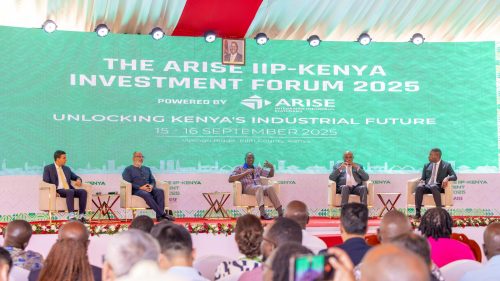
Speaking during the Arise Integrated Industrial Platforms, Kenya Investment Forum 2025 at Vipingo Ridge, Kilifi County, on Tuesday, September 16, 2025, Ruto highlighted Kenya’s growing pension savings and locally funded housing programme as examples of how nations can build investment capacity.
“Because what they’re saying is music to my ears. It’s what I keep, you know, saying. Look at what the professor has said about “How do we mobilise domestic resources?” Ruto said.
He pointed to AfriExim Bank as an example of a local institution that understands African markets better.
“They ask us fewer questions because they understand us. We get our own money. We put it in some institutions out there,” the president said.
“When you want to borrow that money from them, they tell you, you are a risky borrower. This is your money. It is okay for them to keep it, but it’s not okay for them to lend it to you. That tells you we must have some local solutions.”
Ruto said Kenya has changed its approach to savings, noting that the National Social Security Fund, previously among the smallest in the region, has doubled in size over the last two years.
“We will triple it by 2027. We’ll have a trillion shillings in that fund. That is how we are going to create a pool of money which we can use for our own investment.
“Investment is a function of savings. If you have not saved anything, you have nothing to invest. So we must start with savings,” he said.
Local savings drive growth
Ruto also praised Kenyans for embracing a culture of savings.
“They have finally agreed that savings is a way for us to go. We must build our own capacity to invest. And our own capacity to invest is built around how much savings we can put together.
“The call to action on that agenda is we need to do more around mobilising domestic resources, domestic resources for saving, and domestic resources for investment.”
Ruto highlighted the success of Kenya’s housing programme as proof of local mobilisation.
“We have mobilised resources, local resources. We didn’t borrow from anybody. We are building 170,000 housing units, 400 markets, and another 72,000 hostel units in Kenya.
“All contracts signed are worth Ksh600 billion, or $4 billion of Kenyan money, which we have mobilised locally. Even as we look for solutions from elsewhere, we must know that there are solutions near us here. We’ve mobilised about Ksh300 billion shillings to deploy our health programmes. Again, local money, local solutions. We’ve rolled that out,” he said.
Rising debt, stable economy
His remarks come amid concerns over Kenya’s rising debt. Kiharu MP Ndindi Nyoro recently warned that the country borrows Ksh3.4 billion every day, or about Ksh140 million per hour, bringing total debt to over Ksh12.1 trillion.
Nyoro noted that Kenya has taken on more than Ksh3.5 trillion in new loans in the last three years, surpassing the Ksh1.2 trillion borrowed during former President Mwai Kibaki’s entire decade in office.
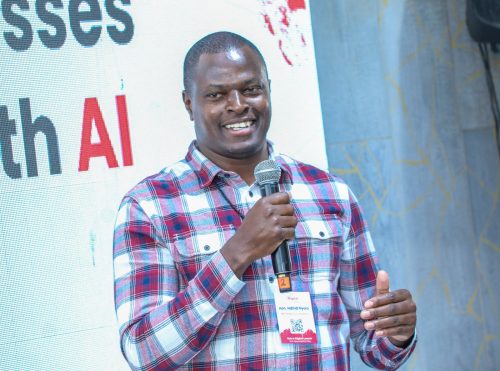
Despite these warnings, Ruto maintains that Kenya’s economy is stable. Nyoro points to disciplined fiscal management, rising domestic savings, and strategic local investment as key factors preventing a debt crisis.
He also highlighted that several development projects, including the Nairobi–Nakuru highway and Talanta Stadium, are financed through local resources or public–private partnerships, rather than increasing official debt.
Ruto, however, defended his administration’s economic record, insisting Kenya has avoided a debt crisis and strengthened its economy. He credited disciplined planning for stabilising the shilling, growing pension funds, and implementing locally funded projects.