Ruto signs Finance Bill 2026 into law
By Kenneth Mwenda, June 23, 2026President William Ruto has signed the Finance Bill 2026 into law at State House in Nairobi, supporting revenue measures and completing the final step in the approval of the Ksh4.8 trillion national budget for the 2026/27 financial year. Following the assent, the Finance Bill 2026 has now effectively become the Finance Act 2026.
The signing of the Finance Bill 2026 was witnessed by Deputy President Kithure Kindiki, Prime Cabinet Secretary Musalia Mudavadi, Speaker of the National Assembly Moses Masika Wetang’ula, leaders of the Majority and Minority sides in the National Assembly, Senator Oburu Odinga, various cabinet secretaries, Chairperson of the Budget Committee, Majority and Minority Whips, among others.
The Clerk of the National Assembly said the Finance Bill 2026 was introduced in line with the Public Finance Management Act and tabled by the National Treasury before the House recess to allow public participation.
He noted that the Finance and National Planning Committee held public hearings in 13 counties and received more than 100,000 memoranda from individuals, businesses and organisations.
He added that the Bill underwent extensive scrutiny during committee stage, with its clauses reduced from 56 to 54 following amendments.
“The Committee also undertook extensive public participation and stakeholder engagement, receiving over 100,000 written memoranda and holding hearings across 13 counties before finalising its report,” the Clerk said.
The Clerk further clarified that the Bill does not introduce a mobile money tax and contains no amendments to land laws, dismissing claims that had circulated during public debate.
President William Ruto, however, interjected during the briefing and referenced concerns raised earlier in parliamentary debates after an MP questioned the existence of a supposed “Clause 159” in the Bill, with officials clarifying that no such provision exists in the Finance Bill 2026 and saying the reference likely related to a different piece of legislation.
The signing on Tuesday, June 23, 2026, gives the Treasury legal authority to collect revenue and implement spending plans across government ministries, counties and agencies from July 1, 2026.
The Finance Bill 2026 sets out tax measures and revenue reforms intended to fund salaries, development projects, debt servicing and key public services.
The National Assembly passed the Finance Bill 2026 on June 18, 2026, after a heated debate that split lawmakers and drew public attention. A total of 122 MPs voted in favour, 40 opposed it, while 187 abstained during the Third Reading. The vote followed weeks of political tension inside Parliament and criticism from opposition leaders and civil society groups.
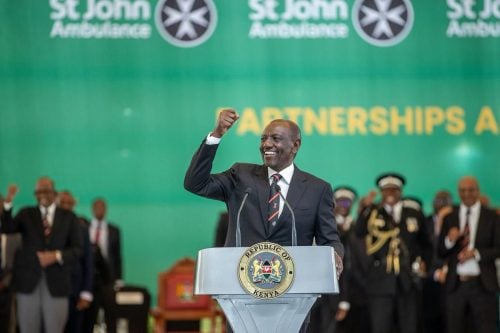
Speaking earlier on Sunday, June 21, 2026, at the 95th St John Ambulance Annual Parade and Inspection at State House, Nairobi, William Ruto confirmed he would sign the Finance Bill 2026 on Tuesday, June 23, 2026, and defended its role in financing government programmes.
“It is the reason why in the budget and the Finance Bill that I’m going to sign on Tuesday, we have enhanced the resources to make sure that we cover every aspect of the commitments we have made to the people of Kenya,” Ruto said.
At the signing ceremony, Ruto said the law would allow the government to deliver its economic agenda without delays caused by funding gaps. He added that the Bill supports the implementation of the national budget and strengthens fiscal planning for the coming financial year.
The President also praised Members of Parliament for approving the legislation despite public pressure. Speaking in Nandi on June 19, he said lawmakers had acted in the national interest.
“Nashukuru Bunge jana walipitisha Finance Bill na kutoruhusu watu wa porojo, fitina na propaganda. History will record that when a time was required to stand for country, you were there,” he said.
Bill sparks policy debate
The Finance Bill 2026 introduces amendments to tax laws and revenue collection measures intended to raise funds for government operations. It also aligns tax policy with the approved budget framework and updates various levies affecting goods and services.
Government officials have defended the Finance Bill 2026, arguing that it supports critical sectors such as health, education, infrastructure and security. They say the reforms will improve revenue collection and help stabilise public finances at a time of rising expenditure demands.
However, the Bill has faced criticism from opposition leaders and some county officials. Siaya Governor James Orengo urged the President not to assent to the legislation, arguing that Parliament passed it without full participation from all MPs. He said such an important law required broader consensus and deeper scrutiny.
Opposition politicians also raised concerns that parts of the Bill could increase the cost of living. They pointed to new taxes and levies affecting fuel, imports and selected consumer goods. Critics further questioned a Ksh101 billion allocation they described as lacking clarity.
Despite the criticism, the government maintained that the Finance Bill 2026 reflects necessary fiscal reforms and responds to economic realities facing the country.
With the signing now complete, the Finance Bill 2026 becomes law, paving the way for full implementation of the 2026/27 budget. Attention now shifts to how the Treasury will roll out spending and whether any legal challenges will follow in the coming weeks.