Ruto, Atwoli leads Labour Day celebrations in Vihiga
By Emmanuel Rono, May 1, 2026President William Ruto has arrived for the Labour Day celebrations held at Chavakali High School in Vihiga County.
Ruto joined Prime Cabinet Secretary Musalia Mudavadi and Central Organisation of Trade Unions (COTU) Secretary General Francis Atwoli in marking this year’s celebrations.
Chavakali boys have been filled with Kenyan workers from different sectors, reflecting a diverse mix of professions and industries.

Kenyans are marking the 61st Labour Day, observed annually and providing an opportunity to recognise the contribution of workers across all sectors of the economy.
Labour Day celebration
Labour Day, marked annually on May 1, honours the contribution of workers across all sectors and recognises the enduring role of the labour movement in shaping economies.

The occasion also shines a spotlight on the gains made by trade unions while underscoring the ongoing push for fair wages, dignified working conditions, and stronger workplace protections.
State of job opportunities in Kenya
The most recent Kenya National Bureau of Statistics (KNBS) Economic Survey shows a total of 882,100 new jobs were created in 2025. However, over 716,800 of these (more than 80%) were in informal employment.
This lifted informal employment to some 18.1 million people, while formal wage employment only increased slightly to some 3.3 million. These figures suggest that the economy is creating jobs, but mostly of poor quality and little security.
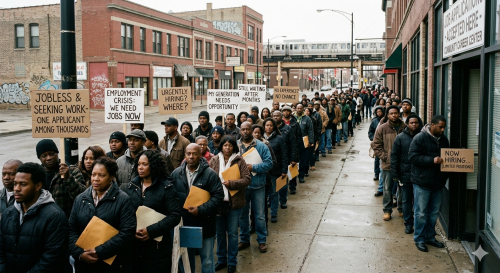
The official unemployment rate (commonly said to be 5 per cent) seems to indicate relative labour market stability. But this rate is influenced by the statistical methodology adopted by KNBS, in which any activity that generates income is classified as employment.
This means a casual worker, street vendor or gig economy worker with an unstable source of income is considered employed on par with a formal worker.