Relief for Kenya as US Supreme Court strikes down Trump’s 10% global tariff
By BBC, February 20, 2026Donald Trump had been warning for months that a Supreme Court decision like this would be catastrophic.
If the court curtailed his ability to impose these tariffs, he had said, it would be an “economic and national security disaster”.
A six-justice majority of the Supreme Court, in ruling against the president on Friday, February 20, 2026, didn’t care much about his concerns.
Congress, not the president, has the power to impose tariffs, the justices ruled. And nothing in the law that the president based his tariffs on, the Emergency Economic Powers Act of 1977, delegated such sweeping powers to Trump.

The court’s decision represents a rare check on this president’s broad use of executive authority.
The majority found that the Constitution “very clearly” gives Congress the power to impose taxes, which include tariffs. “The Framers did not vest any part of the taxing power in the Executive Branch,” Chief Justice John Roberts wrote.
“The tariffs at issue here may or may not be wise policy. But as a matter of text, history, and precedent, they are clearly lawful,” Justice Brett Kavanaugh wrote in the dissent.
A majority of the justices over the past year have shown a willingness to allow Trump to press ahead with his agenda, particularly on immigration and reshaping the federal government, even as legal challenges work their way through the court system.
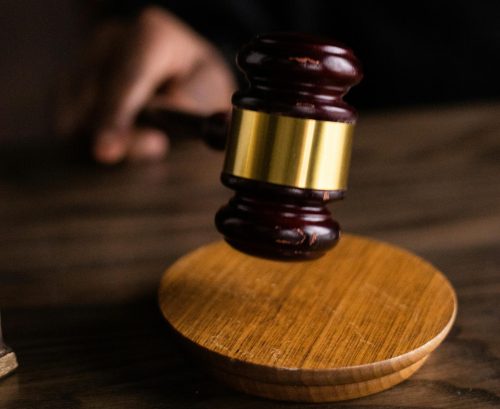
This case, which was fast-tracked through the court system as an emergency, slams the door on one such expansive use of presidential authority.
With several other major cases involving controversial uses of executive power, such as efforts to end birthright citizenship and to dismiss a Federal Reserve governor based on alleged improprieties, this may not be Trump’s only setback in the coming months.
At the very least, this decision weakens Trump’s hand when trying to force other nations to make concessions to the US and tarnishes his veneer of invincibility.
Weakness begets weakness, and America’s trading partners may be emboldened to take a tougher line with the US now that the president’s tariff powers have been curtailed.
It also opens up the possibility that the Trump administration may have to give back much of the tariff revenue it collected over the past year.
While the justices left this thorny issue to be decided by a lower court, Brett Kavanaugh in his dissent, warned that the process is likely to be a “mess”.