Advertisement
Queries as KRA continues collecting Nairobi revenue
Monday 18th December, 2023 07:50 AM|
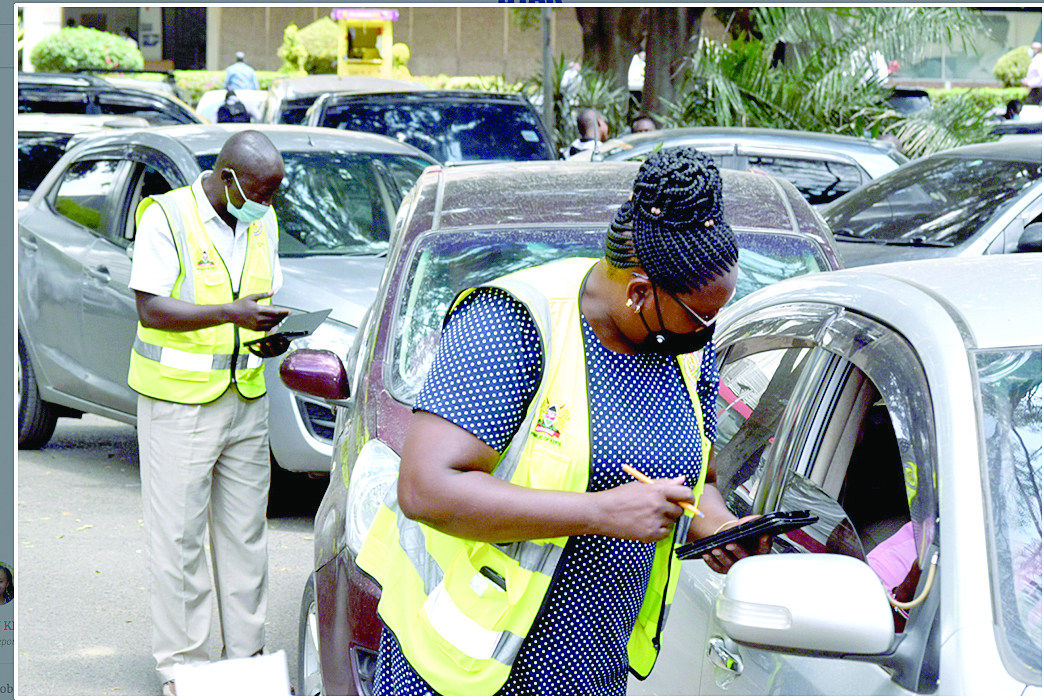
Confusion surrounding revenue collection in Nairobi County has continued to deepen after it emerged that Kenya Revenue Authority (KRA) is still in charge of taxes despite the expiry of the Deed of Transfer of Nairobi Metropolitan Service (NMS).
Submissions of an ad-hoc committee investigating the matter at City-Hall indicate that the tax authority still controls two revenue collection accounts and one pay-bill account opened in 2020.
These accounts are held in the Co-operative Bank and Equity Bank in the name of the Nairobi City County Government.
KRA Chief Manager Finance, Hannington Ogare, said City Hall revenue is collected into two bank accounts opened by the KRA.
The bank accounts are also integrated with the Nairobi Revenue System (NRS), over which the county government says it has no control and is controlled by a Benson Njoroge.
Njoroge does not work for the county or national government.
The taxman said the revenue collected in the two bank accounts is later transferred to the County Revenue Fund (CRF).
During the committee hearing, Anastasia Githuba, who serves as the Deputy Commissioner for Revenue at the KRA, said she and a nine-member team from the Revenue Authority were deployed to the City Hall by the KRA to assist in the transition process.
Transition process
“After the expiry of the Deed of Transfer, I was redeployed back to KRA where I stayed for a few months until I got a request from the county governor to come and help with the transition process,” she told the committee.
Committee chairman Peter Imwatok asked CEC Finance Charles Kerich why he had allowed KRA to be in charge of revenue collection without following the law by making a new agreement.
In response, Kerich said that only a handful of KRA officers had been deployed by the governor to help with the transition process.
Collecting revenue
“The governor requested a small team to stay behind for transition purposes because when the KRA was collecting revenue, they were in charge and had all the records. It was felt that if he left, he would leave a lot of issues that were not handled properly, so the decision was taken to retain him,” he said.
However, he did not respond to whether there was any new formal agreement for KRA officers to continue providing the service, apart from a letter of request from Nairobi Governor Johnson Sakaja.
The Committee also heard that the NRS currently used by the development unit is housed in the Ministry of ICT at the national government level.
However, they do not know where the system’s servers are located or who provides administrative access.
A total of nine KRA officials handling the revenue system under the transferred entity also report to Kerich.
Githuba claimed that nine KRA officials are currently working from a rented office at the Kenyatta International Convention Centre (KICC), paid for by the county government through the Finance Department.
However, the county’s Chief Finance Officer Asha Abdi refuted this claim and insisted that the county has never given any money to KICC.
Highlighting some notable achievements during the period, the KRA said the county government revenue increased from Sh8.49 billion in 2019/2020 to Sh9.76 billion in 2020/2021.
Revenue growth during the same period was driven 54 per cent by land rates, 35 per cent by plans and inspections (building permits) and 78 per cent by markets.
In its presentation to the committee, KRA also said some of the key challenges included unreliable master data on county revenue sources and customer information, legacy and multiple revenue collection systems that are not integrated, and a lack of data to support set revenue targets.
Others include a weak and outdated legal framework, lack of performance management and accountability framework for revenue staff deployed in KRAs, and lack of adequate ICT infrastructure and connectivity.
Author
Alvin.Mwangi
View all posts by Alvin.MwangiLatest News







Advertisement
More on News