Advertisement
Police oppose Bill seeking to regulate demos, gatherings
Wednesday 19th February, 2025 07:00 AM|
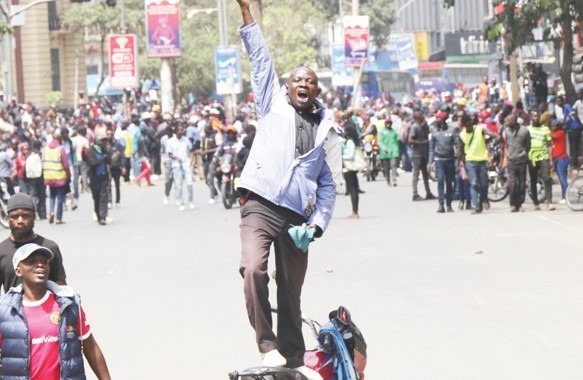
The National Police Service (NPS) and several human rights lobby groups have called for the immediate withdrawal of the Assembly and Demonstration Bill 2024 which they termed as retrogressive and unconstitutional.
Several human rights organisations, civil society groups and police watchdog bodies described the proposed bill as draconian and a major threat to democratic gains made.
The calls came on the day the police proposed changes to the law to deal with noise pollution whenever Kenyans stage protests.
Peter Thuku Superintendant of Police and Director Legal National Police Service headquarters said that the changes should be incorporated in the Public Order Act currently under review in order to ensure that demonstrations are done in a peaceful and quiet manner to avoid causing disturbance to Kenyans.
You Might Also Like
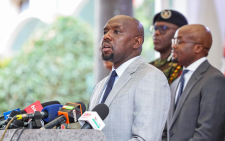

NPSC Director Legal James Nduna said that the Constitution gives Kenyans the right to demonstrate but this should be done in a moderate manner.
He said: “We must have a clear provision of how such noise can be regulated so that it is not much like in the US where we have demonstrations but there is very little noise.”
He added: “There must be a way of separating noise from demonstration. We cannot have a demonstration where they have hired a DJ entertaining people in the middle of town.”
NPS Training Director Wycliffe Opiyo echoed the sentiments of NPSC saying the current Public Order Cct does not talk about noise pollution as is and thus would be necessary to have it in law to ensure that this is regulated.
Their sentiments came on the day NPSC, NPS and Independent Policing Oversight Authority (Ipoa) said there are changes already being done in the Public Order Act under the supervision of the Attorney General and thus there was no need for the bill as this would lead to duplication.
The Bill, sponsored by Mbeere North MP Geoffrey Ruku, seeks to provide a legal framework for the regulation of assemblies and demonstrations as outlined in Article 37 of the Constitution which provides for the right of any person to assembly, demonstration, picketing and petition.
Ensuring clarity
NPSC said that the Public Order Act already offers a comprehensive and well-established legal framework for the regulation of public gatherings and demonstrations within the broader context of maintaining public order.
Said Nduna: “The commission believes that amending the Public Order Act to align with international standards is the most efficient and effective way to address the current concerns, rather than creating a new and separate Assembly and Demonstration Bill.
“Any amendments should be aimed at ensuring clarity, protecting the rights of individuals, protection of police officers and improving accountability in public order management without introducing unnecessary complexity or duplication of existing laws.
Ipoa Chief Executive Elema Halake said that the Bill presents a significant step backwards in the protection of fundamental rights, particularly the right to assemble, demonstrate, picket, and petition as enshrined under Article 37 of the Constitution.
By introducing onerous restrictions, such as the requirement for pre-approval by regulating officers, the imposition of conditions on assemblies and the potential for punitive liability on conveners, IPOA said that the Bill seeks to unjustifiably curtail the exercise of these rights.
He said: “The proposed provisions threaten to infringe upon the very essence of public participation and civic engagement by subjecting it to excessive state control. It is imperative that any legislative framework enacted in this area be progressive and purposive, fostering the exercise and enjoyment of constitutional rights rather than undermining them.”
Proposed amendments
NPS, although opposed to the bill, proposed various amendments which they said should be adopted before the bill is passed.
Among the amendments it is proposing includes, retention of public gathering to mean a gathering of ten persons as opposed to the 100 in the bill as well as the insertion of a new section to provide for the offences related conduct of demonstration and obstruction of certain classes of vehicles.
Kenya National Commission on Human Rights (KNCHR) in its advisory presented by commissioner Marion Mutugi raised concerns with the bill saying it only protects planned and organized assemblies and penalizes unplanned and spontaneous assemblies, primarily through the obligatory notification process.
She also cited Cause 12 (1) of the Bill which severely restricts freedom of assembly in general.
She said: “Organisers cannot be held responsible for the actions of each and every person attending a given meeting. In the event that rogue individuals with bad intent use such meetings as an opportunity to damage property, loot businesses and cause chaos, it is the responsibility of the Police to maintain law and order.”
Further she raised concerns over Clause 7 of the Bill that obligates an organizer of an assembly or demonstration to assist the police in the maintenance of peace and order at the assembly or demonstration arguing that the State bears the primary duty to facilitate and maintain peace and order at an assembly or demonstration.
Author
Mercy Mwai
View all posts by Mercy MwaiLatest News




Advertisement
More on News