Nurses demand apology from MP Farah Maalim over remarks, issues 72-hour ultimatum
By Viola Kosome, April 12, 2026Leaders of Kenya’s nursing unions have issued a 72-hour ultimatum to Dadaab Member of Parliament (MP) Farah Maalim, demanding an unconditional apology over remarks they described as demeaning, reckless and ill-informed.
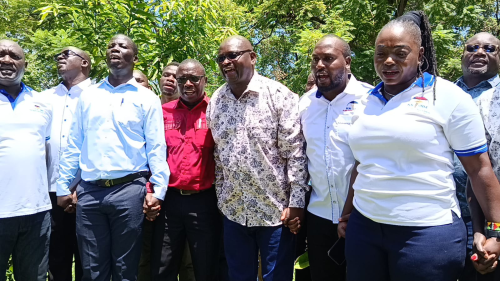
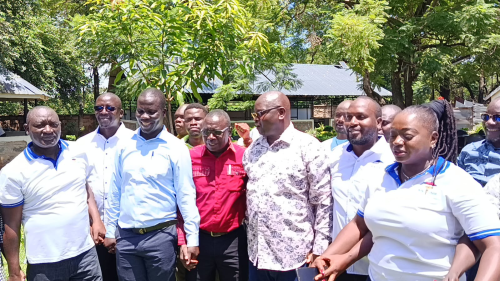
Speaking during a joint press briefing in Kisumu on Sunday, April 12, 2026, Kenya Progressive Nurses Association (KPNA) President Michael Nyongesa said the nursing fraternity was responding to statements made by the MP on the floor of Parliament and in a viral video dated April 9, 2026.
Nyongesa, flanked by officials from the National Nurses Association of Kenya (NNAK) and the Kenya National Union of Nurses (KNUN), accused Maalim of attacking the nursing profession by suggesting that nurses should be barred from holding senior management positions in hospitals.
“The claims that nurses are not competent to hold managerial roles and that their leadership threatens other professionals are not only insulting but a direct attack on the integrity of Kenya’s healthcare system,” Nyongesa said.
He emphasised that nursing is an autonomous and highly specialised profession, dismissing assertions that nurses are subordinate to doctors.
“The modern healthcare system is collaborative, not hierarchical. No profession exists to serve the ego of another,” he added.
Nyongesa further noted that the eligibility of nurses to hold leadership positions is backed by law, citing past High Court rulings that affirmed their right to occupy administrative and managerial roles in the health sector.
He also dismissed the statement that nurses lack advanced education, stating that many Kenyan nurses hold postgraduate qualifications, including master’s degrees and PhDs, and are experts in health management, clinical research, and advanced practice.
NNAK President Collins Otieno warned that the nursing fraternity would not take the remarks lightly, stressing the critical role nurses play in patient care across the country.
“The claims that nurses are not competent to hold managerial roles and that their leadership threatens other professionals are not only insulting but a direct attack on the integrity of Kenya’s healthcare system,” Nyongesa said.
He emphasised that nursing is an autonomous and highly specialised profession, dismissing assertions that nurses are subordinate to doctors.
“The modern healthcare system is collaborative, not hierarchical. No profession exists to serve the ego of another,” he added.
Nyongesa further noted that the eligibility of nurses to hold leadership positions is backed by law, citing past High Court rulings that affirmed their right to occupy administrative and managerial roles in the health sector.
He also dismissed the statement that nurses lack advanced education, stating that many Kenyan nurses hold postgraduate qualifications, including master’s degrees and PhDs, and are experts in health management, clinical research, and advanced practice.
NNAK President Collins Otieno warned that the nursing fraternity would not take the remarks lightly, stressing the critical role nurses play in patient care across the country.
He added that the protests would also highlight broader issues affecting the sector, including staff shortages, delayed salaries, and funding challenges in public hospitals.
Panyako specifically raised concerns about conditions at Kenyatta National Hospital, warning of a looming strike by nurses over unpaid salaries, delayed pensions, and prolonged casual employment.
“Nurses have reached a breaking point. Some have worked for years without permanent terms, and others are not receiving their rightful benefits,” he said.
The union leaders maintained that even if an apology is issued, they will still petition Parliament to take action against the MP for what they termed as abuse of parliamentary privilege.
They warned that failure to address their grievances would trigger nationwide protests aimed at defending the dignity and integrity of the nursing profession.
Maalim’s criticisms
Farah Maalim sparked the storm on March 31, 2026, when he criticised the management structure in county health systems, arguing that highly trained doctors are being frustrated by administrators with less medical training.
He had cited the case of a paediatrician who reportedly topped his class but risks missing a fellowship opportunity at Kenyatta National Hospital after his county government allegedly delayed releasing him.
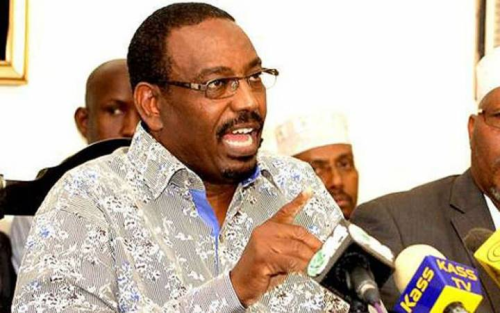
According to the legislator, the doctor needed approval from county health officials before proceeding with the fellowship, but the process had stalled following disagreements with the county’s Chief Officer for Health and the County Executive Committee (CEC) member in charge of health.
“A brilliant doctor who qualified at the top of his class as a paediatrician was supposed to go back for a fellowship, but because he did not talk very well to the chief officer, who is a nurse, and the CEC, who is not a medical person, they said they are going to discipline him.”
The legislator used the case to question the management of healthcare under devolution, arguing that some highly trained specialists are being supervised by administrators with lower academic qualifications.
“You will find a governor appoints a relative who becomes a CEO or a CEC, probably a diploma holder in nursing, and that person is supposed to supervise PhD holders in that field,” he said.
Maalim called for a national inquiry into the state of the health sector, saying the current system was frustrating skilled medical professionals.