Nepal appoints its first female PM after historic week of deadly protests
By The Guardian, September 13, 2025Nepal has sworn in its first female prime minister after a historic week in which widespread youth protests forced the resignation of her predecessor and the dissolution of parliament.
Sushila Karki, the former chief justice of Nepal, took the oath of office to lead an interim government late on Friday, after several tense days of negotiation.
Karki, a widely respected figure known for her hardline stand against corruption, had been nominated by a group that said they represented the self-described Gen Z protesters who brought down the government earlier this week.
Tens of thousands of protesters, the majority of them below the age of 30, took to the streets on Monday to voice their opposition to a clumsily enforced ban on social media sites as well as bigger issues of corruption and nepotism among Nepal’s political elite.
Deadly force
Police responded with deadly force, including documented use of live ammunition. Twenty-one civilians taking part in the demonstrations were killed on what became the bloodiest day of protest in Nepal’s history.
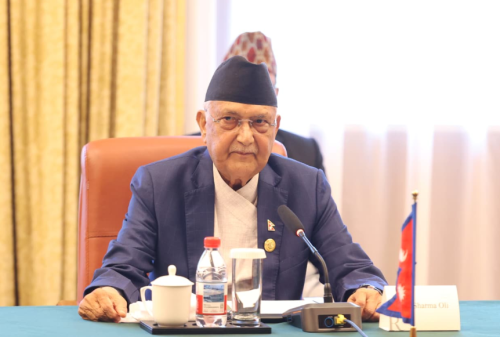
By Tuesday, rage at the government had reached a fever pitch, and the country’s parliament buildings, as well as the homes of the prime minister, KP Sharma Oli, the president, and other ministers, were all set on fire, and the capital, Kathmandu, resembled a burned-out war zone. Oli, who had been airlifted out by the military, announced his resignation by Tuesday afternoon.
The resignation of the 73-year-old, who was serving his fourth term as prime minister and was seen by many as authoritarian, corrupt, and out of touch, was widely celebrated by the Gen Z protesters out on the streets. However, the speed at which the protests had led to the toppling of the government also presented issues. They had not been part of a coherent, organised group and did not have a leader or group of representatives.
Gen Z discussions
After the president and the army chief invited the Gen Z protesters to be part of the discussions on who should form the next government, a team of representatives was chosen. By Wednesday, they had put forward Karki as their choice to lead an interim government, and insisted that the current parliament should be dissolved.
Karki had been appointed Nepal’s first female chief justice in 2016 and became known for delivering several high-profile judgments against ministers and senior police in corruption cases, coming into the crosshairs of the major political parties as a result. After retiring, she established herself as a prominent figure in civil society, speaking out on issues of corruption and political malpractices in Nepal.
Despite some divisions, by Wednesday, the Gen Z protesters rallied around Karki, who had been outspoken against the lethal force used against protesters, describing it as a “massacre”. She was also given the backing of the popular young mayor of Kathmandu, rapper-turned-politician Balendra Shah, who is widely revered among the younger generation.
However, the country appeared to be heading towards deadlock after leaders of some of Nepal’s most established political parties initially refused to agree to parliament being dissolved. But on Friday night, after the army chief Ashok Raj Sigdel warned that the military would be forced to declare a state of emergency if no political solution was found, it was agreed by party leaders to dissolve the parliament, and for Karki to be appointed prime minister until fresh elections are called.
Interim govt
The exact nature of the interim government that will govern Nepal under Karki has yet to be made clear, though it was announced she would be leading a “council of ministers”.
Many in the Gen Z movement are pushing for her to immediately open corruption allegations into former Prime Minister Oli and his ministers and hold an inquiry into the protest deaths that took place.
Dheeraj Joshi, 25, a Gen-Z leader participating in discussions with the army and the president, said that he believed that Karki’s appointment would see the country “moving from a phase of destruction to a phase of construction”.
“That doesn’t mean everything will immediately be fine once she takes office,” he said. “Initially, there will be a process to identify who weakened the country the most, and then set priorities accordingly. Over time, the deeply rooted corruption will be uprooted. Once that process begins, the ground will open up for a better future.”