Advertisement
Museveni warns opposition against violence ahead of Uganda’s election
Wednesday 14th January, 2026 02:15 AM|

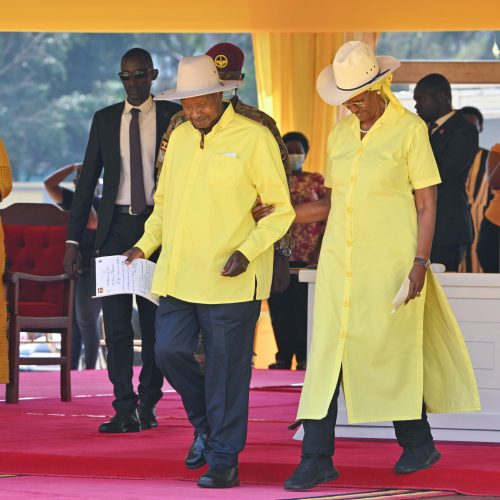
President Yoweri Museveni concluded his nationwide campaign on Tuesday, January 13, 2026, announcing on X that he had held 143 rallies across every district in Uganda. He described the events as celebrations rather than standard political gatherings, highlighting the large turnout of families and the joy displayed at each location.
“I am happy to have completed 143 rallies across all districts of Uganda. These were not just rallies but celebrations. People came joyfully with their families,” Museveni wrote.
He linked the enthusiastic attendance to Uganda’s economic progress.
“Uganda is now ranked among the five fastest-growing economies in the world, and with oil production coming on stream, we shall move even faster. This is clear progress.”
You Might Also Like

Addressing security concerns, Museveni referenced threats of violence from the opposition and urged citizens not to be intimidated.
“I have heard threats of violence from the opposition. I urge Ugandans not to be intimidated. Go out and vote. Anyone who attempts to disrupt our peace will be dealt with firmly. Peace is guaranteed,” he wrote.
The rallies formed part of Museveni’s bid for a seventh term as president in the general election scheduled for Thursday, January 15, 2026. Museveni has led Uganda since 1986 and is contesting under the National Resistance Movement (NRM) banner.
His campaign reached both urban centres, including Kampala, and rural areas, ensuring he connected with voters nationwide.
Uganda imposes internet blackout
Meanwhile, Uganda’s Communications Authority has ordered an internet blackout ahead of the election. The Uganda Communications Commission (UCC) instructed all service providers to suspend internet access from 18:00 local time on Tuesday.
It cited public safety concerns, including the prevention of “online misinformation, disinformation, electoral fraud… as well as preventing [the] incitement of violence.” Voice calls and SMS services are expected to remain operational.
The blackout follows a history of online restrictions during elections. In 2021, the internet was cut for at least a week amid widespread protests that left dozens dead.
The UCC said the suspension was based on recommendations from security agencies, including the army and police, and described it as “a precautionary intervention to ensure peace, protect national stability and prevent the misuse of communication platforms during a sensitive national exercise.”
Thursday’s presidential election will see Museveni, 81, seeking a seventh consecutive term, again facing former pop star Bobi Wine, 43, whose real name is Robert Kyagulanyi, along with six other candidates.
Museveni’s campaign has focused on “Protecting the Gains,” emphasising stability and continuity. Bobi Wine has mobilised voters under the slogan “Protest Vote,” calling for generational change.
The opposition leader criticised the internet suspension, calling those behind the decision “cowards,” and encouraged supporters to use a Bluetooth-based app to communicate, though the UCC warned it could restrict the app.
Author
Kenneth Mwenda
Kenneth Mwenda is a business, sports, and politics digital writer with over seven years of experience in journalism, covering breaking news, feature stories, and in-depth analysis across a range of beats.
For inquiries, he can be reached at [email protected]
View all posts by Kenneth MwendaLatest News


Advertisement
More on News