MoH: Over 650K adolescents have tried tobacco and nicotine products
By Faith Lagat, August 15, 2025Kenya’s success in cutting adult tobacco use from 11.6 per cent in 2014 to 8.5 per cent in 2022 is being overshadowed by a worrying surge in adolescent use.
The Tobacco and Alcohol Drugs Survey (TADSAS) reveals that over 650,000 young people have experimented with tobacco or nicotine products, with flavoured nicotine pouches emerging as a major concern.
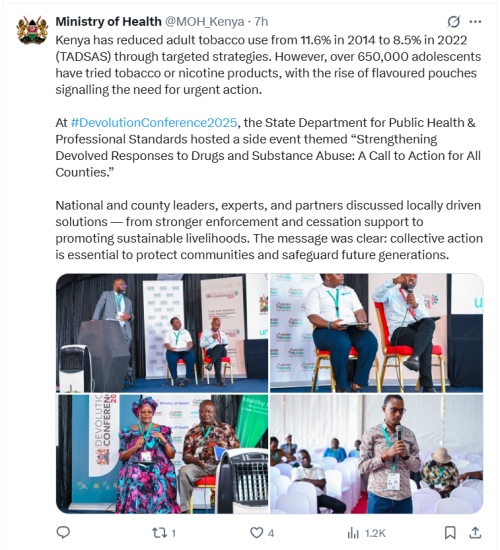
The figures were highlighted at the ongoing #DevolutionConference2025, where the State Department for Public Health & Professional Standards convened a side event under the theme “Strengthening Devolved Responses to Drugs and Substance Abuse: A Call to Action for All Counties.” National and county leaders, experts, and partners discussed targeted interventions, from stricter enforcement and cessation support to sustainable livelihood programmes aimed at prevention.
Health experts warn that the pouches, which can deliver nicotine levels similar to cigarettes, pose significant risks to oral health and adolescent brain development.
The Ministry of Health urged counties to adopt localised strategies, stressing, “Through targeted strategies, we’ve reduced adult tobacco use, but the surge among our youth signals a need for urgent, localised action.”
Focus on inclusive health services
Beyond tobacco control, the ministry used the conference to spotlight broader health challenges. Principal Secretary for Medical Services, Ouma Oluga, speaking at a side event by ATScale, called for mapping all Kenyans in need of assistive technology to ensure no one is left behind.
“Stigma remains a barrier, and current registration figures are lower than the actual need,” he noted, urging counties to invest more in inclusion and dignity for persons with disabilities.
Oluga’s call for innovative funding comes amid a shifting global health financing landscape. He emphasised that sustainable investment in health systems is vital, particularly as donor support declines.
Strengthening healthcare delivery
During a visit to Rachuonyo County Hospital, Oluga assessed infrastructure upgrades, electronic medical record adoption, and improvements under the Social Health Authority (SHA). With 99 per cent of the hospital’s 300–350 daily patients covered under SHA, he stressed the importance of boosting enrolment for sustainable healthcare financing.
In the conference’s closing plenary, Oluga reiterated that universal health coverage remains a top national priority. As Kenya tackles the twin challenges of rising adolescent nicotine use and broader health system demands, the call for counties to take decisive, localised action has never been more urgent.