Advertisement
Meet the miracle babies of August 1998 bomb blast
Monday 07th August, 2023 05:40 AM|
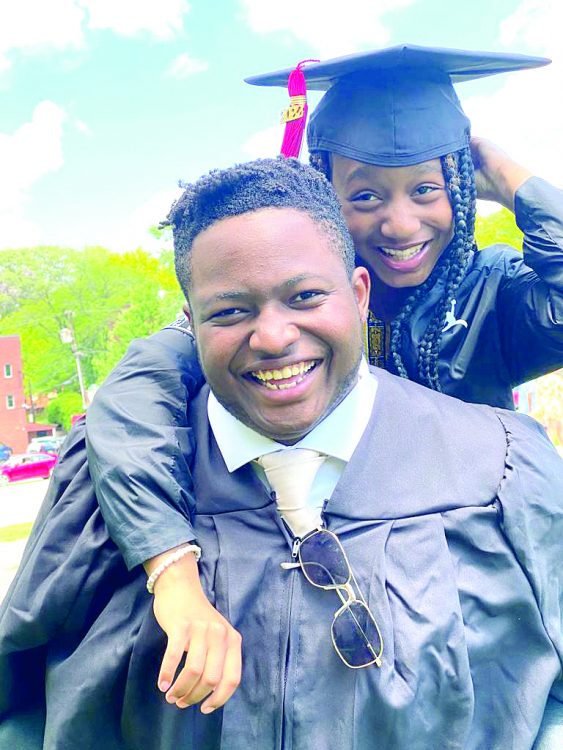
The children born of parents who survived the August 7, 1998, Bomb Blast at the US embassy in Nairobi believe that miracles have played a huge part in their lives since the incident that shocked the world.
The offsprings of the survivors carry names that are symbolic of their parents’ brush with death during the attack by Al Qaeda under the leadership of Osama bin Laden.
Names such as Lucky Baraka Wavae, Emmanuel (biblical for God with us) Mwema and Joy Nana simply translate to ‘miracle’ and the ‘joy’ of surviving and form part of the testaments of the silent survivors who got a second chance at live after surviving the attacks while in their mothers’ wombs.
Most of the young people, who are turning 25 years this year, have completed either high school or college while some are pursuing illustrious careers.
Ahead of the celebrations to mark the August 7, 1998 Bomb Blast today, People Daily spoke with some of youth and their parents.
The harrowing experience notwithstanding, it’s discernible that there is a huge bond between the parents and their children.
“These young people are the silent survivors. The truth is that their stories have never been told. Most of them were in the womb during the attack and were born under the most difficult circumstances,” Caroline Muthoka, the mother to Lucky Wavae, says.
On that day, Muthoka was seven months pregnant and was on the 19th floor of the Cooperative House where she worked as a software engineer.
“How I walked from 19th floor to the ground floor is still something that I have been unable to explain to date. I only heard a huge explosion and my body was filled with glass,” she says.
Muthoka says at the time, her biggest worry was whether her unborn child would survive.
She would later be taken to Nairobi Hospital to deliver. Muthoka says she named her son, who is currently a software engineer at Google, Lucky because he was just fortunate to be alive.
“When I was born, doctors doubted whether I would survive. I was born with conditions and my mom was still having broken glasses lodged in her body so she was still in pain. Listening to my mom and seeing what she had to go through, I just consider myself lucky,” says Wavae.
Trauma
Nancy Mghoi also has a unique story to tell. Mghoi, who was born in September 1998, is now a mother of a three months old child.
Mghoi, a quantity surveyor, considers herself a miracle baby.
“When I think about where I have come from, I just thank God and my mother. My mother stayed in hospital for close to two months getting treatment from the injuries as she waited for me to be born. Mothers are just special,” she reflects.
Though she was not there to bear witness to what had happened, Mghoi describes the experience as so traumatising that she is still afraid of heights and crowded places.
“My mother should be compensated well. She has since retired and she is back in Taita. If it was not for her, I would not be where I am today,” she says.
Emmanuel Mwema describes his mother as the pillar of his life. His attachment to his mother is unmistakable.
“I am the only son in a family of four children. My parents had really waited for us and I believe that’s why they named me Emmanuel (God with us),” he says.
Widow
During the Al Qaeda attack, his mother, Liliam Munyira, was a payroll officer at the Teachers Service Commission (TSC), then based at Cooperative Building House.
“I was saved by a pillar behind my seat. The glass covered wall collapsed and I am only lucky to have survived and given birth to my son,” Munyira, who is the secretary of the 7th August Victims Association.
People Daily also caught up with Safula Mwilu who lost her husband during the blast. She was working as a manager at a local bank adjacent to the American embassy when the terrorists struck.
She narrated how, on the fateful day, her husband had just returned to the office after recovering from a stroke.
Mwilu had accompanied him as he returned to work but she left to go pick his clearance report from the hospital.
Little did she know that that was the last time she would see him alive. She found his body at City mortuary after a search in various hospitals and morgues.
“Most of us widows were not working. Our bread winners have gone. The children stopped going to school as we didn’t have any assistance. We have lived a tough life. That is why we are seeking compensation,” Mwilu said.
At least 213 Kenyans and 12 Americans were killed in the attack by Al Qaeda who were targeting the US embassy.
More than 5,000 people were seriously injured in the blast.
Latest News

Advertisement
More on News