MCK flags surge in fake news, targets rogue online platforms
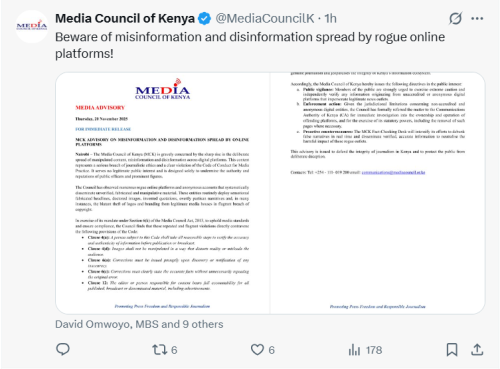
By Faith Lagat, November 20, 2025The Media Council of Kenya (MCK) has raised a red flag over the sharp rise in the deliberate spread of manipulated content, misinformation and disinformation across digital platforms.
MCK has termed it a serious breach of journalistic ethics and a clear violation of the Code of Conduct for Media Practice.
In a strongly worded advisory issued on November 20, 2025, the Council said the content serves no legitimate public interest and is designed solely to undermine the authority and reputations of public officers and prominent figures.
The MCK has observed numerous rogue online platforms and anonymous accounts that systematically disseminate unverified, fabricated and manipulated content.
“The Media Council of Kenya (MCK) is gravely concerned by the sharp rise in the deliberate spread of manipulated content, misinformation and disinformation across digital platforms,” read the MCK statement.
These entities routinely deploy sensational fabricated headlines, doctored images, invented quotations, overtly partisan narratives and, in many instances, the blatant theft of logos and branding from legitimate media houses in flagrant breach of copyright.
Violations of media code
The Council stated that the repeated and flagrant violations directly contravene several provisions of the Code of Conduct for Media Practice. Specifically, the rogue platforms breach Clause 4(a), which requires that a person subject to the Code shall take all reasonable steps to verify the accuracy and authenticity of information before publication or broadcast.
The entities also violate Clause 4(d), which states that images shall not be manipulated in a way that distorts reality or misleads the audience.
Additionally, Clause 6(a) mandates that corrections must be issued promptly upon discovery or notification of any inaccuracy, while Clause 6(c) requires corrections to clearly state the accurate facts without unnecessarily repeating the original error. Clause 12 further holds editors or persons responsible for content fully accountable for all published, broadcast or disseminated material, including advertisements.
Threat to public trust
According to the Council, the systematic nature of these violations poses a profound threat to public trust, erodes the credibility of genuine journalism and jeopardises the integrity of Kenya’s information ecosystem.
The advisory notes that the surge in manipulated content risks creating confusion among audiences, who may struggle to distinguish between legitimate journalism and fabricated material deliberately designed to mislead.
Directives to safeguard the public
In response, the Council has issued three immediate directives in the public interest.
First, members of the public are strongly urged to exercise extreme caution and independently verify any information originating from unaccredited or anonymous digital platforms that impersonate legitimate news outlets.
Second, “Given the jurisdictional limitations concerning non-accredited and anonymous digital entities, the Council has formally referred the matter to the Communications Authority of Kenya (CA) for immediate investigation into the ownership and operation of offending platforms, and for the exercise of its statutory powers, including the removal of such pages where necessary.”
Third, the MCK Fact-Checking Desk will intensify its efforts to debunk false narratives in real time and disseminate verified, accurate information to neutralise the harmful impact of these rogue outlets.
The advisory, issued under Section 6(k) of the Media Council Act, 2013, aims to defend the integrity of journalism in Kenya and protect the public from deliberate deception.