Ledama Olekina raises alarm over priority of transit fuel over Kenya’s strategic reserves
By Ndiritu Wanjiru, April 20, 2026Narok Senator Ledama Olekina has expressed alarm over what he terms ‘mismanagement’ in the petroleum supply chain in the country, saying that unless a radical change is effected in how national reserves are prioritised and run, Kenya is about to witness a repeat of fuel shortages in the country.
Taking it to his social media handles on Monday, April 20, 2026, Olekina has said that those in charge of the Ministry of Energy, in collaboration with players in the Kenya Pipeline Company (KPC) and oil marketers in the region, are giving preference to the transit fuel bound for the neighbouring nations, like Uganda.
He warns that this practice could be undermining Kenya’s ability to build and maintain sufficient strategic fuel reserves.
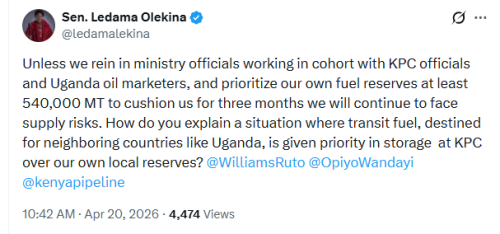
“Unless we rein in ministry officials working in a cohort with KPC officials and Ugandan oil marketers and prioritise our own fuel reserves of at least 540,000 MT to cushion us for three months, we will continue to face supply risks,” Ledama stated.
The senator also says Kenya ought to have a minimum of 540,000 metric tonnes of fuel stored in the country, which is enough to cushion the nation in the case of supply shocks of about three months. Nevertheless, he says that the existing system is exposing the country, and the country is experiencing an undermined domestic supply security due to what he refers to as cohort-based allocation decisions in the supply chain.
Ledama cites foreign attention
Olekina also wonders why transit fuel that is mainly destined for the East African markets seems to be given much storage and logistical attention compared to local consumption demands. He cautions that these agreements, when not checked, would increase the vulnerability of a country that heavily depends on imported refined petroleum products.
”How do you explain a situation where transit fuel, destined for neighbouring countries like Uganda, is given priority in storage at KPC over our own local reserves?” he added.
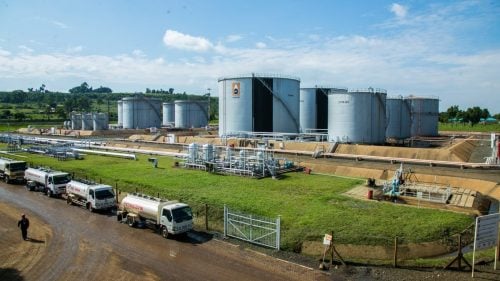
The senator has further demanded increased openness in fuel distribution, stricter control over KPC activities and an explicit change of policy where national energy security is prioritised more than regional transit responsibilities when national reserves are at critical levels.
The comments come at a time when the country is grappling with unstable fuel prices and periodic fuel supply issues that bring back the debate on how Kenya is ready to face energy shocks and how well its strategic petroleum reserve system is working.