KWS targets relocation of 200 animals amid disappearing wildlife corridors
By Faith Lagat, April 25, 2026The Kenya Wildlife Service (KWS) has launched the third phase of a wildlife translocation exercise targeting approximately 200 herbivores from Kedong Ranch to safer habitats.
The announcement was made on April 24, 2026, as part of ongoing conservation interventions in Nakuru County.
The latest phase follows two earlier operations conducted seven and five months ago, during which more than 450 animals were moved.
In the current exercise, KWS relocated over 20 Grant’s gazelles and 10 elands to Solai Sanctuary. The operation involved coordinated field teams using capture and transport methods designed to ensure the safety of the animals during movement.
“As habitats shrink under these pressures, wildlife is pushed into smaller and more fragile spaces where access to food and water is no longer guaranteed. In this third phase, the team aims to relocate approximately 200 herbivores to areas where they have a better chance of survival and can thrive in their natural habitats for posterity,” read part of KWS X post.
The agency indicated that the relocation programme is part of broader efforts to manage wildlife populations in areas experiencing environmental pressure and habitat changes.
Loss of Kedong wildlife corridor
Kedong Ranch, located near Lake Naivasha, previously served as a key wildlife corridor linking Mount Longonot National Park and Hell’s Gate National Park. The corridor enabled free movement of herbivores across feeding and breeding areas.
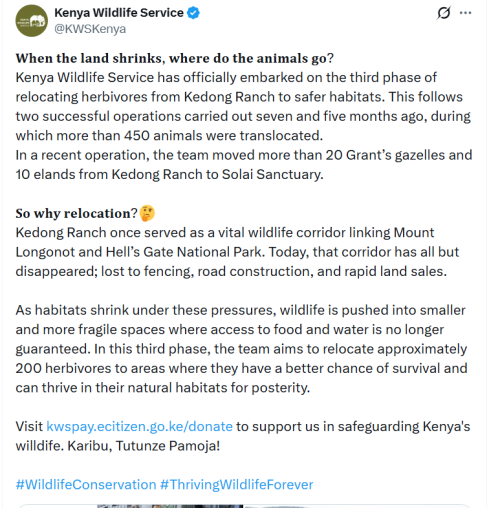
KWS noted that the corridor has been significantly reduced due to land subdivision, fencing, road development, and increased human settlement. These changes have fragmented habitats and limited access to grazing and water resources for wildlife populations.
The reduction of open spaces has confined animals to smaller areas, increasing pressure on available resources and raising the likelihood of human-wildlife interactions.
The translocation exercise is intended to address these constraints by moving animals to areas with more stable ecological conditions.
Conservation measures and related developments
The relocation programme is part of wider conservation measures aimed at preserving wildlife populations in the Rift Valley region. Earlier phases of the exercise included the movement of other species such as zebras and giraffes, reflecting the scale of habitat pressures in the area.
Separately, KWS recently addressed concerns regarding conservation activities in Nairobi National Park. The agency clarified that the relocation of the Nairobi Animal Orphanage is part of a planned upgrade to improve animal welfare standards, reduce congestion, and enhance facilities.
The project complies with the Wildlife Conservation and Management Act 2013 and an approved Environmental Impact Assessment. The orphanage, established in 1964, has supported wildlife rescue and rehabilitation for decades, and its relocation is aligned with international conservation standards.
KWS continues to implement conservation programmes focused on habitat management, species protection, and sustainable ecosystem use as environmental and development pressures increase.