Kenya’s democracy under pressure as fear and crackdowns rise after Gen Zs protests – Study
By Aloys Michael, May 9, 2026Kenya is increasingly confronting a dangerous contradiction.
While the country continues to market itself internationally as one of Africa’s most vibrant democracies, a growing body of evidence suggests civic freedoms are shrinking rapidly at home.
A new international governance assessment paints a troubling picture of a state responding to dissent with intimidation, crackdowns and growing pressure on civil liberties.
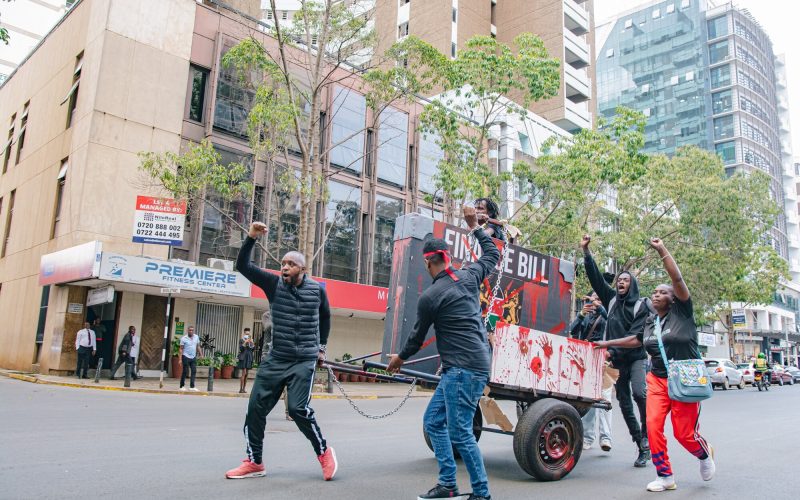
The BTI 2026 Country Report warns that the aftermath of Kenya’s 2024 anti-Finance Bill protests had a profound impact.
“The freedoms of association and expression have been restricted, with heavy-handed responses to protests and numerous reports of threats, abductions and enforced disappearances,” the report reads.
The report notes that the government has denied involvement in those violations.

The warnings come after months of unrest sparked by the controversial Finance Bill 2024, which sought to raise taxes amid growing economic hardship.
Youth-led demonstrations spread across major towns and cities, culminating in the storming of Parliament on June 25, 2024.
But while the protests forced President William Ruto to withdraw the Bill, rights groups say the state’s response exposed deeper authoritarian tendencies.
The BTI report documents accusations of excessive force by police during both the 2023 cost-of-living protests and the 2024 anti-tax demonstrations.

“At the height of the protests on June 25, 2024, the president deployed the military to restore order after a violent breach of Parliament’s precincts,” the report states.
It adds that individuals suspected of organising the protests faced “threats, arbitrary arrests, illegal detention and even enforced disappearances.”
The report specifically references prominent activist Boniface Mwangi, saying he had been “arrested, beaten and released on numerous occasions.”
Human rights organisations have repeatedly accused security agencies of targeting online activists and protest mobilisers.
Police brutality
The report cites findings by the Independent Medico-Legal Unit showing that 63 people were killed during the Gen Z-led protests in 2024.
“It also noted that security agencies employed night raids, forced disappearances and staged ‘shootouts’ to justify killings,” the report says.
Journalists have also faced growing risks.
According to the report, at least 24 journalists were injured during the anti-Finance Bill protests, while others had their equipment destroyed.
Kenya’s ranking on the Reporters Without Borders Press Freedom Index dropped sharply from 69th place in 2022 to 102nd in 2024.
The report also highlights growing scrutiny of social media users.
Although Kenya avoided outright internet shutdowns during the protests, the June 25 internet outage was widely perceived as deliberate.
Government allies have increasingly cited cybercrime laws against critics posting content considered disrespectful to leaders.
Civil society groups say the pattern reflects a broader effort to narrow civic space.
The BTI report notes that organisations accused of supporting the protests faced “heightened scrutiny” and accusations of colluding with foreign actors.
At the same time, the report says Kenya still retains many democratic strengths.
The judiciary continues to act as an important check on executive power, occasionally halting controversial government projects and legislation.
Afrobarometer data cited in the report show strong public support for democracy and constitutional term limits.

Yet analysts warn that the increasing normalisation of abductions, intimidation and violence could erode those democratic gains.
The report argues that Kenya’s institutions remain vulnerable to manipulation by political elites, cartels and informal power networks.
“In practice, the rule of law is threatened by politicians, business leaders and cartel-like structures seeking to corrupt or manipulate systems in their own interests,” it states.
For many young Kenyans, the post-protest environment has created fear but also greater political awareness.
The demonstrations transformed social media into a key battlefield between citizens demanding accountability and a state struggling to maintain control.
The question now facing Kenya is whether the country can preserve democratic freedoms while managing growing political and economic tensions.
If the warnings in the BTI report are ignored, analysts fear the country risks sliding toward a more repressive political era.