Kenyan Catholic bishops warn faithful against banned Society of Saint Pius X
By Wanjira Wachira, July 11, 2026Two Kenyan Catholic archbishops have warned the faithful against joining or participating in activities associated with the Society of Saint Pius X (SSPX), days after the Vatican imposed canonical penalties over the group’s unauthorised consecration of four bishops.
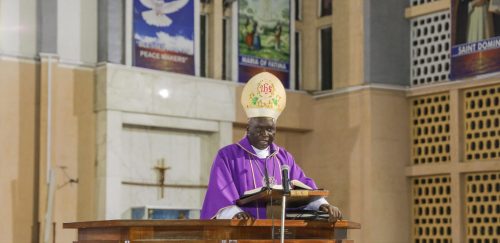
Kisumu Archbishop Maurice Muhatia Makumba and Nairobi Archbishop Philip Anyolo issued separate warnings urging Catholics to remain in full communion with Pope Leo XIV and bishops recognised by the Holy See.
The Vatican’s Dicastery for the Doctrine of the Faith said the episcopal consecrations conducted in Écône, Switzerland, on Wednesday, July 1, 2026, without papal approval constituted an “act of a schismatic nature”.
In remarks circulating online on Saturday, July 11, 2026, Archbishop Muhatia cautioned Catholics against assuming that the SSPX was in full communion with the Catholic Church because it promotes traditional forms of worship.
“The Society of Pius the Tenth says it wants to preserve the traditional Catholic faith, which is a good thing. But they have one big problem. They do not want to listen to the Holy Father,” Muhatia said.
The archbishop, who also chairs the Kenya Conference of Catholic Bishops, maintained that obedience to the Pope remained central to Catholic identity.
“When we say we are Catholics, you cannot be a Catholic and disobey the Pope. To be a Catholic necessarily means you must be obedient to what the Holy Father teaches,” he said.
Muhatia said he was aware that some Kenyan Catholics had been drawn to the SSPX believing that joining its congregations was the same as remaining in full communion with the Catholic Church.
“I am saying this because I am aware one or two of our Christian faithful have been misguided to join this group, thinking it is the same as being Catholic. It is not the same,” he said.
He also addressed concerns surrounding the celebration of Mass in Latin, saying the Catholic Church had not prohibited the language.
According to Muhatia, the Eucharist can be celebrated in Latin and in approved local languages following the liturgical reforms associated with the Second Vatican Council.
He argued that the central dispute was not simply about the language used during Mass, but whether clergy and bishops remained under the authority of the Pope.
“Our advice to the faithful is to stay away from that group,” Muhatia said.
Anyolo issues directive
In a pastoral circular dated Thursday, July 9, 2026, Archbishop Anyolo warned Catholic clergy, religious men and women, and lay faithful in Nairobi against formally adhering to the SSPX or participating in its activities.
Anyolo said the Vatican decree had serious implications for SSPX clergy and laypeople who formally joined the group.
He directed priests and deacons serving in the Catholic Archdiocese of Nairobi not to concelebrate with SSPX clergy or invite them to minister in Catholic parishes, schools and other institutions.
“Priests and deacons of the Archdiocese are not to concelebrate with SSPX clergy, invite them to minister in our parishes or institutions, or participate in their liturgical celebrations and apostolates,” the circular stated.
Anyolo also urged Catholics not to promote SSPX programmes or participate in activities that could be interpreted as formal adherence to the society.
The archbishop said the directive was particularly relevant because the SSPX operates Holy Cross Church and Priory on Amboseli Road in Nairobi’s Lavington area.
The SSPX’s official Africa website lists Holy Cross Church and Priory at 9 Amboseli Road, Lavington, Nairobi, and identifies several priests serving at the centre.
Anyolo said Catholics needed accurate information to ensure that they were not misled by the group’s use of Catholic terminology and traditional forms of worship.
Pastoral approach urged
Despite the restrictions, Anyolo said the Church’s response should remain pastoral rather than punitive.
He invited SSPX priests who wished to return to full communion with the Catholic Church to approach the Archbishop’s Office for guidance and assistance.
Lay Catholics who had joined or participated in SSPX activities were advised to seek guidance from their parish priests.
Anyolo also directed parish priests, catechists, chaplains and leaders of Catholic institutions to explain the Vatican decree calmly and accurately.
The archbishop said the education of the faithful should avoid insults and unnecessary confrontation while clearly explaining the Catholic Church’s position.
What Vatican said
The Dicastery for the Doctrine of the Faith issued its decree on Thursday, July 2, 2026, one day after SSPX bishops Alfonso de Galarreta and Bernard Fellay consecrated four priests as bishops without a pontifical mandate.
The four consecrated bishops were named as Pascal Schreiber, Michael Goldade, Michel Poinsinet de Sivry and Marc Hanappier.
According to the Vatican, the two consecrating bishops and the four newly consecrated bishops incurred automatic excommunication for conducting the ceremony without papal approval and against the expressed will of Pope Leo XIV.
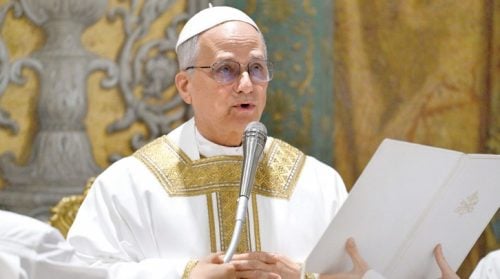
The dicastery said the consecrations constituted the canonical offence of schism because they represented a rejection of papal authority.
It also stated that SSPX clergy were to be considered in schism and that lay Catholics who formally adhered to the society could face canonical consequences under conditions outlined in Church law.
The Vatican further urged Catholics to remain in communion with the Pope and bishops united with him and to avoid celebrations and activities organised by the SSPX.
SSPX defends decision
In a statement issued on Wednesday, July 1, 2026, the SSPX acknowledged that the four bishops had been consecrated without the Pope’s authorisation.
The society said it regretted that the consecrations had taken place without approval but argued that “exceptional circumstances” had made the ceremony necessary.
It said the new bishops would serve as auxiliary bishops without territorial jurisdiction and maintained that their consecration was necessary to preserve what the group described as the sacred heritage of Catholic tradition.
The SSPX also said its superior general had not been granted a personal meeting with Pope Leo XIV to explain the reasons behind the planned ceremony.
The society’s official position differs sharply from the Vatican’s determination that the consecrations constituted a schismatic act.
As of Saturday, July 11, 2026, the SSPX’s international leadership had responded to the Vatican decree, but no separate public response from its Kenyan representatives to the warnings by Muhatia and Anyolo had been established.
Both Kenyan archbishops maintained that an appreciation of traditional Catholic liturgy was not, by itself, contrary to Church teaching.
They, however, stressed that Catholic identity required communion with the Pope and bishops united with him.