Advertisement
Kenya urged to invest in targeted treatment
Wednesday 13th July, 2022 01:41 AM|
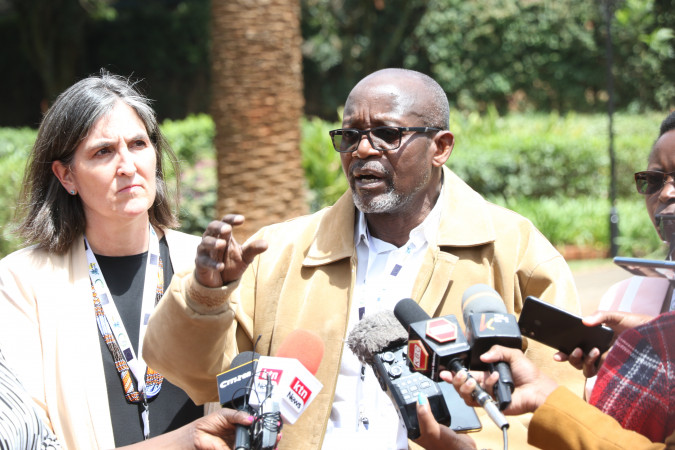
The Kenyan government has been urged to invest in personalized medicine in order to be able to reduce the disease burden and deaths that emanate from some of the critical conditions such as cancer. Personalised medicine is also described as targeted treatment.
Research experts from Europe and Africa congregating in Nairobi have acknowledged the importance of personalized medicine in targeted treatment but expressed concern that most of the countries in Sub Saharan Africa, Kenya included, are slow in adopting this technology.
During the opening session for the two-day stakeholders’ workshop, experts described this new medical model as a game changer in identifying, characterising and providing targeted treatment for a specific person, condition and the affected part of a body.
Prof. Omu Anzala, a medical microbiologist at the University of Nairobi said that treatment response for sickle cell anemia treatment for instance cannot be generalised because different people react in diverse ways to medication and its management.
“It will help us address prevention of diseases at very early stages by individualising diagnosing, monitoring, treatment and management for specific conditions,” he said.
This is also applied in the response to vaccines, which Prof. Anzala noted that the development of vaccines must be in tandem with the way recipients react to them for a good outcome.
“The way we respond to vaccines is not the same globally,” he noted.
This, he said, means that from the beginning when designing the vaccines, specialists must be clear that this is the product they want to use for a specific health condition.
“For us as Africa we are beginning to say that we don’t want to be left behind. We want to have the human resource, infrastructure and ensure that all of us at every level we are coordinating, not only within our country but across the continent so that we map out who we are so that as we administer these medications, we are looking at individuals and not generalising the interventions,” he added.
Tanzania for instance, a country that tops in Africa with the highest prevalence in sickle cell anemia has been able to reduce this disease burden by investing heavily in infrastructure where the country has put in place a comprehensive care programme from diagnosis programmes and to screening of children.
Dr Agnes Jonathan, a Project Coordinator for the Sickle-cell Pan African Research Consortium (SPARCO) said that before there was no newborn screening in most of the hospitals in Tanzania, but now that has gone down.
“For instance, two years ago we did not have newborn screening and for those who came were brought in late, so mortality was high. But now through newborn screening this has helped a lot, because now babies are identified, screened at birth and those who identify with the disease, we enrol directly to our clinic, and this has reduced mortality,” she said while giving an overview of the status of personalised medicine in Tanzania.
Personalised medicine, also described by the European Commission – the first region in the world where it has taken root – as precision medication or targeted treatment involves a new medical model used to differentiate human genes, in order to tailor the right therapeutic strategy for the right person at the right time.
It’s also used to determine human beings’ vulnerability to disease as well as to deliver timely and targeted prevention.
The workshop hosted by the National Commission for Science Technology and Innovation (NACOSTI) with contribution from the European Union (EU) and Africa Personalised Medicines (PerMed) consortium members aims at integrating more African countries in the global Personalised Medicine (PM) research agenda.
It has brought together stakeholders from the East African region including health system policy makers, research and innovation (R&I) funding agencies and councils, health care providers, researchers, scientific societies, industry, regional, technology developers and international organizations drawn from Kenya, Tanzania, Uganda, Rwanda and Ethiopia.
During the scientific and policy mapping exercise carried out by the project, these countries were found to have capacity in PM research with R&I governance structures in place.
Author
George.Kebaso
View all posts by George.KebasoLatest News






Advertisement
More on News