Advertisement
Kenya has sufficient tools to address food insecurity, scientists say
Saturday 26th August, 2023 05:01 PM|
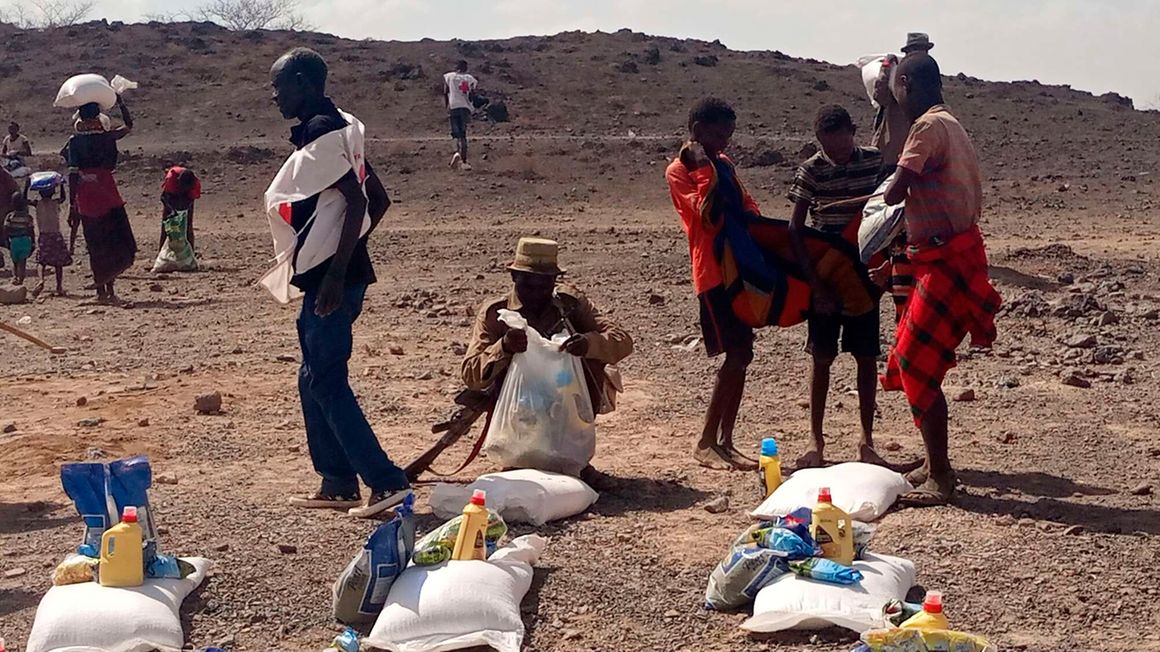
Kenya should not be in a perennial food crisis with the range of new tools at the disposal of the country including the ability to do targeted weather forecasting, research scientists have said.
This comes in the backdrop of a new analysis by a UN body cautioning that despite this year’s good rainy season – March to May – the cumulative impact of the long drought that has plagued the East Africa region, could continue to influence food insecurity levels, currently at unprecedented levels.
The scientists congregating at a hotel in Kiambu are calling for deliberate efforts to support farmers, who are the backbone of the economy – even just by recognising them by creating a national day for them.
The scientists were also developing a common position ahead of the Africa Climate Summit scheduled to kick off on September 4, next month.
In a suggestion that perhaps may start to ignite a positive approach towards impact farming, Dr Sheila Ochugboju, the Alliance for Science Executive Director, confided that there is a need to engage farmers with the right information about the tools they need.
“There is a need for the government and its partners to recognise the value of farmers, let’s say, establish national days where sharing of information and knowledge will be enhanced,” she said on the sidelines of the South-South Collaboration for Innovation workshop.
The Alliance for Science in partnership with the National Direction of Bioeconomy of Argentina and the National Biosafety Authority (NBA) of Kenya are hosting the discussions which kicked off on Wednesday.
The meeting brings together representatives from countries that strongly believe in the added value of innovation to share knowledge and experiences that encourage the Global South to create a supportive environment for scientific research.
The overall objective of the three-day workshop is to promote a statement on the need to collaborate and facilitate joint efforts for global south countries to benefit from existing innovations, create spaces to share knowledge, skills, and experiences; launch initiatives; enable policy dialogues and carry out science diplomacy events between participating countries.
“We think if we can have a farmers’ day like we have the Labour Day to listen to them, and start finding out what they need, it will be the beginning of addressing this perennial elephant in the room- food insecurity,” she said in relation to the need to start honouring farmers.
Empower farmers to boost food security
She pointed out that it includes helping farmers to get better seeds that can withstand the changes in the climate, since there’s sufficient knowledge on the fact that now the long and short rains come at different times than it was before.
“We have varieties suited for both rainy seasons now since we don’t know when sufficient rains will be available. We also have weather forecasting.
“So the possibility of a farmer being able to know which the best seed to plant is when; where and how is huge because that capacity is here,” Ochugboju pointed out.
She explained that to get farmers to understand this; and how they get seed quickly and affordably, is one way to challenge climate change.
This, according to Ochugboju will enhance the farmers’ resilience so that they don’t lose all their crops because they planted seeds that were not good because of the weather but also not good for the soil type in the region.
“These are some of the things we are discussing in these forums, and also sharing what as an Alliance we have been doing across eight countries sensitising the farmers, and also investing a lot in supporting them with radio shows, and talking to them directly,” she revealed further emphasising that science is a service and not a body of human beings generating data alone.
Speaking at the workshop launch, National Biosafety Authority CEO Roy Mugiira said several countries in the Global North have adopted a common approach to regulating these new technologies. The rest of the countries in the Global South should learn from this and follow suit.
“This workshop comes against a backdrop of tremendous development in bio-innovation and their regulatory frameworks,” He added, as Pablo Orozco, the Global Director for Policy for the Alliance for Science, said one of the workshop’s objectives is to create space for sharing knowledge on a regulatory approach to gene editing that fosters local innovation.
Author
George.Kebaso
View all posts by George.KebasoLatest News






Advertisement
More on News
