Advertisement
Kenya faces rotavirus vaccine shortage amid global supply disruption
Friday 06th March, 2026 03:18 PM|

Kenya is facing a temporary shortage of the Rotavac frozen rotavirus vaccine following a disruption in global supply caused by production delays at the manufacturing plant.
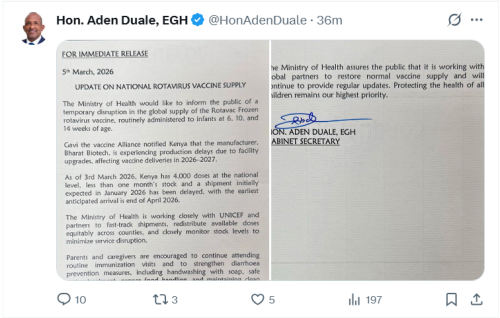
In a press statement issued on March 5, 2026, Health Cabinet Secretary Aden Duale said the shortage was linked to delays at Bharat Biotech, the manufacturer of the vaccine.
The Rotavac vaccine is administered orally to infants at six, 10 and 14 weeks as part of Kenya’s routine immunisation programme to protect children from rotavirus infection, a major cause of severe diarrhoea and dehydration.
According to the Ministry of Health, Gavi, the Vaccine Alliance, informed Kenya that Bharat Biotech is currently upgrading its production facility, which has affected vaccine deliveries for 2026 and 2027.
You Might Also Like



“The Ministry of Health would like to inform the public of a temporary disruption in the global supply of the Rotavac Frozen rotavirus vaccine, routinely administered to infants at 6, 10, and 14 weeks of age,” the ministry stated.
“Gavi the Vaccine Alliance notified Kenya that the manufacturer, Bharat Biotech, is experiencing production delays due to facility upgrades, affecting vaccine deliveries in 2026-2027,” read the statement in part.
Current stock levels
The ministry said that as of March 3, 2026, Kenya had about 4,000 doses of the vaccine at the national level, which is estimated to last for less than one month.
A shipment that had been expected in January 2026 has been delayed, with the earliest possible arrival now projected for the end of April 2026.
Rotavirus vaccines are part of routine childhood immunisation programmes aimed at protecting infants from severe diarrhoeal disease, which can lead to dehydration and hospitalisation if not treated early.
The Ministry of Health clarified that the disruption is linked to production delays and not to any safety or quality concerns regarding the vaccine.
“As of 3rd March 2026, Kenya has 4,000 doses at the national level, estimated to last less than one month’s stock. A shipment initially anticipated in January 2026 has been delayed, with the earliest arrival now projected for the end of April 2026.”
Government response
Health authorities said they are working with partners to minimise disruption to immunisation services.
The Ministry of Health is collaborating with UNICEF and other partners to fast-track the next shipment of vaccines, redistribute available doses across counties and closely monitor stock levels.
Parents and caregivers have been encouraged to continue taking their children for routine immunisation visits at health facilities. The ministry noted that other vaccines in the childhood immunisation schedule remain available.
“Parents and caregivers are encouraged to continue attending routine immunisation visits and to strengthen diarrhoea prevention measures, including handwashing with soap, safe water, proper food handling, and maintaining clean household environments.”
Prevention measures
The Ministry of Health also urged the public to strengthen measures aimed at preventing diarrhoeal diseases. These include regular handwashing with soap, use of safe drinking water, proper food handling and maintaining clean household environments.
Health officials said such hygiene practices are important because rotavirus spreads easily through contaminated hands, food, water and surfaces.
Duale assured the public that the government is working with global partners to restore normal vaccine supply and will continue to provide updates. “Protecting the health of all children remains our highest priority,” he said.
Author
Latest News






Advertisement
More on News