Justina Wamae asks govt to provide Galana-Kulalu sales and harvests report
By Kenneth Mwenda, August 12, 2025Former Roots Party presidential running mate Justina Wamae has challenged the Kenya Kwanza administration to come clean on the progress and finances of the Galana-Kulalu Food Security Project.
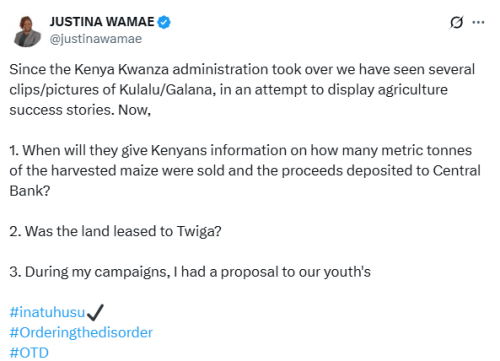
“Since the Kenya Kwanza administration took over we have seen several clips/pictures of Kulalu/Galana, in an attempt to display agriculture success stories,” Wamae wrote in a post on X, on Tuesday morning, August 12, 2025.
“Now, when will they give Kenyans information on how many metric tonnes of the harvested maize were sold and the proceeds deposited to Central Bank? Was the land leased to Twiga? During my campaigns, I had a proposal to our youth’s.”
Her remarks come as the government moves ahead with major developments at Galana-Kulalu. Recently, Treasury PS Chris Kiptoo announced that a contractor had been picked for the Ksh35 billion dam to be built at the site.
The dam will supply enough water to support commercial farming on 1.5 million acres and is expected to attract more investors.
PPP model drives farming
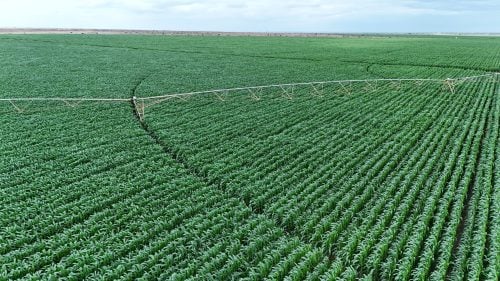
Under a Public-Private Partnership (PPP) model, companies such as Selu Limited have already started farming. Selu has developed 1,060 acres so far and expects its first maize harvest in October. The plan is to eventually irrigate 20,000 acres under Selu for 30 years, producing about 1.4 million bags of maize annually.
The government says the project will help reduce food imports, save foreign exchange, and create jobs for young people in the region. Other investments include building the Galana-Kulalu Bridge, access roads, and installing solar power to reduce production costs.
President William Ruto has said the Galana-Kulalu project is central to his administration’s food security agenda. In May 2025, he announced that the first phase of irrigation infrastructure, including canals, a reservoir, and pumping stations, was complete. Agreements have also been signed with investors from the United Arab Emirates for large-scale farming in the area.
Even so, Wamae’s questions highlight concerns about transparency, especially on how the proceeds from current harvests are handled and whether land allocations are being managed openly.