Advertisement
Iran says Hormuz open to all but enemy-linked ships amid US threat
Sunday 22nd March, 2026 10:37 AM|

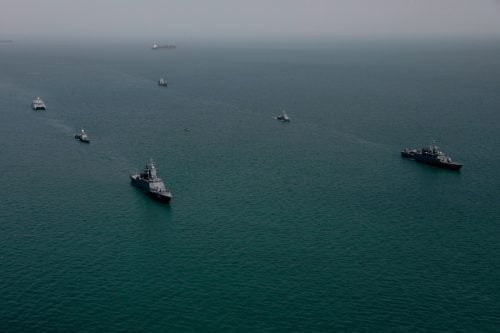
The Strait of Hormuz remains open to all shipping except vessels linked to Iran’s enemies.
Iran’s representative to the United Nations (UN) maritime agency said on Sunday, March 22, 2026, after United States President Donald Trump threatened to target Iranian power plants if the waterway was not fully open within 48 hours.
The ultimatum, made just a day after the US president said he was considering winding down military operations after three weeks of war, came as the key oil passage remained effectively closed and thousands more US Marines headed to the Middle East.
Even so, the threat of Iranian attacks during the U.S.-Israeli war on Iran has kept most ships from getting through the narrow strait, the conduit for around a fifth of global oil and liquefied natural gas supplies, threatening a global energy shock.
You Might Also Like
Ali Mousavi said Tehran was ready to cooperate with the International Maritime Organisation to improve maritime safety and protect seafarers in the Gulf, adding that ships not linked to “Iran’s enemies” could pass the strait by coordinating security and safety arrangements with Tehran.
“Diplomacy remains Iran’s priority. However, a complete cessation of aggression as well as mutual trust and confidence are more important,” Mousavi said, adding that Israeli and U.S. attacks against Iran were at the “root of the current situation in the Strait of Hormuz”.
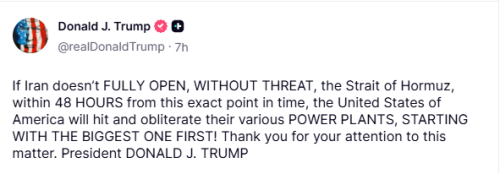
Trump wrote on Truth Social that the US would hit and obliterate Iranian power plants, starting with the biggest one first.
“If Iran doesn’t FULLY OPEN, WITHOUT THREAT, the Strait of Hormuz, within 48 HOURS from this exact point in time, the United States of America will hit and obliterate their various POWER PLANTS, STARTING WITH THE BIGGEST ONE FIRST!” the post read.
Iran’s foreign minister, Abbas Araghchi, said Tehran had imposed restrictions only on vessels from countries involved in attacks against Iran, and would assist others that stayed out of the conflict.
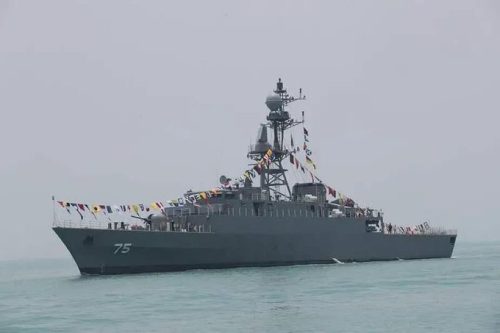
Iran war crisis
The war in the Middle East has triggered a nightmare scenario for the global energy system, slashing so much supply that consumers around the world must both pay up big and lower consumption.
The effective closure of the Strait of Hormuz, a narrow channel along the Iranian coast, has stopped the passage of 20 per cent of the world’s oil and liquefied natural gas since the U.S. and Israel began airstrikes on Iran on February 28, 2026.
Meanwhile, ongoing strikes by Iran and Israel have targeted Middle East energy infrastructure, doing damage to gas fields, oil refineries, and terminals that industry representatives say will take years to repair.
All of that adds up to what the International Energy Agency has already called the worst global energy disruption in history, eclipsing even the Arab oil embargo of 1973 that caused fuel shortages and triggered widespread economic damage.
Author
Latest News






Advertisement
More on News