International Day of Women in Diplomacy: Monica Juma honours women diplomats
By Ndiritu Wanjiru, June 24, 2026Executive Director of the United Nations Office on Drugs and Crime (UNODC) and Director-General of the United Nations Office at Vienna, Monica Juma, has joined the world in marking the International Day of Women in Diplomacy, saluting women diplomats whose efforts continue to shape global affairs and create lasting impact through dialogue and cooperation.
In a statement on her X handle on Wednesday, June 24, 2026, marking the International Day of Women in Diplomacy, Juma has applauded the contributions of women serving at the United Nations in Vienna and in diplomatic missions worldwide, saying their efforts continue to shape a more just and secure world.
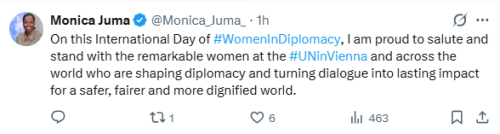
“On this International Day of Women in Diplomacy, I am proud to salute and stand with the remarkable women at the UN in Vienna and across the world who are shaping diplomacy and turning dialogue into lasting impact for a safer, fairer and more dignified world,” Juma said.
Juma has noted that women diplomats have increasingly become influential voices in addressing global challenges, including conflict resolution, sustainable development, climate action, and human rights advocacy.
Her message comes as the international community commemorates the growing role of women in foreign affairs and decision-making spaces, while also highlighting the need for greater gender equality in diplomatic leadership.
Juma’s remarks underscore the importance of inclusive diplomacy, emphasising that diverse perspectives are essential in building lasting peace, fostering cooperation among nations, and promoting human dignity across the world.
UN’s celebration of International Day of Women in Diplomacy
In Resolution 76/269, adopted on June 20, 2022, the United Nations General Assembly proclaimed 24 June as the International Day of Women in Diplomacy. The day is dedicated to celebrating the vital contributions of women in diplomacy while drawing attention to the barriers that continue to hinder their equal participation in decision-making processes at all levels.
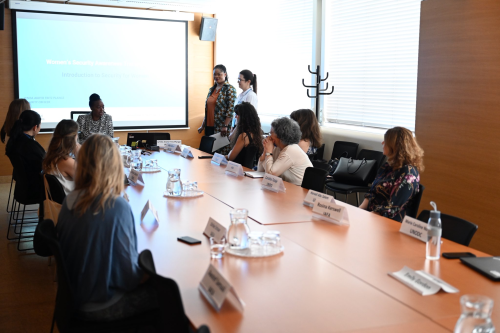
It also provides an opportunity for member states, the United Nations system, regional and international organisations, civil society, academic institutions, associations of women diplomats, and other stakeholders to promote the full, equal, and meaningful participation of women in diplomacy through education, advocacy, and awareness-raising initiatives.
The UN noted that despite progress, women remain under-represented in peace and diplomatic processes. Between 1992 and 2019, women accounted for only 13 per cent of negotiators, 6 per cent of mediators, and 6 per cent of signatories in peace processes worldwide.