Inside 1,000 days of war in Sudan, which has left 70% of the population in need
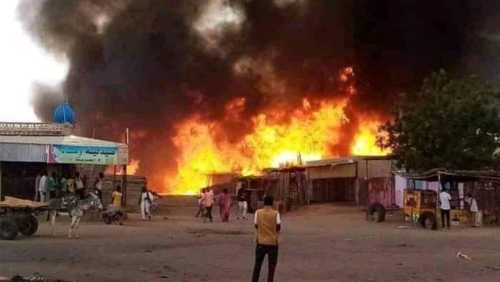
By Sky News, January 9, 2026No one is left untouched by the violence as the paramilitary Rapid Support Forces (RSF) and the Sudanese Armed Forces (SAF) continue to bombard key cities for territorial control, and nothing captures the brutality of this war like the takeover of North Darfur’s capital Al Fashir by the RSF in late October.
Civilians who returned to the city to retrieve their valuables and search for missing loved ones told us videos shared by the RSF and their partners showing cheering crowds of happy people are propaganda.
Doctors, journalists and politicians are among the hundreds of civilians held for ransom by the RSF in the aftermath.
One doctor using a pseudonym for her safety told us she was assaulted by their fighters and detained in a camp full of wounded, elderly and children, and later forced to serve the remaining hospital.
“I saw five corpses on the street in our neighbourhood. At the hospital, there were people with maggots in their wounds because of how infected they were. There was no capacity to offer any healthcare, and the videos of people being medically treated were just for show.” 28-year-old Fatima said
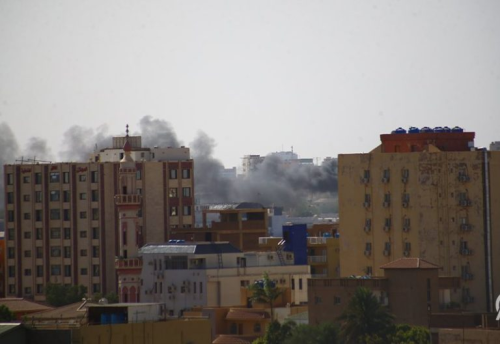
Many of the blast injuries came from the barrage of shells dropped on them by the RSF in the weeks before the capture.
“There were C-5s, the three types of drones – strategic, suicide and bomb-carrying drones – R-23, tanks, Howitzers,” Fatima said.
Sudan has been flooded with foreign weapons over the 1,000 days of war. Videos shared by fighters online show the RSF using foreign equipment across the country – including sites of some of its more severe atrocities and key territorial gains.
The vehicle, identified by its distinctive polygon-shaped rear compartment and unique window configuration, appears to be a Panthera T2, produced by UAE-based company Minerva Special Purpose Vehicles (MSPV).
The same vehicle was seen being operated by the Libyan National Army, backed by the UAE, in Libya.
“The supply lines have been set up through networks and proxies that are supported by the United Arab Emirates and forces either in Libya or in Chad,” says Emaddedin Badi, senior fellow at the Global Initiative Against Transnational Organised Crime (GI-TOC).
“What we are seeing is essentially not one but two arms embargoes being contravened – obviously the Sudanese one, but also it’s been a long-standing reality that the Libyan arms embargo is recurrently contravened.”
The UAE categorically denies supporting either warring party and told Sky News that weaponry like the AH-4 Howitzer seen in Sudan has been on the market for nearly a decade and that the assertion that only one country has procured or transferred this system is invalid.
“The UAE operates a comprehensive and robust export control regime in line with its applicable obligations under international law, including with respect to arms control,” the statement reads.
According to the SIPRI arms transfer database, these Howitzers were imported to the UAE from China in 2019.
The proliferation of foreign arms in Sudan is so advanced and diverse that weapons analysts suspect that weaponry is being battle-tested in the vast warscape.
“By October 2024, open source analysis indicated that weapons manufactured in the same year had already entered the battlefield. By early November 2025, weapons produced in 2025 were being deployed inside Sudan,” Faisal Al-Sheikh said.
“There is credible evidence that German-origin small arms (including G36, MP5, and G3 variants), German-manufactured components such as Webasto systems, and U.S.-origin rifles (including AR-10 and M110 SASS platforms) are present in Sudan’s battlespace.”
“These systems likely entered via retransfer or integration through third-party states, including Turkey, Egypt, Jordan, and the UAE, or through battlefield capture following the seizure of key strategic locations.”
Among the civilians forced out of their homes and relegated to camps across the country are military soldiers also displaced by the war.
In one camp in North Darfur near the rebel-held town of Tawila, SAF soldiers who laid down their arms after the fall of Al Fashir are living among civilians with no support from the military.
They describe a doomsday scenario as the city fell.
“There were no instructions from the top command. Everyone just scattered. Everyone had to save themselves. We don’t know where the area commander left from or where the national intelligence left from or where the military intelligence left from,” says Ali Adam.
His eyes widen and tear as he describes the chaos that unfolded as the city collapsed.
“It was every man for himself.”