Advertisement
Individual competence basis for junior high admission – PS
Tuesday 25th January, 2022 07:30 AM|
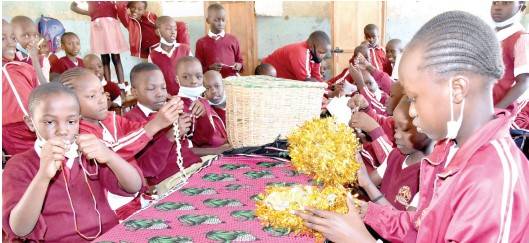
Candidates will be placed in junior secondary schools based on their specific individual competence as opposed to their performance in a one-off exam, the government has declared.
Curriculum Reforms Principal Secretary Prof Fatuma Chege said children joining Junior Secondary School (JSS) at Grade 7 will be picked based on their performance in a series of periodic assessment tests.
The tests shall be administered by teachers and scores forwarded to the Kenya National Examination Council (KNEC).
The first batch of learners is expected to join JSS in January next year after sitting their exams in December. “What is important is that children will not be placed based on how they have competed with each other, on how to pass say Science, English and such, it is their competition with themselves as has been assessed through KNEC that is indicating where their competences are and schools that are best placed to offer teaching and learning of those competences,” said the PS.
You Might Also Like


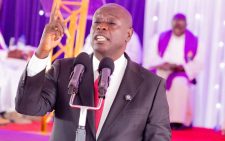
She did not, however, divulge finer details of the placement criteria, only stating that the ministry was in the process of developing a policy, which will not only streamline but also guide the exercise.
Under the 8-4-4 system, learners are placed in secondary schools based on their performance in the Kenya Certificate of Primary Education (KCPE) examination at the end of eight years. Prof Chege made the revelation during a zoom meeting jointly organised by the office of Government Spokesperson and the ministry to respond to issues surrounding implementation of Competency Based Curriculum (CBC).
“KNEC does its assessment, which is cumulatively recorded and is in the custody of the Kenya Institute of Curriculum Development (KICD) up to the final summative that gives them 40 and 60 per cent. The rest is left to the Ministry of Education under a policy of placement… we cannot have it happening haphazardly,” she explained.
According to the CBC taskforce report, the mode of assessment will entail a combination of teacher-administered formative assessment in Grades 4, 5 and 6 and a summative assessment to be administered by KNEC at the end of Grade 6.
“The proposed weighting is 60 per cent for formative and 40 per cent for summative assessment. The summative assessment is prompted by the need to allow learners from across the country to access schools which have superior infrastructure and a culture of good performance, thus enhancing equity,” states the taskforce report.
The first CBC group, now in Grade 5 and the 8-4-4 learners currently in Class 7, will concurrently transition to JSS and Form 1, respectively.
Projections show that there will be at least 27 per cent increase in secondary school population next year, from about 4.4 million to 6 million learners. Yesterday, Prof Chege said a lot of work is going on to ensure there will be a smooth transition, including the ongoing construction of classrooms in secondary schools to cover the 100 per cent transition.
“The current reforms were envisioned in the Vision 2030 blueprint. The State department for Implementation of Curriculum reforms, which was established in February last year, is charged with the responsibility of ensuring that CBC is implemented in ways that improve access, equity, quality and relevance of education,” said the PS.
The discussions came on a day that the International Day of Education was being celebrated. In a joint statement, global organisations Unesco and Unicef called for concerted action on learning in the Covid-19 era.
“We are appealing to key actors responsible for learning and futures of children living across the Eastern and Southern Africa region. Even during the pre-pandemic period, a vast majority of African children were experiencing a widespread learning crisis, with Covid-19 only serving to exacerbate the situation,” the two said in a joint statement.
They, however, regretted that the learning losses caused by the pandemic will stay much longer. Evidence in all countries has shown that when schools close, children not only lose out on their learning progress, but also the safety of the school ground, interactions with friends, a route to healthcare and too often, their only nutritious meal of the day
Author
Irene.Githinji
View all posts by Irene.GithinjiLatest News







Advertisement
More on News