Advertisement
Heavy investments in geothermal, solar fuel power supply – Report
Wednesday 11th January, 2023 09:42 AM|
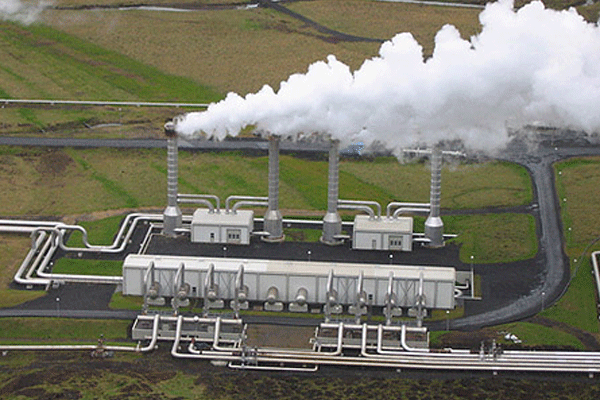
The installed electricity generation capacity in Kenya crossed the 3,000MW mark due to aggressive investment in solar and geothermal power, the latest update from the sector regulator says.
Energy and Petroleum Regulatory Authority (EPRA) estimates that about 86 per cent of electricity generated in Kenya now comes from renewable energy sources following increased investment in the sector. Incidentally, it says in the report that the use of the otherwise expensive thermal energy also dropped following the retirement of Tsavo Power, easing pressure on costs.
Installed capacity
The regulator said in its annual report released on Monday that the installed capacity increased by 102.34MW from 2,972MW as at June 2021 to 3,074.34MW as at June 2022.
“Geothermal and solar generation increased by 86MW and 120MW respectively,” it added. The increased contribution from the two sources is attributed to the addition of 40MW from the Cedate Solar power plant, 40MW from the Selenkei Solar power plant, 40 MW from the Malindi Solar plant, and 86MW from the Olkaria 1 unit 6 to the grid.
The installed solar power capacity increased to 5.5 per cent, up from three per cent.
With an installed capacity of 949.13MW, geothermal now accounts for 30.8 per cent of the total installed capacity, up from 849MW in June 2021.
“Thermal power electricity installed capacity reduced from 748.7MW in June 2021 to 646.32MW in June 2022 following the retirement of Tsavo Power, whose power purchase contract lapsed in September 2021,” the regulator said.
The installed wind power capacity remained unchanged at 435.5MW.
The industry regulator noted that the country generates more than 12,652.74GWh of electricity annually, with the bulk from geothermal and hydroelectric sources, and contributions from wind and solar energy fast-rising.
“As a result of investments made in developing the renewable energy sub-sector, 86.98 per cent of the energy generated in Kenya is obtained from renewable energy sources,” said EPRA Director-General, Daniel Kiptoo, in the report for the financial year ending 2022.
Power in Kenya has been steadily rising in recent years, with peak demand increasing 3.1 per cent on average each year to over 2,000MW. Economic recovery from the Covid-19 disruption has helped push up demand for electricity in the country, according to the report.
Geothermal, mainly produced by the State-owned firm Kenya Electricity Generating Company (KenGen), accounts for a major portion of the power generated, while hydroelectric, as well as solar and wind energy, are critical for the stability of the grid.
Author
John Otini
View all posts by John OtiniLatest News








Advertisement
More on News