Health alert: WHO lists early cataract signs, urges regular eye checks
By Faith Lagat, February 11, 2026The World Health Organization (WHO) has called for regular eye examinations after outlining early warning signs of cataract, a condition that clouds the eye’s lens and can lead to blindness if left untreated.
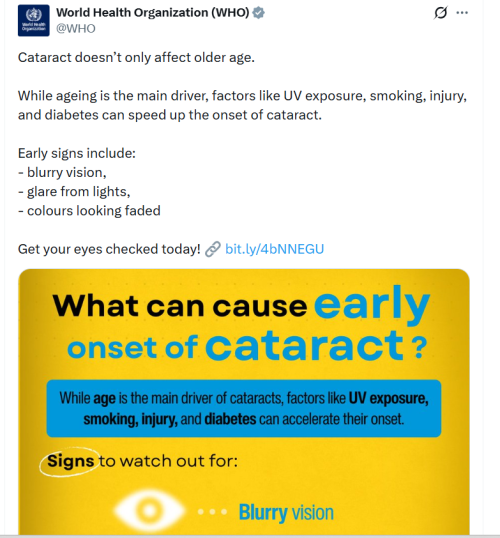
In a social media post and accompanying release issued on February 11, 2026, WHO said cataract does not only affect older people and urged individuals to seek immediate eye checks if they experience symptoms such as blurry vision, glare from lights and colours appearing faded.
“Get your eyes checked today!” the organisation said in its X post.
Risk factors and early symptoms
While ageing remains the leading risk factor, WHO noted that prolonged exposure to UV-B rays, tobacco use, extended corticosteroid medication, diabetes and eye injuries can accelerate the development of cataract.
The agency warned that these factors may cause the condition to occur earlier than expected, increasing the risk of vision impairment among younger populations.
The alert coincided with the publication of a new study in The Lancet Global Health, which found that nearly half of people affected by cataract-related blindness worldwide still lack access to surgery.
Access to surgery gaps persist
According to WHO, cataract affects more than 94 million people globally. The organisation said the condition can be treated through a 15-minute surgical procedure that restores vision and is among the most cost-effective medical interventions.
“Cataract surgery is one of the most powerful tools we have to restore vision and transform lives,” said Devora Kestel, Acting Director of WHO’s Department of Noncommunicable Diseases and Mental Health. “When people regain their sight, they regain independence, dignity, and opportunity.”
Despite a 15 percent increase in global cataract surgery coverage over the past two decades, WHO reported that progress has slowed. Current projections indicate an 8.4 per cent rise this decade, below the 30 per cent target set by the World Health Assembly for 2030.
Africa bears heaviest burden
The WHO African Region records the largest treatment gap, with three in four people in need of cataract surgery remaining untreated. Women face lower access to care than men across all regions due to barriers such as limited eye-care professionals, high out-of-pocket costs, long waiting times and low awareness.
WHO recommended integrating vision screening into primary health care systems, expanding surgical services and prioritising rural and underserved communities, particularly women and marginalised groups.
The agency urged governments and partners to strengthen efforts to improve access to cataract surgery and reduce preventable blindness worldwide.