Govt under pressure as lobby groups demands accountability over fuel scandal
By Faith Lagat, April 10, 2026A leading coalition of anti-corruption and governance watchdogs has called for accountability over the importation of substandard fuel into Kenya.
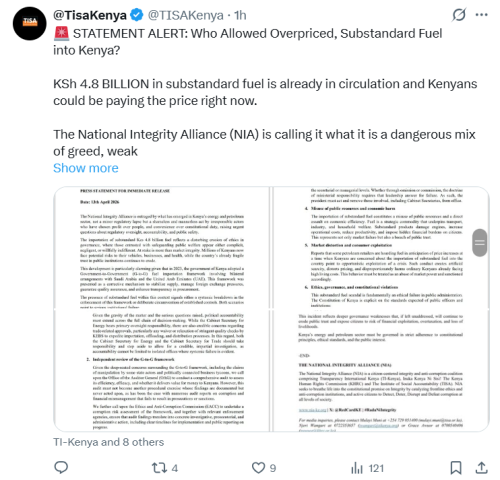
The National Integrity Alliance (NIA), in a statement on Friday, April 10, 2026, described the matter as “Profiting from Poison”, citing that actors in the energy sector prioritised profit over public safety and constitutional obligations.
The coalition comprises Transparency International Kenya (TI-Kenya), Inuka Kenya Ni Sisi!, the Kenya Human Rights Commission (KHRC), and the Institute of Social Accountability (TISA).
“The importation of substandard Ksh4.8 billion fuel reflects a disturbing erosion of ethics in governance, where those entrusted with safeguarding public welfare appear either complicit, negligent, or willfully indifferent. At stake is more than market integrity,” the statement read in part.
G-to-G framework and regulatory concerns
The NIA linked the controversy to the Government-to-Government (G-to-G) fuel importation framework introduced in 2023 involving Saudi Arabia and the United Arab Emirates (UAE), which was intended to stabilise supply, manage foreign exchange pressures, and strengthen quality assurance.
The group raised questions on how the consignment bypassed established quality control systems involving the Energy and Petroleum Regulatory Authority (EPRA), the Kenya Bureau of Standards (KEBS), and other oversight agencies.
It also questioned whether due process was followed in approving the consignment, including whether authorisation was granted before or after arrival, and whether timelines reflected compliance with procurement regulations.
Accountability demands and ongoing investigations
The statement called for political responsibility, stating that the Cabinet Secretaries for Energy and Trade should step aside to allow independent investigations.
It further urged the Office of the Auditor General (OAG) to audit the G-to-G framework and the Ethics and Anti-Corruption Commission (EACC) to assess corruption risks and ensure findings lead to investigations and prosecutions.
The NIA also demanded full disclosure of importation, testing, and distribution records under Article 35 of the Constitution.
It called on the Directorate of Criminal Investigations (DCI) to expand probes to identify collusion networks and beneficiaries, including politically connected actors.
The coalition cited possible breaches of constitutional provisions, including Article 10 on national values, Article 42 on environmental rights, Article 46 on consumer protection, Article 201 on prudent use of public resources, and Article 232 on public service ethics.
It also reported concerns over fuel hoarding and speculative practices in the market. According to the statement, ongoing investigations in the energy sector include arrests and scrutiny of pricing and data handling linked to the alleged importation.
The NIA emphasised the need for reforms in oversight mechanisms to restore confidence in Kenya’s petroleum supply chain and ensure compliance with quality standards.