Advertisement
Govt reprogrammes World Bank agriculture funds over drought
Wednesday 17th December, 2025 05:54 PM|

The national government and county leaders have agreed on urgent measures to address Kenya’s worsening drought, including reprogramming key World Bank-funded agriculture projects to focus on immediate relief while laying the groundwork for long-term resilience.
Following a high-level meeting in Malindi on Wednesday, December 17, 2025, involving the Council of Governors (CoG) Agriculture Committee and the ASAL Governors Caucus, Cabinet Secretary for Agriculture and Livestock Development Mutahi Kagwe emphasised an all-of-government approach to the drought response.
The discussions focused on the Food Systems Resilience Program (FSRP), implemented in 13 severely affected counties, and the National Agricultural Value Chain Development Project (NAVCDP), covering the remaining 34 counties.
“We sit at a critical point where we must reprogramme these two programmes to respond to the current drought reality, while also putting in place permanent solutions to avert future crises,” CS Kagwe said.
You Might Also Like
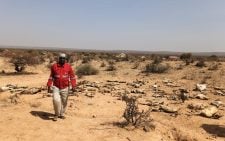
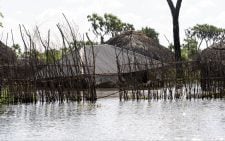

The reprogrammed approach prioritises counties facing acute drought with immediate support, including the transportation of fodder, delivery of water to pastoral areas, and interventions to save livestock and protect households. Some planned activities will be paused, allowing funds to be redirected toward urgent mitigation.
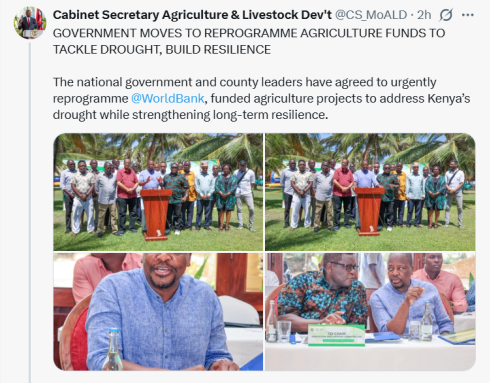
County-led implementation
Governors noted ongoing livestock losses due to prolonged lack of rainfall, stressing the need for rapid action. Leaders agreed that at least 85 per cent of programme resources will be directed to on-the-ground impact rather than administrative costs.
CoG Agriculture Committee Chair and Bungoma Governor Ken Lusaka underscored the counties’ central role in planning and implementation.
“Capacity-building funds must be re-allocated. Going forward, resources will no longer be absorbed by recurrent expenditure,” Lusaka said.
ASAL Governors Chair and Garissa Governor Nathif Jama backed CS Kagwe’s call to recognise counties with dual climates and mixed livelihoods, warning against rigid classifications. “An area should not be defined by lack of rainfall alone. With irrigation, places like Garissa can become net producers, including in crops such as rice,” CS Kagwe said.
The reprogrammed initiatives aim to cushion communities during the current drought while preparing Kenya for future climate extremes, preventing cycles of bumper harvests followed by severe droughts.
Building long-term resilience
Leaders agreed to reduce overreliance on rain-fed agriculture by scaling up irrigation, feedlots, strategic fodder reserves, and storage facilities. Livestock disease control, including combating Foot and Mouth Disease and tsetse-fly eradication, was also highlighted as critical for productivity and exports.
The Kenya Agricultural Digital Integration Centre (KADIC) will modernise the sector, linking counties through digital platforms for soil data, pest control, animal identification, and vaccination records. Youth inclusion was emphasised, with CS Kagwe stating: “Young people must begin to see agriculture as modern, profitable and ‘cool’ especially in value addition.”
Author
Latest News








Advertisement
More on News