Govt initiates move to ease workplace tension in Chinese-run firms
By Kenneth Mwenda, February 7, 2026Concerns are growing over workplace tensions in some Chinese-run companies in Kenya’s Export Processing Zones (EPZs) and the construction sector. Labour Commissioner Hellen Apiyo recently met with representatives from the Canton Chamber of Commerce to discuss the issues.
The meeting took place on February 5, 2026. Officials and business leaders examined the causes of industrial unrest reported by workers in affected firms. Complaints include resistance to trade unions, lack of proper employment contracts, unpaid overtime, unfair terminations, and pressure on employees to leave unions or not join them at all.
The Ministry of Labour and Social Protection highlighted the situation through a statement on Saturday, February 7, 2026.
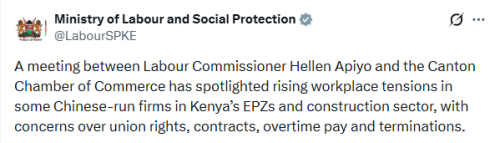
“A meeting between Labour Commissioner Hellen Apiyo and the Canton Chamber of Commerce has spotlighted rising workplace tensions in some Chinese-run firms in Kenya’s EPZs and construction sector, with concerns over union rights, contracts, overtime pay and terminations,” a statement from the Ministry of Labour and Social Protection read in part.
Workers also report other challenges. Some firms set unrealistic production targets, while employees face problems with rest days and general safety conditions. Although Chinese investments bring jobs and support infrastructure development, these disputes have created friction in certain workplaces.
Both sides acknowledged the importance of foreign investment. Chinese firms contribute to economic growth through manufacturing in EPZs and large construction projects. At the same time, Kenyan labour laws apply to all employers. Companies must provide written contracts, pay fair overtime, respect union rights, and follow proper procedures when terminating employees.
After discussions, both parties agreed on practical steps to improve conditions. The plan includes training programmes on Kenyan labour laws for Chinese employers. The sessions will cover human resource policies and legal compliance.
The meeting also focused on including trade unions in workplaces. Both sides aim to set up better grievance systems, giving workers clear channels to raise concerns without fear. Plans include establishing workers’ committees to represent employee views. Stronger safety training is expected to reduce accidents and promote safer work environments.
The Ministry summarised the outcome.
“Kenya and Chinese business leaders now plan joint action: training on labour laws, inclusion of unions, better grievance systems, workers’ committees and stronger safety training—aimed at protecting workers while sustaining investment and growth.”
This approach seeks balance. It protects workers’ rights while maintaining business stability. If implemented effectively, the measures could reduce disputes and build trust between employers and employees.

EPZ labour concerns continue
The issues form part of a wider pattern. Trade unions and workers have raised similar concerns in EPZs before. Recent cases, including calls for action against managers accused of abuse, show that labour practices in these zones remain under scrutiny. EPZs employ many people in textiles and other export sectors, often with special incentives for companies.
Kenyan authorities stress the enforcement of existing laws. Employers must follow the Employment Act and related regulations. The government encourages dialogue rather than confrontation to resolve problems.
The meeting marks progress through cooperation.
Kenya continues to attract Chinese capital for roads, factories, and other projects. Officials aim to ensure that economic growth goes hand in hand with decent work standards.