Focus turns to Parliament as MPs conclude Safaricom divestiture hearings
By Aloys Michael, February 16, 2026Public hearings on the proposed sale of a 15 per cent government stake in Safaricom PLC have concluded, with Parliament’s finance team shifting attention to a new legislative framework intended to ringfence proceeds for infrastructure development.
The nationwide exercise, anchored on Sessional Paper No. 3 of 2025, saw the Departmental Committee on Finance and National Planning and the Select Committee on Public Debt and Privatisation traverse 30 counties to collect public views.
The final forums were held in Kwale and Kilifi counties over the weekend, marking the end of a process that has drawn intense scrutiny amid concerns over the sale of the 15 per cent share.
In a statement on Monday, February 16, 2026, after wrapping up the hearings, Committee Chairperson Kuria Kimani assured participants that their submissions would inform the House report.
“We are delighted that across the 30 counties that we have visited, the members of the public have come out to candidly give their views on what direction they wish the Safaricom divestiture process to take. Your views are not in vain, and they will enrich our report to the House,” he said.
While a majority of contributors signalled conditional support for the transaction, the dominant theme across counties was the need for safeguards on the utilisation of proceeds. Many participants warned against channelling funds into the Consolidated Fund without a dedicated accountability structure.
“I support this move since accelerated infrastructure development will not occasion increasing of taxes or lead to higher borrowing. However, we do not want the proceeds directed to the Consolidated Fund as there will no way to ascertain what the proceeds were used for,” said Charles Nyaga during the Embu forum.
In Maralal, boda boda rider Amos Lekitap underscored governance risks.
“We have been losing a lot of money to corruption. If we don’t find ways of sealing the leakage gaps, even these proceeds will not yield much. You also need to come back and tell us how you appropriated the proceeds of the sale and its impact,” he told lawmakers.
Fiscal policy
The concerns echo historical anxieties about public finance management and come as the government seeks to balance fiscal consolidation with infrastructure expansion.
Proponents argue that a partial divestiture would unlock capital for catalytic projects without increasing taxes or public borrowing. Critics counter that without ironclad oversight, the one-off windfall could dissipate without delivering long-term economic returns.
In response to these fears, Parliament has introduced the National Infrastructure Fund Bill, 2026. The proposed law seeks to establish a dedicated fund to receive proceeds from privatization and disposal of state assets, as well as allocations approved by Parliament.
The Bill was read for the first time on February 12, 2026, clearing the way for public participation.
Addressing a separate forum in Mombasa, Kimani linked the Bill directly to public feedback on the Safaricom sale.
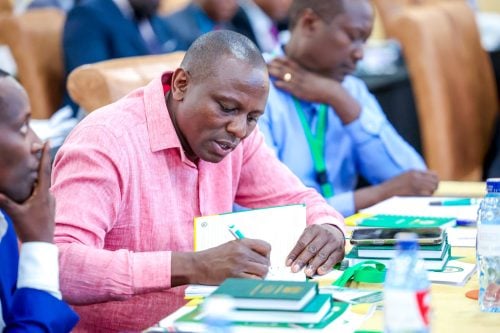
“A majority today have supported the proposed divestiture. However, they are concerned about money being misused, like the Eurobond. The tabled Bill will see proceeds from privatisation or sell of government assets go to this account, where they will be ringfenced for viable projects like airports, dams and spent for intended purposes,” he said.
The Bill is sponsored by Majority Leader Kimani Ichung’wah and proposes a Board of Directors to oversee the Fund and formulate a five-year investment policy. Its stated objective is to accelerate commercially viable infrastructure projects, mobilise private capital, and reduce reliance on public debt.
Beyond governance safeguards, regional equity emerged as another flashpoint. In Samburu County, residents led by Eli Letipila pressed for inclusion of priority projects should the sale proceed.
“We have water projects and about 6,000 kms of road that we require done to unlock the potential of our county. For instance, we want the Baragoi road and the Kisima-Wamba road tarmacked as a matter of priority. I will be seeking the inclusion of this matter in our recommendations,” the lawmaker stated.

Questions were also raised about the structure of the divestiture itself. Some participants queried the decision to partially offload the stake to Vodacom rather than offering shares to Kenyan investors first.
“During the initial public offering of Safaricom shareholding to the public, the offer was oversubscribed. Why has the government decided to offload this 15 per cent to a foreign firm before making the offer to the public?” asked Stephen Muchangi in Manyatta.
The Committee is expected to retreat to compile its report for tabling in the House. Its recommendations will likely weigh fiscal imperatives against governance safeguards, as Parliament determines whether and how the state proceeds with one of its most consequential asset sales in recent years.