Education funding: How crisis deepens despite Ruto’s govt promises
By Aloys Michael, May 6, 2026Kenya’s education sector is under mounting pressure as funding gaps widen across both basic and higher learning institutions, exposing a growing disconnect between government promises and the financial realities on the ground.
Despite reforms introduced by President William Ruto’s administration, fresh data and parliamentary disclosures reveal a system struggling to stay afloat.
There is a sharp mismatch between rising enrolment and stagnant or insufficient funding. As the country transitions from the 8:4:4 system, secondary school enrolment remains high, with about 3.34 million learners in Forms 2, 3, and 4 in 2025. Yet the resources needed to sustain this population have not kept pace.
In higher education, the situation is even more dire. Universities are grappling with a projected Ksh260 billion shortfall for the 2026/2027 financial year, pushing several institutions to the brink of collapse.
At least 23 public universities risk insolvency, weighed down by accumulated pending bills totalling Ksh85.28 billion as of January 2026, with major institutions among the hardest hit, struggling to meet operational costs, staff salaries, and statutory obligations.
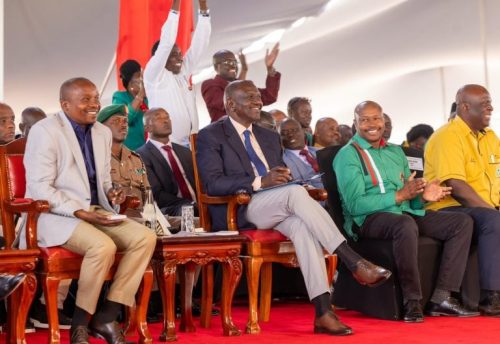
The introduction of the student-centred Variable Scholarship and Loan Funding (VSLF) model in 2023 was meant to improve equity and efficiency in university financing. However, the shift from block grants to individualised funding has sparked criticism.
Stakeholders argue that the Means Testing Instrument (MTI) used to assess students’ financial need is flawed, potentially locking out deserving but vulnerable learners.
Even for those who qualify, the support is often insufficient. Households continue to shoulder high costs, including accommodation, food, and transport, at a time when the cost of living remains high.
Delays in government disbursements further compound the problem, disrupting university operations and deepening institutional debt.
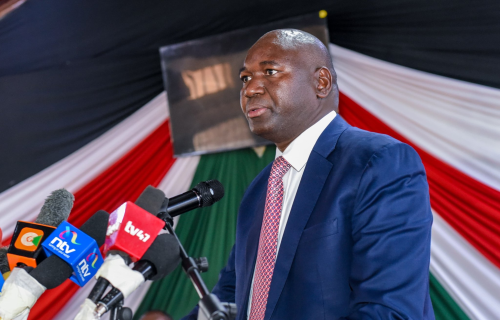
Education in a shipwreck?
Recent disclosures show that funding for 379,858 university and TVET students hangs in the balance due to a Ksh32.9 billion deficit in the current academic year.
The State Department for Higher Education revealed that only Ksh41.5 billion was allocated against a requirement of Ksh74.4 billion to support over 1.1 million students.
Higher Education Principal Secretary Beatrice Inyangala told lawmakers that the available funds can only cater to 650,267 students, leaving nearly half a million eligible applicants without support.
“The proposed supplementary budget allocation of Ksh4.1 billion will support 74,031 students at an average of Ksh55,639 per student. This will leave 379,858 students not funded,” she said.
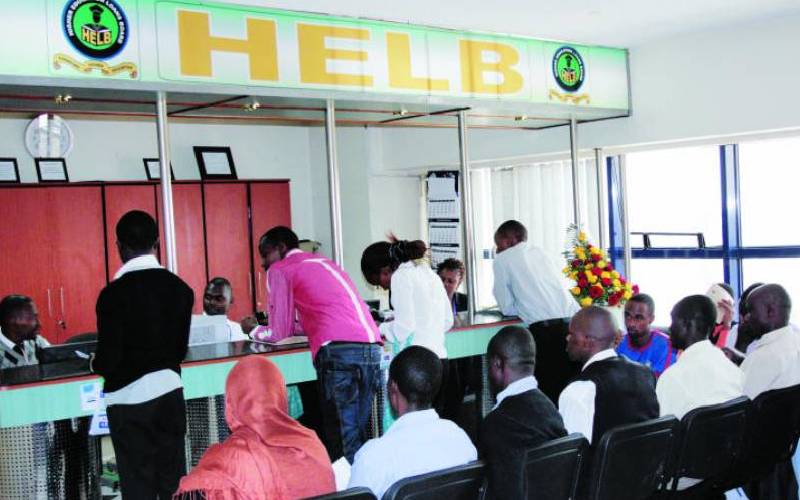
PHOTO/@HELBpage/X
Of the 575,663 university students who applied for loans in the 2025/26 financial year, only 358,832 were approved, leaving 216,831 without assistance. Similarly, 237,058 TVET applicants missed out on funding.
The funding gap is expected to widen. For the 2026/27 financial year, resources required for student loans and scholarships stand at Ksh47.36 billion, yet only Ksh17.92 billion has been allocated, leaving a deficit of Ksh29.44 billion. Cumulative scholarship shortfalls could hit Ksh51.7 billion, raising questions about the sustainability of the current model.
Private universities are also feeling the strain. The Kenya Association of Private Universities has threatened legal action over unpaid government obligations amounting to Ksh45.77 billion for students placed through the central placement system.
Meanwhile, basic education is facing its own crisis. Members of Parliament have raised concerns over delayed and inadequate capitation funds, warning that the promise of free education is increasingly becoming untenable.
MPs raise concerns
Basic Education Principal Secretary Julius Bitok admitted that while the official capitation for secondary school learners is set at Ksh22,044 per student, schools receive an average of only Ksh15,844.38. This shortfall has forced institutions to operate under severe constraints.
Between the 2020/21 and 2023/24 financial years, secondary schools alone recorded an underfunding of more than Ksh71 billion, while junior secondary schools faced a deficit of Ksh31.9 billion. The gap continues to widen as enrolment grows.
“Despite this, the approved budget increased only marginally, resulting in a growing deficit that reached more than Ksh25.8 billion by 2023/24. The number of learners not provided for increased from 724,959 to 1,161,349,” Bitok said.
Lawmakers have openly questioned the viability of the current approach.
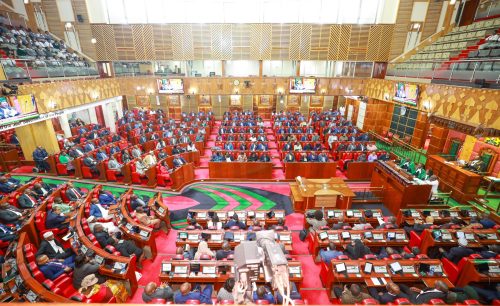
“Who foots that particular deficit of capitation? You should make a policy directive that we are not having free education but subsidised education,” Funyula MP Wilberforce Oundo quipped.
Others have pointed to inflation as a key factor eroding the value of capitation. Lugari MP Nabii Nabwera noted that the real value of funding has declined significantly over time.
“The capitation is actually 12,000 and not 15,000 if we factor in inflation because the value of money now and when the capitation was calculated is not the same,” he said.
Criticism has also been directed at government spending priorities. Some leaders argue that increased expenditure in other areas has come at the expense of education funding, further deepening the crisis.
This comes even as the number of learning institutions and enrolment continues to rise. Data from the 2026 Economic Survey shows steady growth in schools and student populations across all levels, intensifying pressure on already strained resources.
As funding gaps widen and debts pile up, the education sector finds itself at a crossroads. Without significant policy adjustments and increased investment, the promise of accessible and equitable education risks slipping further out of reach for millions of Kenyan learners.