Advertisement
EACC seeks prosecutorial powers to expedite cases
Monday 21st August, 2023 01:01 AM|
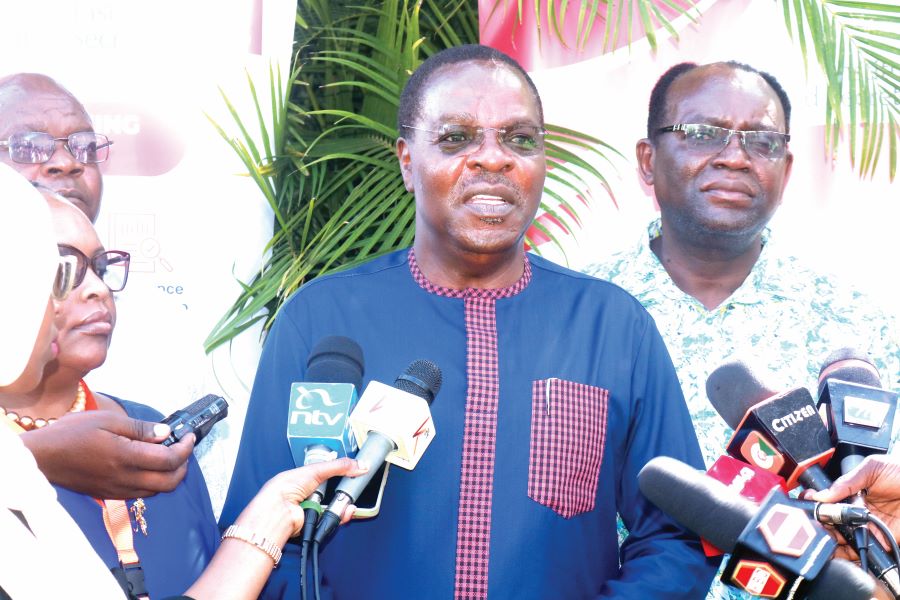
Ethics and Anti-Corruption Commission (EACC) will go after both the big and small fish in a new strategy to slay the ghost of corruption in the country, chairperson Bishop David Oginde has declared.
Oginde at the same time said his office is lobbying to be handed prosecutorial powers to make the processing of corruption cases more expeditious.
While addressing the press in Mombasa, Oginde said the so-called small people are actually the ones being used by the big fish to advance mega corruption, warning there is a danger of graft growing into an insurmountable level if the status quo is not immediately disjointed.
While singling out the Turkana Wind Power project as his first case to deal with since he officially took the helm as EACC chief, Bishop Oginde said there are big names from Ketraco who were involved adding the matter has already been investigated and the file forwarded to the office of the Director of Public Prosecution for further actions.
Curtail flow
“I also used to think the government has been lenient on big fish until now I am inside the Anti-graft body that I have realised that the small fish are actually people who are being used by the big fish.
“The small fish are not stealing for themselves, they are actually stealing for others. We have a case like Siaya for example which we have just concluded the investigations. We found a secretary who stole Sh70 million. And I say stole in quotes. But she never benefited from that money.
“It was actually passed on to the bigger guys. So if you allow the small people to get away with the money that they are stealing, you are actually feeding the big guys. A majority of the small guys are sadly just being used… There are some who are also stealing for themselves,” the EACC boss said adding it is important to curtail the flow between the big and the small fish if the war against graft is to be won.
Referring to the case of National Museum of Kenya, Oginde warned ignoring the small fish can be equally dangerous.
“If you look at the Museum of Kenya, again small guys buy how much did they steal? Sh 499million through small people… So it’s a wrong perception that the war on corruption is tailored on small fish. When we go for these people, we are actually turning off the tap on the big guys. But we are going for both the small and the big,” he noted.
While expressing regrets that the big fish have over the years devised tactics to clear their trails making it almost impossible to catch them, the Oginde hinted at new EACC tricks to stop the fraudsters on their tracks.
“We want to change strategy because we have realised that some of the ways that we have been using before, they have been able to circumvent those processes.
“We are looking at new ways of recovering the resources to that have been stolen, we are looking at ways of minimising the benefits from corruption because if you follow the trail of the thefts that we have experienced from the County Government, National Government, State Corporation and so on, you will find that the big guys have find ways to clear their trails so you will almost never catch them.
“We are coming up with ways to catch them even where the trails may not be very clear and I believe that will end with better prevention and better prosecution of those involved,” he said.
Oginde made the remarks as the Anti-Graft body released a report highlighting massive corruption in Counties in the 10 years of devolution during which EACC has received and processed 10,543 reports of corruption and unethical conduct relating to county governments, corruption reports and investigations relating to counties.
According to the report, accountability for public resources remains a serious challenge in county governments. Corruption reports investigated by EACC over the last ten years point to massive loss and mismanagement of public resources in the counties.
The most prevalent malpractices in the counties include embezzlement of public funds, conflict of interest, procurement fraud, payroll fraud mainly through ghost workers, fraudulent pending bills and blatant disregard of laws relating to prudent management of public affairs.
Unethical conduct
In the last ten (10) years, EACC has received and processed 10,543 reports of corruption and unethical conduct relating to county governments.
Cases of misappropriation of public funds dominated the reports with total of 2,994 cases followed by Public Procurement irregularities with 1,130. 840 cases of abuse of office were recorded, with unethical Conduct tallying to 747 followed by bribery at 578.
The report further indicates that non-remittance of statutory deductions was emerging as a form of corruption in almost all counties.
It further reveals that nine former and serving governors have been taken to court for criminal and civil proceedings related to theft of public funds.
“The cases are at various stages of hearing by the courts. Many more are under investigations for alleged embezzlement of public funds and possession of unexplained wealth,” the report reads in part.
Author
Reuben.Mwambingu
View all posts by Reuben.MwambinguLatest News





Advertisement
More on News