Amnesty International slams govt over delay in GBV taskforce report
By Ndiritu Wanjiru, February 27, 2026Human rights organisation Amnesty International Kenya has slammed the Ministry of Gender, Culture, the Arts and Heritage for not handing in a Cabinet memorandum to implement the Gender-Based Violence (GBV) Taskforce report, even after a 30-day presidential deadline had elapsed.
In an open letter sent to the Cabinet Secretary Hanna Cheptumo on February 27, 2026, Amnesty International Kenya and partner civil society organisations were concerned about what they termed ‘unacceptable delays’ in dealing with an escalating crisis of femicide in the country.
“Wednesday marked the end of the thirty-day deadline set by President William Ruto for your office to present a memorandum to the Cabinet for the implementation of the Gender-Based Violence Taskforce report headed by Hon. Nancy Baraza.
“We urge your office and those of other cabinet secretaries to prioritise this instrument and operationalise the national emergency strategy to reduce the spike in femicide cases. We note that it has been seven months since the report was presented to Deputy President Kithure Kindiki,” Amnesty International stated.
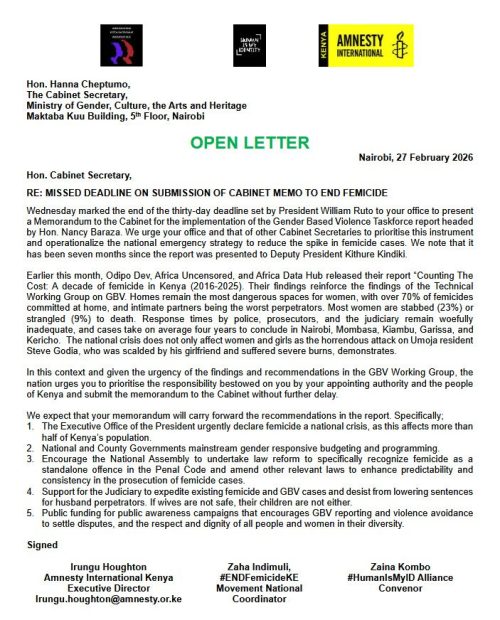
Amnesty International observed that President William Ruto had instructed the Ministry to submit the memorandum within 30 days to enable the Cabinet to approve and initiate urgent interventions. It has been thirty days since, and not a Cabinet memo has been submitted. The letter then said that your office should take this instrument seriously and put the national emergency strategy into practice.
National crisis?
Amnesty International has said that the results of the report depicted a dark picture of gender-based violence in Kenya, and the homes have been observed to be the most unsafe places for women, and the intimate partners were found to have perpetrated over 70 per cent of all the cases of femicide. Irungu Houghton, the Executive Director of Amnesty International Kenya, says the further holding back of the issue erodes the move to tackle what activists call a national crisis.
He cautioned that failure to take decisive measures by the government has enabled the crisis to deteriorate further, since numerous cases have remained uninvestigated, prosecuted poorly and sentenced lightly.
The human rights organisation also referred to the recent studies of civil society groups that they have conducted, indicating alarming effects such as increasing numbers of women being stabbed, strangled or murdered by individuals familiar to them. The families of the survivors and the victims tend to endure a long legal procedure, with some cases lasting years before being completed.
Amnesty International and its partners are currently demanding that the executive formally announce femicide a national emergency and demand immediate changes in the law to acknowledge femicide as a separate criminal offence. They also encouraged the national and county governments to focus on gender-responsive budgets, enhance prosecution systems, and advance funds for raising awareness initiatives.
Not only women and girls but families and communities in the whole nation are susceptible to the national crisis. The organisations said they required leadership and urgency.
The rights groups cautioned that the constant postponements are threatening to undermine the trust of the population in the promises made by the government to ensure the protection of women and end gender-based violence. They insisted that fast cabinet action is essential to carry out the reformation that could save more lives. Their message was clear: Kenya cannot afford any more delays in dealing with the crisis of femicide