Advertisement
A million children face malnutrition, State agency says
Wednesday 24th August, 2022 01:45 AM|
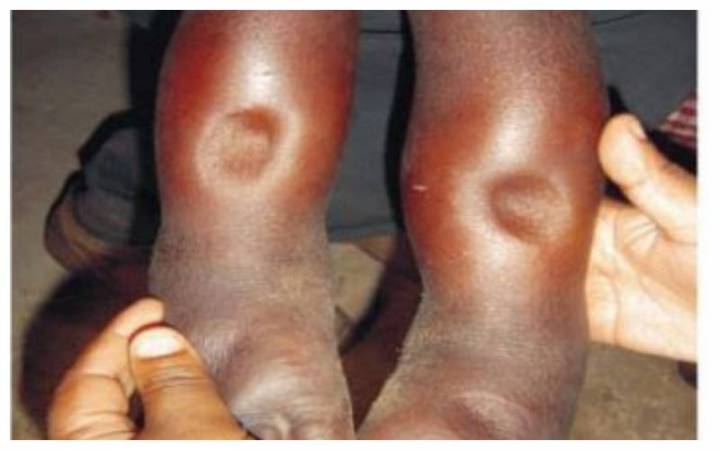
Close to 1 million children between six months and five years in 23 counties on drought red alert are acutely malnourished, a latest drought alert by the National Drought Management Authority (NDMA) indicates.
Warning that more Kenyans could completely run out of food supplies earlier than projected in the first week of September, NDMA says the drought situation in 20 out of those counties will continue to worsen.
“The number of people in need of assistance is projected to increase to 4.35 million by October 2022 if the short rains season performs below average,” NDMA says in its August 2022 National Drought Early Warning Bulletin.
The agency has also warned that 115,725 cases of pregnant or lactating women are acutely malnourished and in need of treatment.
“Acute malnutrition has also been noted across the counties with 884,464 cases of children aged 6-59 months acutely malnourished and 115,725 cases of pregnant or lactating women acutely malnourished and in need of treatment,” NDMA said, barely two weeks when Special Programmes Cabinet Secretary, Margaret Kobia raised the alarm that the number of Kenyans in need of food aid could go up from 4.1 million to 4.35 million by the end of the year.
“The weather outlook indicates that there will be generally depressed rainfall across all the arid and semi-arid counties during the October-December 2022 rainfall season,” the CS said pointing to the effect of La Nina, hence the prospect of a fifth failed rain season.
Forecasters expectations
In a recent update from the Climate Prediction Centre, climate forecasters expect the current La Niña conditions present over the eastern Equatorial Pacific Ocean to continue this fall.
NDMA highlights in its latest bulletin that the drought situation continued to worsen in 20 of the 23 ASAL counties since July and most of this month attributing it to the poor performance of the 2021 Long rains.
This is coupled with the previous three failed consecutive seasons.
“Seven counties namely; Isiolo, Mandera, Samburu, Turkana, Wajir, Laikipia and Marsabit are in Alarm drought phase while Thirteen (13) counties including Embu, Garissa, Kajiado, Kitui, Makueni, Meru, Narok, Nyeri, Tharaka Nithi, Taita Taveta, Tana River, Kwale and Kilifi are in Alert drought phase,” the authority notes.
The remaining three counties including Baringo, West Pokot and Lamu according to NDMA, are in Normal drought phase.
Several parts of ASALs remained relatively dry in July, while the other ASALs counties experienced below-average rainfall (less than 75mm of rainfall).
The Pastoral North East (PNE) counties including; Mandera, Wajir, Isiolo, Tana River and parts of Garissa received between < 10mm to 25mm of rainfall totals.
According to the Authority, the South East Marginal Agriculture (SEMA) counties; Tharaka Nithi, Embu, Kajiado, Meru, Makueni and Kitui counties received very little rainfall in the range of < 10mm – 50mm.
“The Coast Marginal Agriculture (CMA) counties received some off-season rainfall with parts of Kwale, Kilifi and Lamu counties receiving moderate to above normal rainfall,” the agency says.
Lamu and northern Kilifi received between 51mm -100mm of rainfall while some parts of Agropastoral cluster; Baringo and West Pokot received off-season rainfall that was moderate in the range of 76mm – 125mm of rainfall totals, with some areas receiving very high rainfall totals of >151mm.
Over 50 million people in East Africa will face acute food insecurity this year, a study from late July by the World Food Programme (WFP) and Food and Agriculture Organisation (FAO) found.
Roughly 7 million children are suffering from malnourishment and, according to the United Nations High Commissioner for Refugees, hundreds of thousands are leaving their homes in search of food or livelihoods. Affected countries include Djibouti, Ethiopia, Kenya, Somalia, South Sudan, Sudan and Uganda.
Author
George.Kebaso
View all posts by George.KebasoLatest News








Advertisement
More on News