Advertisement
A bag of mixed fortunes in Sino-British relations
Thursday 01st September, 2022 12:00 AM|
The significance of people-to-people exchanges in bilateral relations is of no mean significance. While relations between governments may be strained, people between two countries could actually be yearning to engage each other at a personal level.
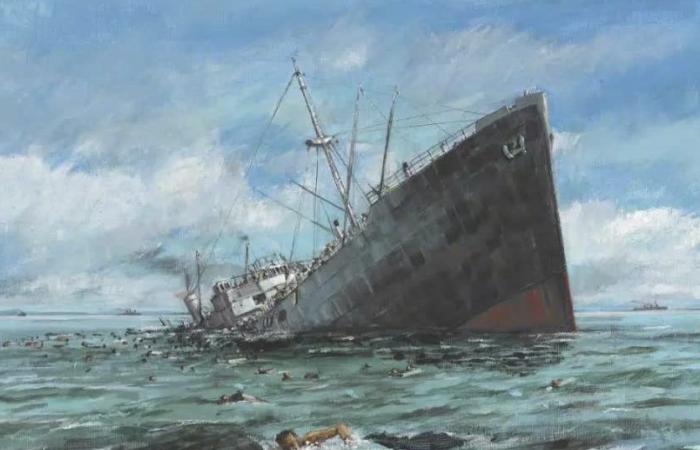
In a letter published on August 27 in remembrance of the survivors of the “Lisbon Maru”, Chinese President Xi Jinping appealed to their families to continue committing to the unbreakable China-Britain friendship. The Japanese-leased Lisbon Maru cargo vessel carrying over 1,800 British prisoners of war was hit by the U.S. army off the Zhoushan Islands, China’s Zhejiang Province in October 1942.
A total of 843 soldiers perished either by drowning or being shot, while local Chinese fishermen rescued, nurtured and protected 384 of them. The survivors were subsequently assembled at the Shanghai pier from where they were picked by another ship for the onward journey to Japan. It is an unforgettable Chinese humanitarian gesture that is deeply entrenched in the British psyche.
During the Second World War in the 1940s, China and Britain fought as allies against fascism, which shows that at a crucial time in the world’s history they shared ideals. Of course, at that time Britain need all the support to stop Nazi Germany from running over the country and taking over Europe. Unfortunately, this camaraderie was whittled down by the decades-old Cold War that pitted the U.S.-led Capitalist West versus the Communist East led by the then Union of Soviet Socialist Republics.
The Cold War was indeed a point of departure between the hitherto good friends. Britain could obviously not have liked to be seen as warming up to China, a rising communist country. Even the fact that both are members of the United Nations Security Council did little to make Britain lift its ideological blinkers towards China.
The British Government has conveniently overlooked such events due to geopolitical expediency, deciding to side with those that seek to curtail and eventually stop China’s rise. It is understandable though that Britain is torn between following its mind in accordance with historical facts, or its heart in the Western Capitalist alliance as dictated by the U.S. mantra “you are either with us or against us”.
Now, in his speech to the United Kingdom (UK) Parliament during his visit to the country in October, 2015 Xi noted that the two countries had scored multiple “firsts” since the founding of the People’s Republic of China (PRC). For instance, the UK was the first major western country to recognize the PRC, and led other European Union (EU) countries in establishing a comprehensive strategic partnership with the PRC.
Further, the UK is the largest RMB offshore trading center after Hong Kong, it has the largest number of Chinese overseas students and Confucius Institutes in the EU, and was the first major western country applying for membership of the Asian Infrastructure Investment Bank. These developments are evidence of a deep bond between the two countries.
By appealing to China’s British friends to contribute to bilateral ties between the two countries, Xi took cognizance of the fact that relations between the pair are strained and need to be jumpstarted by interpersonal relations. The British government, particularly under outgoing Prime Minister Boris Johnson, has become toxic towards anything China even as the two countries have had no direct confrontation.
Relations between China and Britain date back to the Ming Dynasty Ming Dynasty between 1368–1644 when English ships sailed to Macau, then leased to Portugal by China. In between the centuries there has been significant trade and diplomatic activity between the two countries, characterized mainly by Britain seeking an upper hand in the trade relations.
The lowest point in Sino-British relations came after June 30, 2020 following the enactment of the Hong Kong National Security Law. Britain could not hide its angst towards both the governments of the Hong Kong Special Administrative Region and motherland China for enacting laws that secured the territory from foreign interference and destabilization. Britain was more aggrieved than the bereaved and led a massive global misinformation campaign alleging human rights abuse by the two governments.
Gradually, Britain has been forced to swallow its pride and accept that the status quo in Hong Kong has now undergone a fundamental transformation. The territory has passed the unicorn of British influence in particular, and the West in general. This frustration caused the British Government to incite a mass exodus of Hong Kong residents by offering them citizenship of the UK.
Britain is yet to give official figures of those who have taken the offer since it was given by outgoing Prime Minister Boris Johnson. But experts think that there will be few takers compared to Britain’s plan for a mass exodus. Once bitten twice shy. In the 1980s British National Overseas Passport holders in Hong Kong were granted special status but it proved an anti-climax with restricted rights.
The British have nothing on China. They are simply victims of U.S.’s arm twisting manipulative ways that dictate its allies should befriend its friends, and hate the superpower’s enemies. As the world becomes more dynamic, the British will find that taking Xi’s hand in friendship is the wisest move for future social and economic survival.
Author
PD columnist
View all posts by PD columnistLatest News








Advertisement
More on News