Why rehabilitation works better than incarceration for substance use- NACADA
By Faith Lagat, January 30, 2026Kenya needs treatment over tough jail time for substance use because addiction is a health challenge, not just a crime.
Locking people up often fails to break the cycle of dependence, while proper care, counselling, medical support, and community follow-up help many rebuild lives, cut relapse risks, and return as positive contributors to families and society.
Imagine someone caught in the grip of alcohol or drug use. They might start to cope with stress, peer pressure, or daily hardships common in many Kenyan communities. Over time, it can turn into dependence, affecting health, work, relationships, and sometimes leading to minor offences like possession for personal use.
According to the National Authority for the Campaign Against Alcohol and Drug Abuse (NACADA), incarceration alone does not address the root causes of substance use dependence.
The agency emphasises that combining treatment, counselling, and community supervision is far more effective in helping individuals recover. These interventions reduce relapse, support long-term sobriety, and enable people to reintegrate as productive members of their families and society.
By prioritising care over punishment, NACADA argues, Kenya can break the cycle of addiction and promote healthier communities.
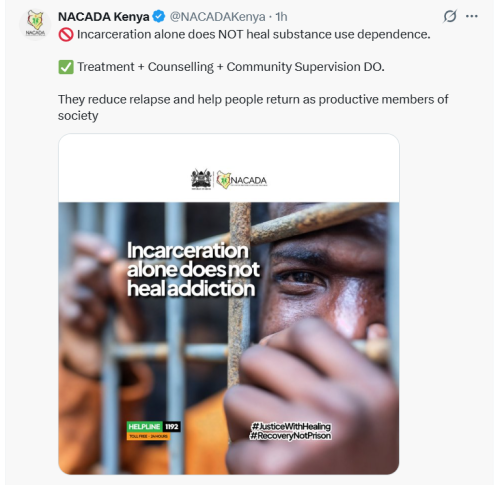
“Incarceration alone does NOT heal substance use dependence. Treatment, Counselling, Community Supervision do. They reduce relapse and help people return as productive members of society,” read the NACADA X post.
The current approach often sends such individuals straight to prison, where harsh conditions and lack of support rarely address the root cause.
Studies show that prison alone does little to stop future use many return to the same habits soon after release, facing high chances of reoffending and re-arrest.
This creates a revolving door: more court time, more prison overcrowding, and ongoing harm to families left behind.
In contrast, treatment approaches view substance use as a treatable condition. Evidence highlights that combining counselling, therapy, and community supervision lowers relapse rates significantly compared to punishment alone.
Programs offering behavioural support and ongoing monitoring help individuals develop coping skills, manage triggers, and stay sober longer.
When treatment replaces or supplements jail for non-violent cases, people are more likely to stay drug-free, avoid new crimes, and reintegrate successfully.
Community-based care fits Kenya’s reality
Community-based options prove especially promising in Kenya. These include outreach for early detection, outpatient counselling sessions, peer support groups, and links to social services for jobs or family help.
Such approaches suit local realities, as many affected individuals live in informal settlements or rural areas with limited access to formal care. By involving families, faith groups, and local leaders, these programs build support networks that last beyond initial recovery.
Vocational training or harm reduction steps further empower people to find purpose, reducing idleness that can lead back to old patterns.
The benefits extend far beyond the individual. Families suffer less heartbreak and financial strain when a loved one recovers instead of disappearing into prison.
Communities gain productive members who contribute through work and stable homes. Society saves resources; treatment often costs far less than long prison terms, while reducing repeat offences cuts court and policing burdens.
Public health improves, too, with fewer risks from untreated conditions like infections or mental health struggles tied to substance use.
Accountability with care
Treatment does not remove responsibility since many programs include court oversight, regular check-ins, and consequences for non-compliance.
For serious crimes, prison may still be necessary, but offering care inside or upon release helps prevent future problems. The key is balance: hold people accountable while addressing the health issues driving the behaviour.
Kenya is already piloting diversion programs and community rehabilitation frameworks. These recognise that punishing dependence without healing it rarely works long-term. Expanding access to affordable, evidence-based care through local centres, mobile units, and partnerships could transform outcomes.
Choosing treatment over tough jail time builds a smarter response, it heals rather than hardens, prevents rather than perpetuates cycles, and strengthens society.
Every person who recovers is a win for families, neighbourhoods, and the nation’s future. By prioritising care, Kenya can turn a growing challenge into stories of hope and renewal.