When can IEBC postpone an election? What Kenya’s constitution and Elections Act provides
By Ndiritu Wanjiru, July 13, 2026The Independent Electoral and Boundaries Commission (IEBC) has mulled deferring the aftermath of the Ol Kalou parliamentary by-election in case ‘circumstances provided for’ under the law occur, sparking a controversy among political leaders, legal experts and the general public about what powers the commission has.
The remarks come at a time when political tension has been building up, and some allegations have been made in the constituency of electoral violence, voter intimidation and vote buying, and various stakeholders have called on state agencies to investigate the allegations, which could make the poll result questionable.
Leaders in the opposition have called on the IEBC to proceed with the election as scheduled, while some rights groups have called on the commission not to be afraid to use its legal mandate should the conditions on the ground compromise the integrity of the electoral process.

This debate provides a new impetus to the public debate on what the Constitution and the Elections Act say about postponing an election.
The Constitution has set time frames for elections, but it also offers a legislative structure in the Elections Act to enable the IEBC to postpone elections in exceptional circumstances.
The Constitution of Kenya has specified the time limits for general elections. According to Article 101, general elections must be held on the second Tuesday of August every 5 years, while Article 102 will only permit Parliament to be extended during times of war and for a period of not more than 6 months at a time and will require a resolution by two-thirds of all members of both Houses.
The Constitution, however, does not explicitly define the circumstances in which the polling can be delayed. Instead, the IEBC has been constitutionally empowered to conduct and supervise elections under Article 88, and the Elections Act specifies the grounds on which elections may be postponed by the IEBC.
Circumstances for election postponement
In the event of the failure to hold an election, the IEBC can delay it under three circumstances.
Under section 55B of the Elections Act, the IEBC may reschedule an election in a constituency, county or ward after it has been scheduled.
Serious threat to peace and security
The Commission may call off an election if there is good evidence that there will be a serious breach of peace if the election is to proceed as scheduled.
This may encompass generalised political violence, combat or threats from terrorists or significant insecurity that would threaten voters, election officials or candidates. The ‘threshold’ is not just a normal political conflict but serious enough to threaten the integrity and security of the electoral process.
Natural disaster or other catastrophe
Also, if a natural disaster or other emergency makes it impossible to hold an election, an election may be delayed.
Such as large-scale flooding, major infrastructure failure, disease outbreak or any other emergency which prohibits polling stations from functioning or makes it unsafe to vote at the polling station. Whereas in law, the stress is on impossibility and not on inconvenience.
Electoral malpractice that makes voting impossible
The third situation is where there is electoral malpractice on such a scale that a legitimate election cannot take place.
This can involve the general destruction of electoral materials, intimidation of the electorate, interference in the ballot or other grave offences which impair the electoral process in general. Minor procedural irregularities are generally not likely to reach this level.
Elections cannot be postponed indefinitely
The Elections Act stipulates that if the voting is postponed, the IEBC shall conduct the election as soon as practicable after the conditions that necessitated the postponement have been resolved.
The law also allows the Commission to declare results under certain conditions, provided the Commission is satisfied that voting in the affected area would not affect the overall result of the election.
Supreme Court affirmed IEBC’s powers
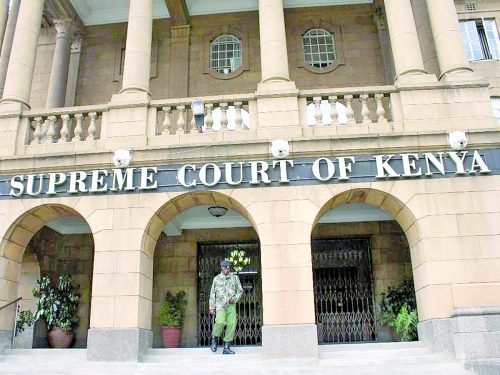
In the presidential election petition ruling of 2022, the Supreme Court ruled that the IEBC has the power to extend the elections as a matter of both the Constitution and the Elections Act. The court ruled that the Commission can postpone elections in counties, constituencies or wards where the conditions of the statute (Section 55B) are fulfilled.
Kenya’s election laws clearly state that elections cannot be delayed for political purposes or administrative considerations. The IEBC is limited in its powers and can only be invoked in exceptional situations where there is a serious threat to peace, a natural disaster or emergency or electoral malpractice is so grave that a free, fair and credible election cannot be held.
These protections are designed to ensure that the right to vote is not denied while maintaining the integrity of the voting process.